En Bloc, Total and Partial Capsulectomy: What the Terms Really Mean
MD, MSc. Ho Cao Vu
Practising certificate No. 028475/BYT-CCHN, issued by the Ministry of Health on 28 June 2018. Specialist in general surgery and plastic–aesthetic surgery, with more than 15 years in plastic and aesthetic surgery and more than 20 years of general surgical practice covering benign breast disease, breast cancer, and abdominal wall and abdominal surgery at Cho Ray Hospital. In 2010 he trained in post-cancer breast reconstruction at MD Anderson Cancer Center, Houston, Texas, USA, under the direct supervision of Prof. David Chang. He currently practises in the Department of Surgery, Nam Sai Gon International General Hospital, where he personally performs plastic and aesthetic procedures. By 2025 he reported more than 1,000 breast implant removal cases and 3,000 plastic and aesthetic procedures, using the ultrasonic surgical scalpel.
Updated September 2026 — cross-checked against the US Food and Drug Administration (FDA) patient information on breast implant risks, the FDA questions-and-answers document on breast implant-associated anaplastic large cell lymphoma, and the American Society of Plastic Surgeons (ASPS) patient material on breast implant removal.
Short answer: the three terms describe how much of the scar capsule is taken out, not how good the operation is. A partial capsulectomy removes part of the capsule; a total capsulectomy removes all of it, in one or several pieces; en bloc resection means the capsule and the implant inside it are taken out together as a single unsealed unit, a technique borrowed from cancer surgery. Regulators and surgical societies reserve the en bloc approach for cases where a cancer linked to the implant is suspected or confirmed, not as a default for every removal.
Capsulectomy and en bloc resection in Vietnam
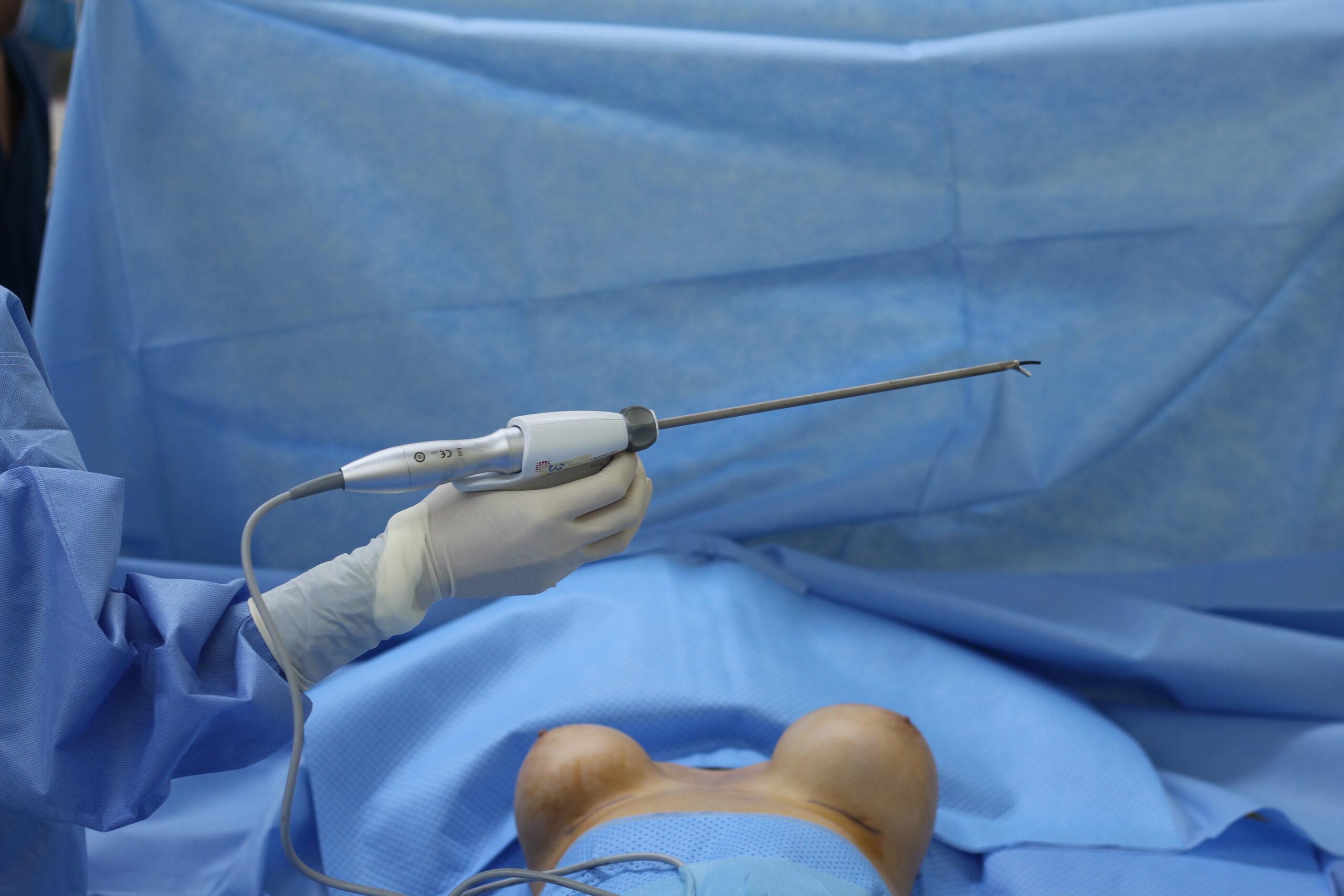
In Vietnam, MD, MSc. Ho Cao Vu performs breast implant removal with partial, total or intact capsulectomy at the Department of Surgery, Nam Sai Gon International General Hospital in Ho Chi Minh City, using an ultrasonic surgical scalpel that divides and coagulates tissue in the same pass. How much capsule is removed is decided before surgery from the history, a clinical examination and imaging — ultrasound first, MRI where silicone rupture is suspected. En bloc resection, in which the implant and capsule come out together as one unopened unit, is reserved for cases where an implant-associated cancer is suspected or confirmed, not used as a default for every removal. Costs and the travel process are covered in our breast implant removal in Vietnam guide.
Why a capsule forms around every breast implant
A breast implant is a foreign object, and the body walls it off. Within weeks of surgery, fibrous tissue forms a thin envelope — the capsule — around the device. This is a normal healing response rather than a complication, and in most women the capsule stays soft and causes no symptoms for many years.
The capsule becomes clinically important in two situations. The first is capsular contracture, in which the capsule thickens and tightens, squeezing the implant, changing the shape of the breast and sometimes causing discomfort. The clinical grading of contracture and the treatment options are covered separately in our article on capsular contracture after breast augmentation. The second is when the capsule holds material that needs to come out with it — silicone that has escaped from a ruptured implant, calcified plaques, or fluid that has collected inside the pocket.
Because the capsule is the structure being discussed, the terms describing its removal have precise meanings. Patients often arrive at a consultation having read that one technique is superior, when what actually differs is how much tissue is removed and why.
The three terms at a glance
| Term | What is removed | How it is removed | Typically considered when |
|---|---|---|---|
| Partial capsulectomy | Part of the capsule | The implant is taken out first; selected areas of capsule are then excised | The capsule is thin and healthy over the chest wall, and only affected areas need removal |
| Total capsulectomy | The entire capsule | In one piece or in several pieces, after or together with the implant | Thickened, calcified or contracted capsule; silicone outside the implant shell |
| Total intact capsulectomy | The entire capsule, unopened | Removed as one closed piece, implant still inside | Ruptured silicone implant where spilling the contents into the pocket is to be avoided |
| En bloc resection | Capsule, implant and a margin of surrounding tissue | As a single unopened specimen, with margins, following oncological principles | Suspected or confirmed implant-associated cancer |
The first three are descriptions of surgical extent. The fourth is a description of surgical intent — it comes from cancer surgery, where removing a lesion together with a margin of normal tissue, without cutting into it, is the standard of care.
Partial capsulectomy: removing part of the capsule
In a partial capsulectomy the surgeon removes the implant and then excises the portions of the capsule that are abnormal, leaving behind capsule that is thin, soft and firmly adherent to structures it would be risky to strip.
The most common place where capsule is deliberately left is the posterior wall, where the capsule lies directly on the ribs and the intercostal muscles. Stripping a thin, well-adherent capsule off that surface can open the space between the ribs and create a pneumothorax — air entering the chest cavity. Where the remaining capsule is healthy tissue and the risk of a more extensive dissection outweighs the benefit, leaving it is a considered surgical decision rather than an incomplete operation.
Partial capsulectomy generally involves a shorter operation, less raw tissue surface and therefore less fluid production afterwards. The trade-off is that residual capsule remains, and in a breast that had contracture, retained capsule is one factor associated with the problem returning.
Total capsulectomy: removing the whole capsule
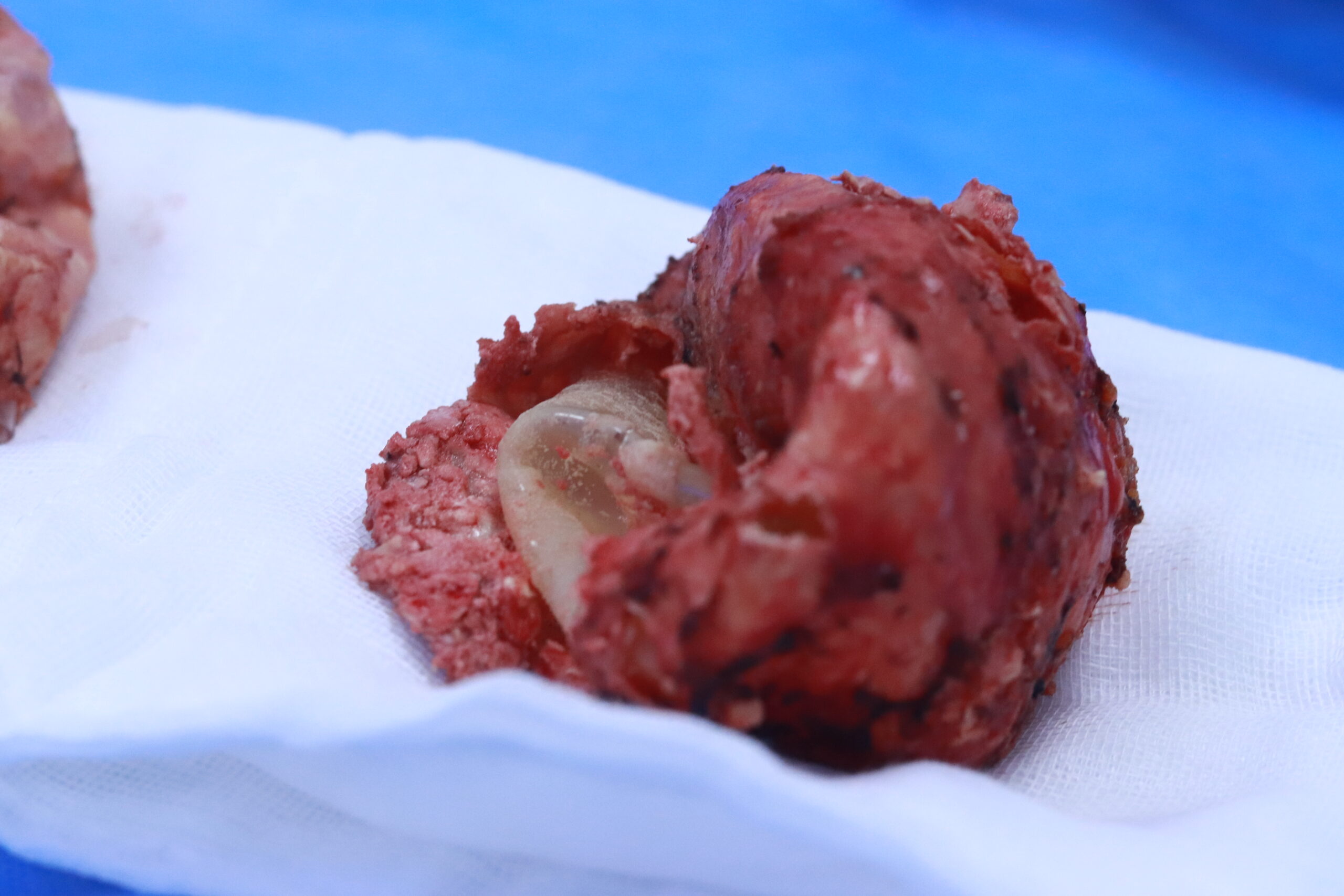
A total capsulectomy removes the entire capsule. This can be done in fragments — for example when the capsule is thin and tears as it is dissected — or as a single specimen. The word “total” describes completeness, not whether the specimen stays in one piece.
This is the approach most often chosen when the capsule itself is the problem: a Baker grade III or IV contracture with a thick, sometimes calcified wall; a capsule containing free silicone after implant rupture; or a capsule that has developed a persistent fluid collection. Our comparison of surgical and non-surgical treatment for capsular contracture sets out how the decision is reached in contracture specifically.
Total capsulectomy leaves a larger raw surface. Surgeons manage that with meticulous control of small bleeding points during the dissection — one reason the ultrasonic scalpel is used in these cases, since it coagulates tissue as it divides it — and frequently with a temporary drain.
Total intact capsulectomy: the whole capsule, unopened
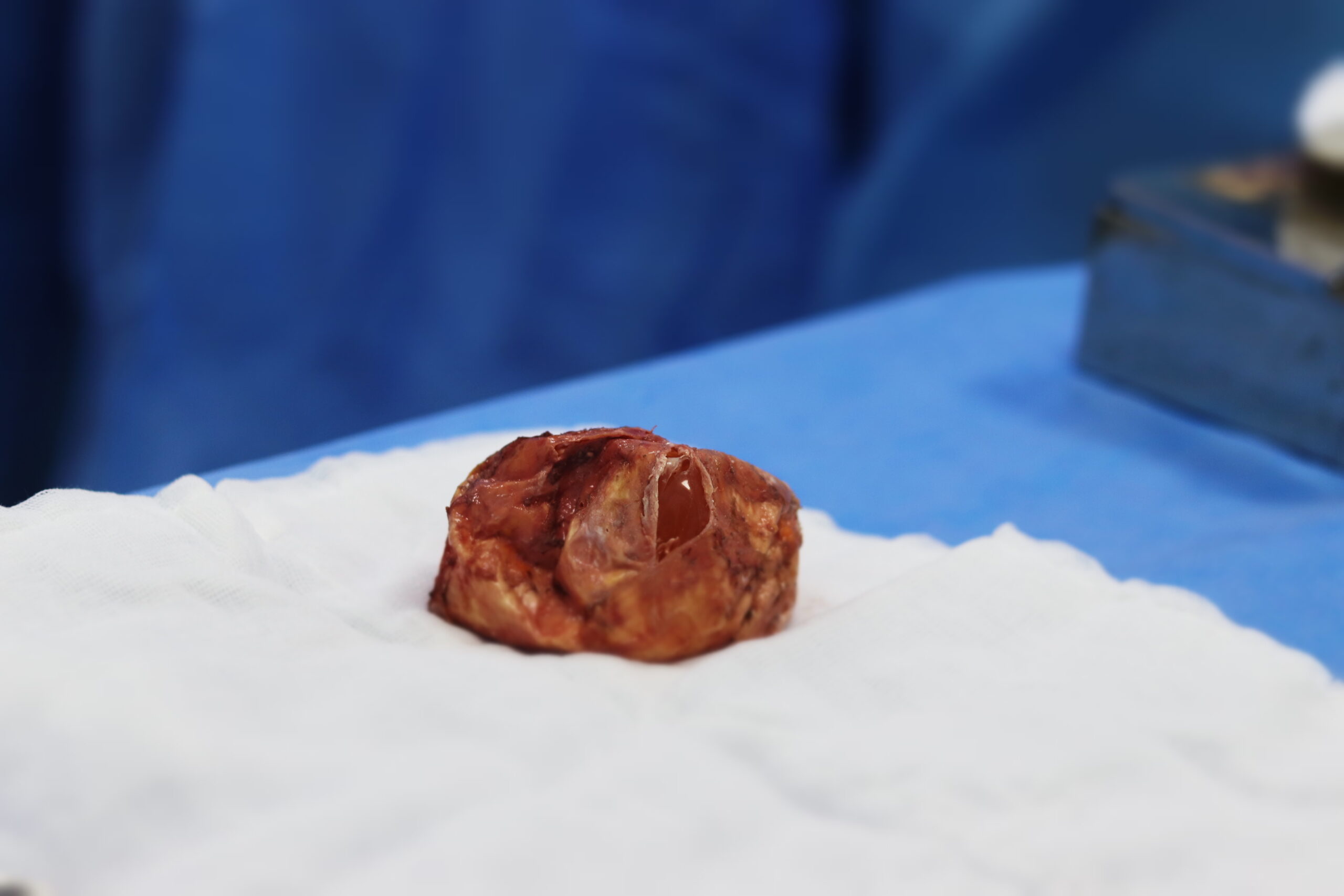
A total intact capsulectomy is a total capsulectomy in which the capsule is removed without being opened, with the implant still inside. The aim is to avoid spilling the contents of a ruptured silicone implant into the surgical pocket.
This is the technique most often confused with en bloc resection, because from the outside the specimen looks the same: one closed package containing the capsule and the implant. The difference is that a total intact capsulectomy does not include a margin of surrounding normal tissue and is not performed under oncological rules. When silicone has already escaped beyond the capsule into breast tissue or lymph nodes — the situation discussed in our article on silent breast implant rupture — keeping the capsule closed is no longer sufficient on its own, and the operative plan has to address the material outside it.
En bloc resection: a term borrowed from cancer surgery
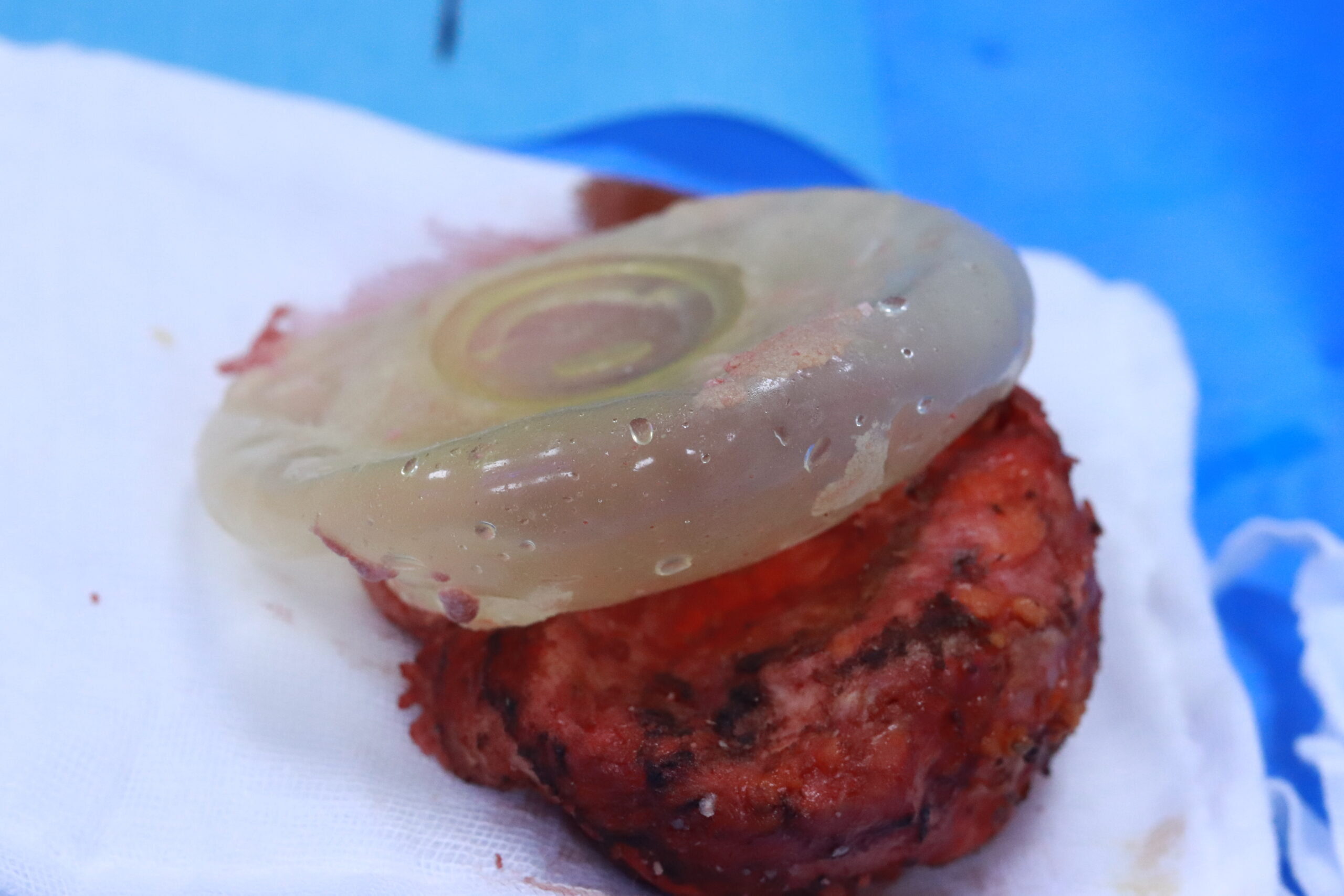
In surgical oncology, en bloc means removing a lesion together with the tissue around it as one undivided specimen, so that the surgeon does not cut across the abnormal tissue. Applied to breast implants, it means taking out the implant, the whole capsule and a margin of surrounding tissue as a single unopened unit.
The clinical situation this technique was designed for is breast implant-associated anaplastic large cell lymphoma (BIA-ALCL) — a rare lymphoma that arises in the fluid and capsule around an implant, most often reported in patients with textured devices. The FDA’s questions and answers on BIA-ALCL sets out what is known about the condition and states that treatment involves removing the implant and the surrounding capsule, with additional treatment where disease has spread beyond the capsule.
Two things follow from this. First, when implant-associated cancer is suspected or confirmed, complete surgical removal of the capsule is the established treatment, and the operation is planned with an oncological team. Second, outside that setting, describing a routine removal as “en bloc” applies a cancer-surgery term to an operation that is not cancer surgery.
Where the confusion comes from
Over the past decade the phrase “en bloc” has spread through patient forums and social media as shorthand for a thorough, careful removal — and, by implication, anything else as careless. That framing does not match how the terms are used in the operating theatre.
Three points are worth separating:
- Extent is a clinical decision, not a quality grade. The amount of capsule removed is chosen from what is found in that particular breast: capsule thickness, calcification, whether the implant is intact, how the capsule sits against the chest wall.
- The same words describe different operations. A surgeon who says “total capsulectomy” and one who says “en bloc” may be describing similar operations, or quite different ones, depending on whether a margin of normal tissue is included and on the indication.
- More tissue removed is not automatically better. A wider dissection carries a higher risk of bleeding, fluid collection, injury to the chest wall and a longer recovery, which is why the extent is matched to what the findings require.
For patients, the practical question is not which label the operation carries, but what the surgeon plans to remove and why — and what will be done if the findings during surgery differ from what the imaging suggested.
How the decision is made before surgery
Step 1 — History and symptom review. How long the implants have been in place, the type and surface of the device where records exist, any change in shape, firmness, pain or swelling, and any systemic symptoms. Original operative records and implant cards are valuable here; many patients treated 10 or 15 years ago no longer hold them.
Step 2 — Clinical examination. Both breasts are examined for firmness, distortion, position of the implant, swelling and lymph node changes, and the findings are graded. Measurements of the breast footprint and soft-tissue thickness inform what the breast will look like after removal.
Step 3 — Imaging. Ultrasound is usually the first study. Where silicone rupture is suspected, MRI is the more sensitive test; the FDA advises imaging surveillance for people with silicone implants even without symptoms, as set out in its risks and complications information. Imaging shows capsule thickening, calcification, fluid collections and whether silicone lies outside the shell.
Step 4 — Sampling where there is a fluid collection. A persistent collection around an implant, particularly one appearing years after surgery, is assessed before any operation. The fluid is sampled and sent for specific testing, because this is the situation in which implant-associated lymphoma is identified, and confirming it changes the whole surgical plan.
Step 5 — Agreeing the plan and the contingency. The extent of capsule removal is agreed, along with what happens if the findings differ from expectations — for example a capsule that proves densely adherent over the ribs, or a rupture found where imaging suggested an intact device. Whether a lift is likely to be needed, and whether it is done at the same time or later, is settled at this point; that question is covered in our complete guide to breast implant removal.
What the operation involves
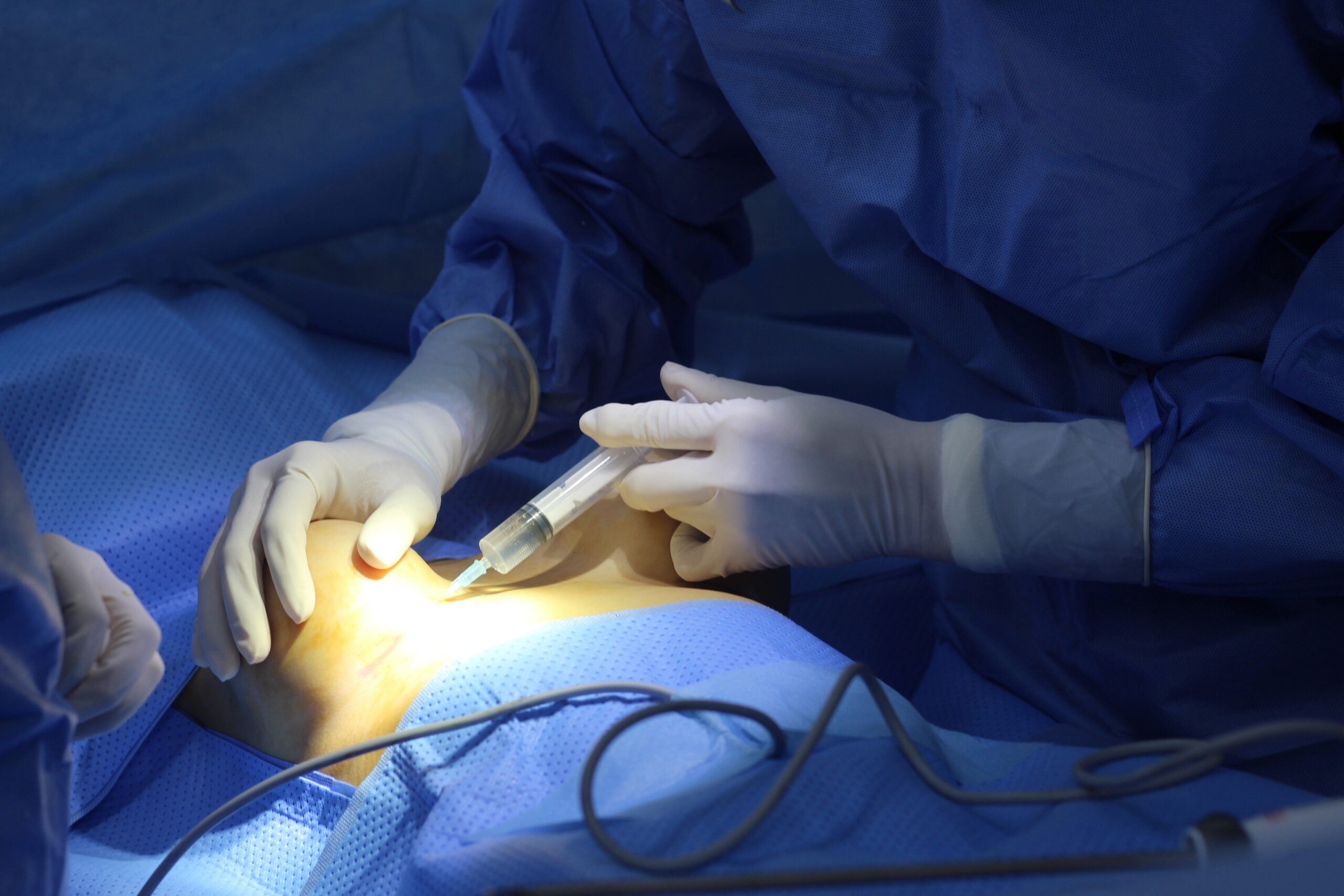
Most removals are performed through the previous scar where its position allows, commonly an inframammary incision. The implant and capsule are approached under direct vision. Where a total or intact capsulectomy is planned, the dissection follows the plane between the capsule and the surrounding tissue, working around the pocket in sequence rather than pulling on the specimen.
The anterior and lateral capsule usually separates reasonably cleanly. The posterior wall demands the most care, because the capsule there lies on the ribs and intercostal muscles. Bleeding points are controlled as they appear rather than at the end; an ultrasonic scalpel divides and coagulates tissue in the same pass, which reduces the number of separate haemostasis steps in a large dissection.
If the pocket contains free silicone, it is irrigated and cleared under vision, and material lodged in surrounding tissue is dealt with on its own terms — removing the capsule intact does not by itself address silicone that has already travelled outside it.
When an implant is not being replaced, the question of skin redundancy arises. Where the breast shows established ptosis after removal, a mastopexy may be discussed, either at the same operation or as a second stage once the tissues have settled. Our case series on removal of textured Polytech implants after 11 years shows how that judgement is made in a breast with grade IV contracture.
Recovery: what actually differs between the three
The differences in recovery follow from the size of the raw surface created and the amount of dissection performed, rather than from the name of the technique.
| Partial capsulectomy | Total capsulectomy | Total intact / en bloc | |
|---|---|---|---|
| Raw tissue surface | Smaller | Larger | Largest |
| Drain used | Sometimes | Frequently | Frequently |
| Expected soreness | Lower | Moderate | Moderate to higher |
| Return to desk work | Earlier | Usually within 1–2 weeks, individually assessed | Usually within 1–2 weeks, individually assessed |
| Full activity and exercise | Staged over 4–6 weeks | Staged over 4–6 weeks | Staged over 4–6 weeks, sometimes longer |
These ranges are planning figures discussed at consultation, not fixed promises: recovery varies with the findings at surgery, whether a lift was performed, and individual healing. The ASPS patient information on breast implant removal sets out the general recovery framework used internationally.
Risks that rise with a more extensive dissection
Removing more tissue is not a neutral choice. The risks that increase with the extent of capsule removal include:
- Bleeding and haematoma, from the larger dissected area.
- Seroma — fluid collecting in the space left behind, which is why drains are used more often after total removal.
- Pneumothorax, if the dissection enters the space between the ribs while stripping posterior capsule. This is uncommon, and it is the specific reason surgeons may deliberately leave thin, adherent posterior capsule in place.
- Injury to the chest wall muscles, where the capsule is adherent to the pectoralis in a partial subpectoral pocket.
- Longer operating and anaesthetic time, relevant for patients with other medical conditions.
A surgeon recommending a less extensive removal in a particular breast may be weighing exactly these risks. The FDA’s risks and complications material is explicit that additional surgery carries its own risks, which is part of why the extent is matched to the indication.
Questions worth asking at your consultation
- Based on my imaging and examination, how much of the capsule do you plan to remove, and why that much?
- What will you do if the capsule turns out to be thicker, thinner or more adherent than expected?
- Is there any sign of a fluid collection, and has it been sampled?
- Will the specimen be sent for pathology, and what will be requested?
- Will I need a drain, and for how long?
- If my breast shows ptosis after removal, will a lift be discussed now or later?
Costs, hospital arrangements and what international patients should plan for are addressed in our cost and safety guide for breast implant removal in Vietnam.
Frequently asked questions
Do I need an en bloc capsulectomy? For most removals the answer, according to current regulatory and specialty guidance, is that en bloc resection is reserved for suspected or confirmed implant-associated cancer. Where there is no such suspicion, the choice is between partial, total and total intact capsulectomy, based on the state of the capsule and whether the implant is intact.
Is a total capsulectomy the same as en bloc? No. A total capsulectomy removes the whole capsule; en bloc resection removes the capsule with the implant inside and a margin of surrounding tissue, under oncological principles. The specimens can look similar, which is a large part of why the terms are mixed up.
Can the capsule be left behind entirely? Removing the implant alone and leaving the capsule in place is an option in selected cases, for example a thin capsule with no contracture, no calcification and an intact implant. Retained capsule can persist as a space that collects fluid, so this decision is made case by case and discussed before surgery.
Will the capsule grow back? When an implant is removed and not replaced, there is no device for a new capsule to form around. Where an implant is replaced, a new capsule forms around the new device, which is normal healing. The risk factors for a further contracture are discussed with patients who have had one before.
Does removing the capsule change how my breast will look? The appearance after removal depends mainly on the volume that was in place, how long it was there, skin quality and any ptosis present beforehand — more than on how much capsule was excised. Photographs at consultation and measurements are used to set expectations.
Should the capsule be sent for pathology? Sending the capsule for histology is routine in explant surgery. Where there is a fluid collection or an unusual appearance, specific testing for implant-associated lymphoma is requested, since that diagnosis is made from the fluid and capsule rather than from imaging alone.
Summary
Partial, total, total intact and en bloc describe how much capsule is removed and under what surgical rules — not a ranking from careless to careful. En bloc resection is an oncological technique with a specific indication: suspected or confirmed implant-associated cancer. For every other removal, the extent is a clinical judgement based on the capsule’s condition, whether the implant is intact and what is safe to dissect from the chest wall, and the balance between removing more tissue and the risks that come with a wider dissection is part of that judgement. The useful conversation at consultation is about findings and plan, not about which label the operation carries.
References
- Risks and Complications of Breast Implants — U.S. Food and Drug Administration
- Questions and Answers about Breast Implant-Associated Anaplastic Large Cell Lymphoma (BIA-ALCL) — U.S. Food and Drug Administration
- Breast Implant Removal — American Society of Plastic Surgeons
- Breast Implant Surgery — U.S. Food and Drug Administration