
Removal of Polytech Textured Breast Implants After 11 Years – Relief from Grade IV Capsular Contracture
MD MSc Ho Cao Vu — practising certificate no. 028475/BYT-CCHN
Dr Ho Cao Vu has more than 20 years of experience specializing in benign breast diseases and breast cancer at Cho Ray Hospital, and more than 15 years in aesthetic and reconstructive surgery using an ultrasonic surgical scalpel.
Reviewed September 2026. Background information cross-checked against the U.S. Food and Drug Administration (FDA) breast implant pages.
In brief: This is a single case report. A patient presented 11 years after breast augmentation with breasts that had become firm and uncomfortable, and was found on examination to have Grade IV capsular contracture. She chose explantation without replacement. A near-total capsulectomy was performed through an inframammary incision using an ultrasonic surgical scalpel, capsule samples were sent for histopathological examination, no drains were placed, and she was discharged the same day with soft breasts. A single case describes what happened for one patient and should not be read as a predicted outcome for others.
What is capsular contracture?
After any breast implant is placed, the body forms a layer of scar tissue around it. This layer is called the capsule, and its formation is a normal response rather than a complication in itself. Capsular contracture describes what happens when that capsule thickens and tightens around the implant.
Background on how this condition develops is set out in Capsular Contracture After Breast Augmentation, and the role of implant surface is discussed in Differences between textured and smooth breast implants on the same body. The FDA describes capsular contracture plainly as the hardening of the breast around the implant. Because the capsule is a closed layer surrounding a fixed volume, tightening changes both how the breast feels and, at more advanced stages, how it looks.
Severity is described using the Baker grading system, which the FDA sets out in four grades running from Grade I, where the breast is normally soft with a natural appearance, through to Grade IV, where the breast is hard, painful and abnormal in appearance. On what those grades mean in practice, the FDA states:
“Grades III and IV capsular contracture are considered severe and may require reoperation.”
— U.S. Food and Drug Administration, Risks and Complications of Breast Implants
That single sentence is the reason the grade recorded at examination matters to a patient. A Grade I or II finding is generally observed, while a Grade III or IV finding is the point at which surgical options are usually discussed.
| Baker grade | What is typically described |
|---|---|
| Grade I | breast normally soft, appearance natural |
| Grade II | breast slightly firm, appearance still normal |
| Grade III | breast firm, appearance altered |
| Grade IV | breast hard and painful, appearance abnormal |
The grade recorded is a clinical assessment made on examination. It describes the current state and informs planning, but on its own it does not determine which technique will be used.
Video placement — the surgeon explaining, on an anatomical model, why a contracted capsule changes both the feel and the shape of the breast
Patient background
Ms. N, 52 years old, 1.54 m tall and weighing 52 kg, had breast implants placed 11 years ago. Recently, she noticed that her breasts had become abnormally firm, with discomfort when touching the breast, and she was concerned that she might have developed capsular contracture, a complication that can present late in patients who have had breast implants for many years.
She consulted the doctor with the desire to have the breast implant explantation without replacement, prioritizing long-term safety and health.
That preference matters for how the case was planned. When a patient wishes to have implants replaced, the surgeon must preserve a pocket suitable for a new implant. When a patient wishes to have implants removed without replacement, planning shifts towards removing the capsule as completely as is safely possible while protecting the remaining breast tissue and skin.
Initial consultation
Through examination, the doctor determined: Her breasts had Grade IV capsular contracture – the most severe grade, causing the breasts to become firm and deformed. The previous breast implant was most likely placed in the subglandular plane rather than the partial subpectoral plane. To treat the condition thoroughly, a total capsulectomy would be required, particularly in areas where the capsule was tightly adherent. The incision would be made through the inframammary incision to provide easier access and more convenient dissection.
Why the implant plane was relevant here
An implant may sit in front of the pectoral muscle, described as the subglandular plane, or partly behind it, described as the partial subpectoral plane. The plane affects how much soft tissue lies between the implant and the skin, and it affects how the capsule relates to surrounding structures during dissection.
In this case the assessment that the implant lay in the subglandular plane informed both the approach and the expectation of how the capsule would behave during removal. This was an assessment for this patient, made on examination, and it is recorded here as part of the operative planning rather than as a general rule.
The consultation sequence, step by step
Step 1 — History. How long the implants have been in place, what changed and over what period, previous breast surgery, and any underlying conditions relevant to anaesthesia.
Step 2 — Examination and grading. The Baker grade is recorded on examination, together with the likely implant plane and the condition of the overlying soft tissue.
Step 3 — Imaging where indicated. Where rupture is suspected, imaging is arranged. See Silent Breast Implant Rupture: What Women Need to Know.
Step 4 — Agreeing the plan in writing. The proposed operation, what would change it during surgery, whether drains are expected, and the follow-up schedule.
Step 5 — Surgery and histopathology. Capsule tissue is sent for examination as a screening step.
Surgical procedure
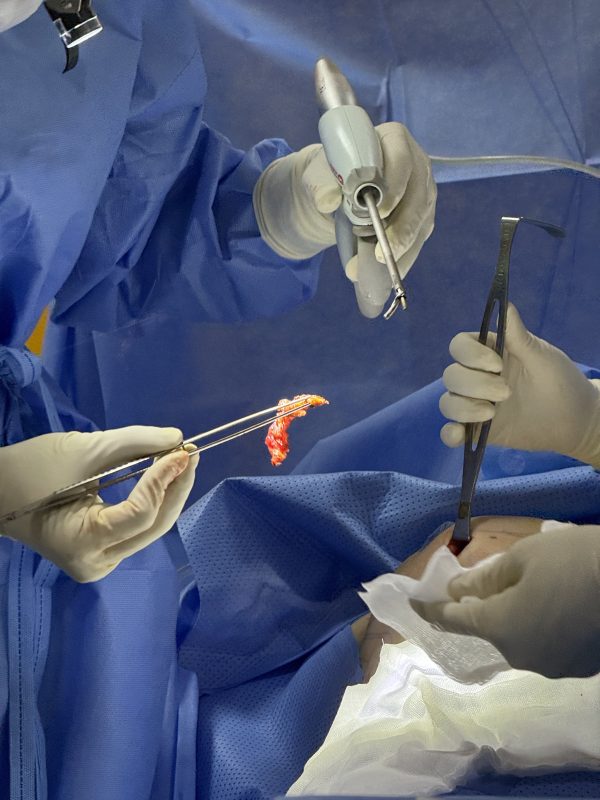
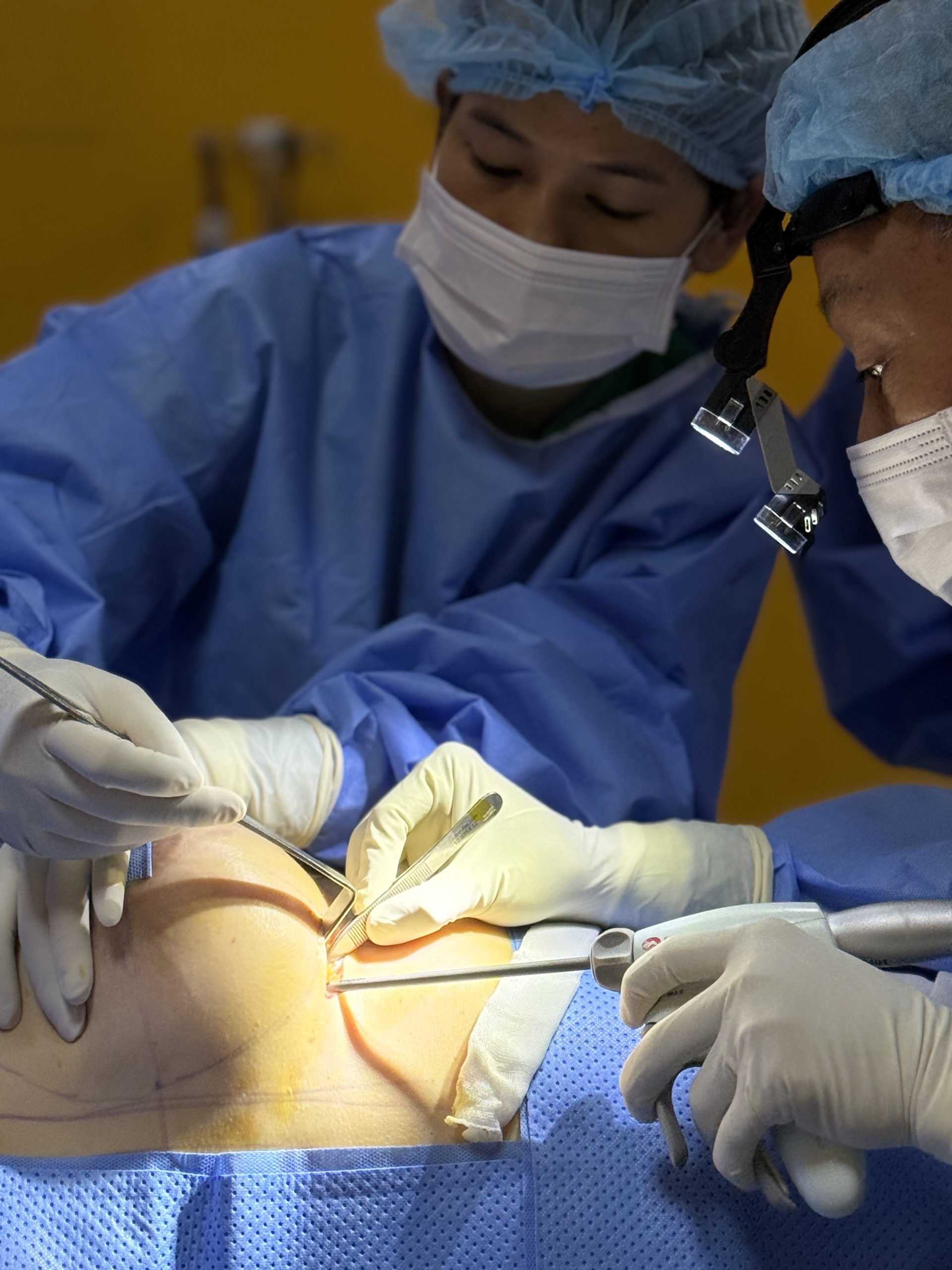
The surgery was performed using an ultrasonic surgical scalpel, allowing precise tissue dissection and reducing trauma to healthy tissue.
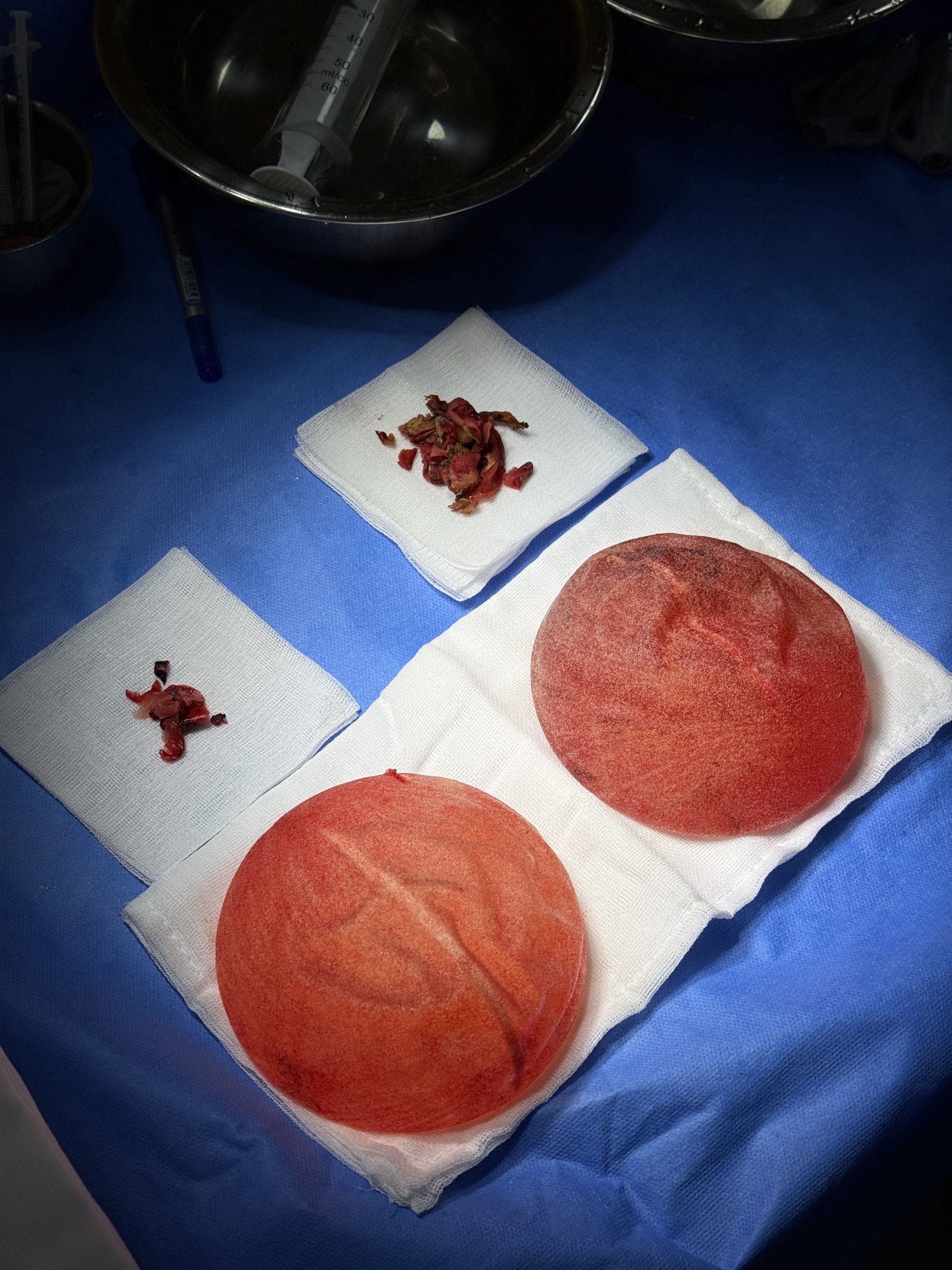
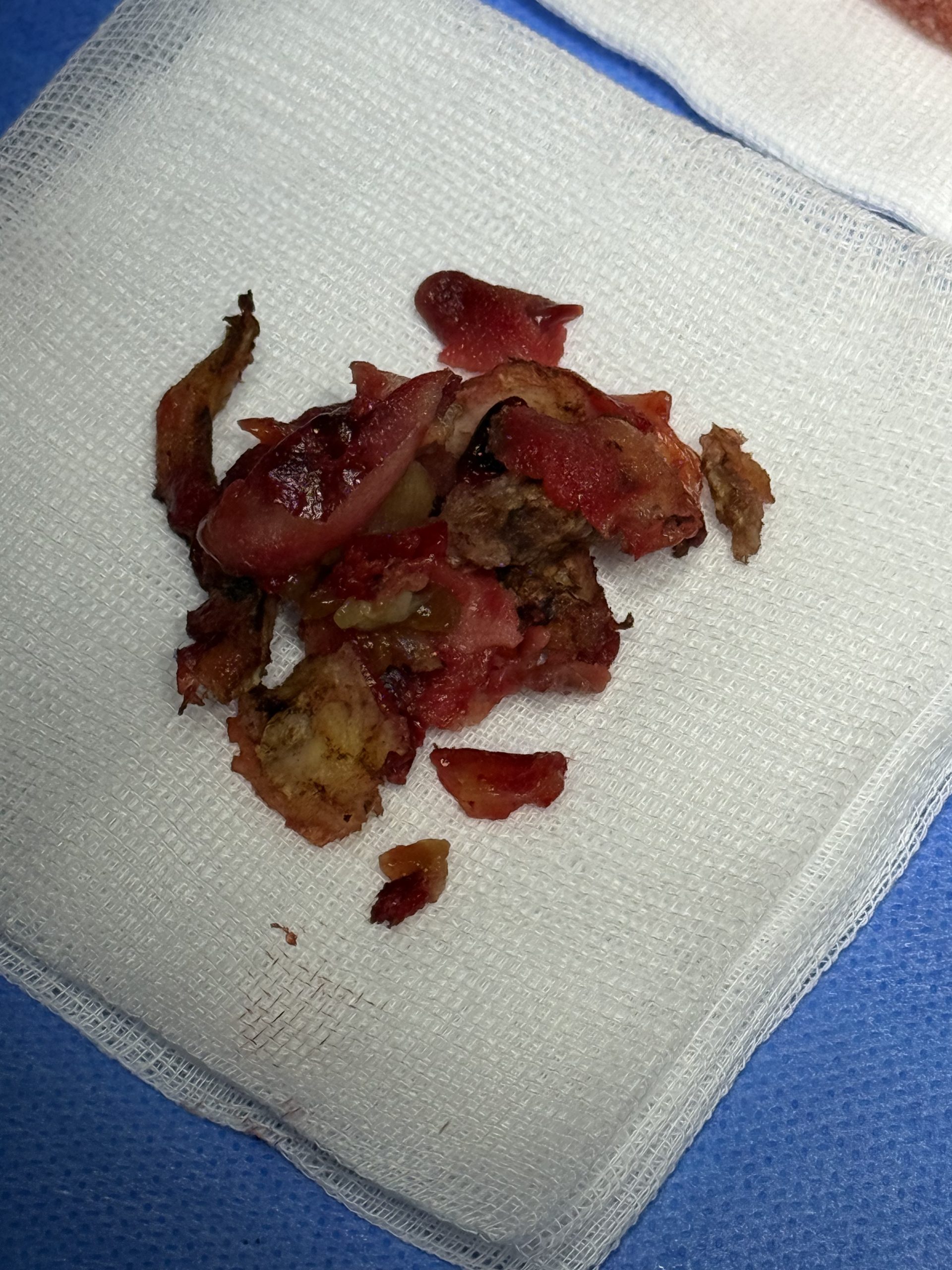
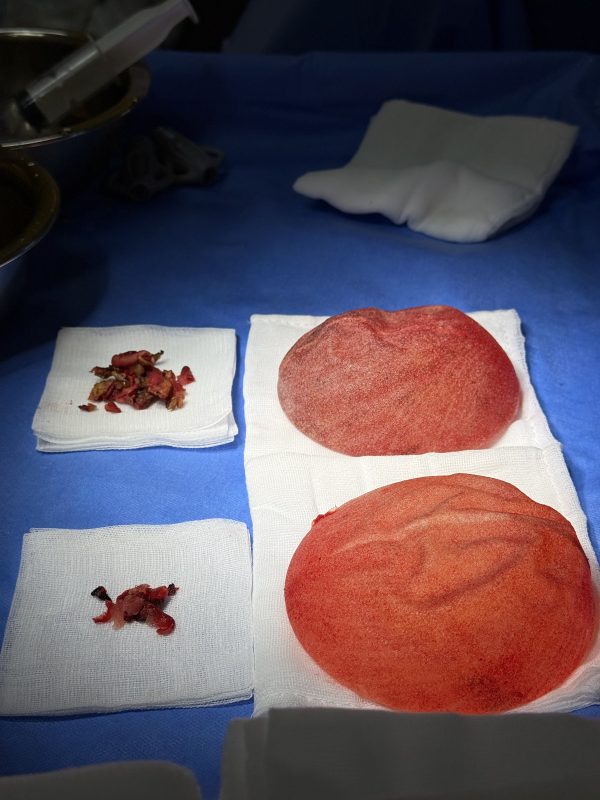
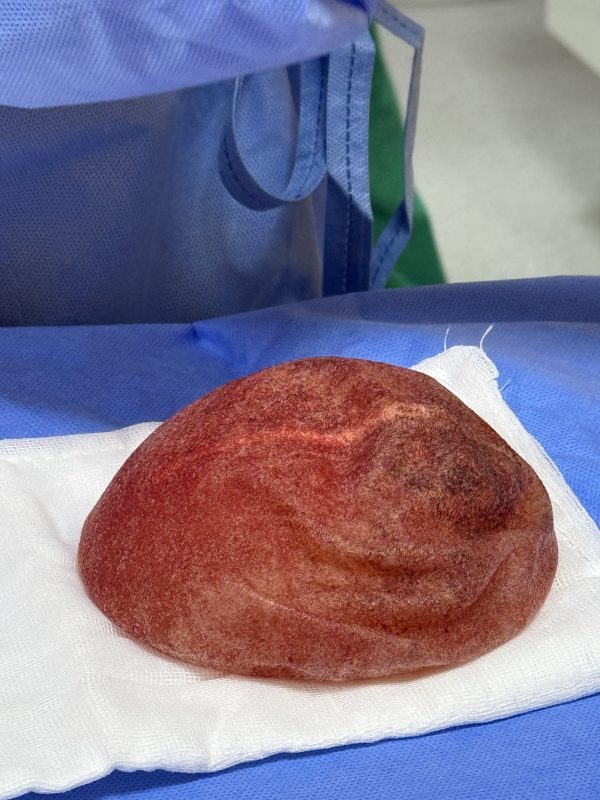
- Accessing the breast pocket. When cutting through the fatty tissue, a large amount of fibrotic tissue was found firmly adherent to the pocket. Upon opening the pocket, a 275cc Polytech textured implant was found, with a small amount of fluid inside. On the left side, old bleeding was noted on the pocket wall, with dark blood adhering to the tissue.
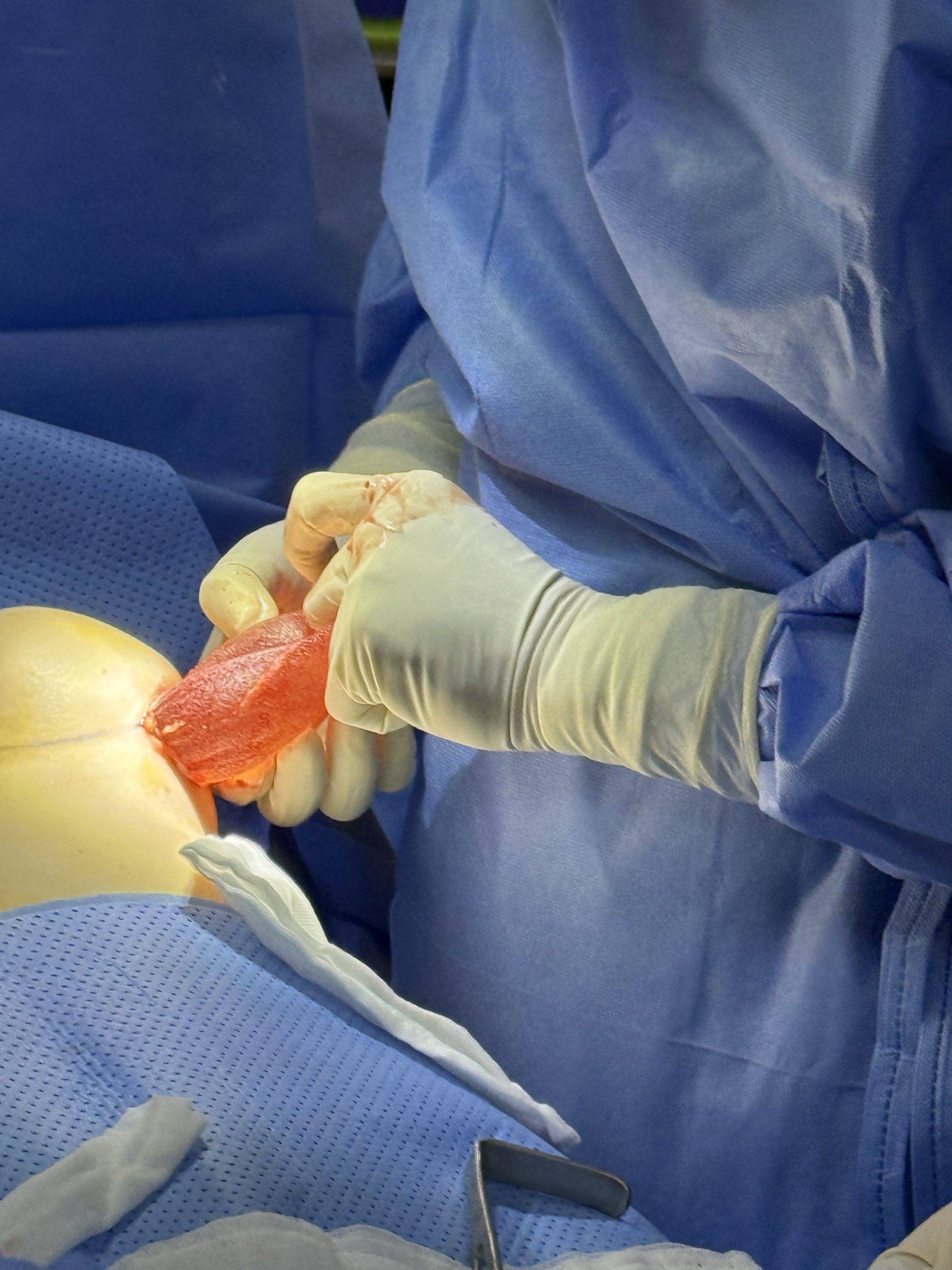
- Capsulectomy. Nearly the entire capsule on both sides was removed. Only the anterior portion of the capsule directly behind the nipple, where it was firmly adherent to the glandular tissue and the skin was limited, was left in place to avoid breast deformity.
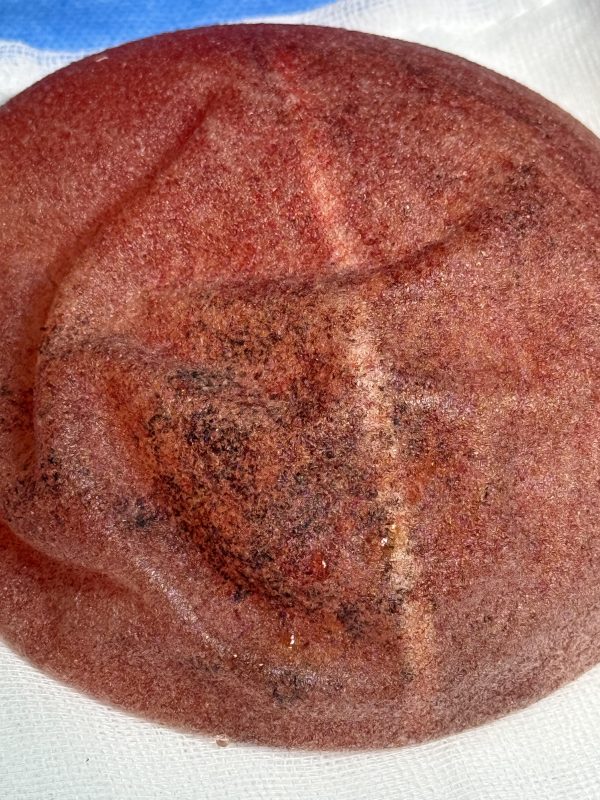
- Implant condition. Neither implant was ruptured, but the silicone gel had aged and turned yellow.
- Completion. Both breast pockets were thoroughly irrigated. Capsular tissue samples were collected and sent for histopathological examination to screen for the risk of related diseases.
No drains were placed, reducing postoperative discomfort. No oral pain medication was required thanks to the precise, minimally invasive dissection technique. Ms. N was discharged after 6 hours, fully alert and feeling relieved as her breasts had become soft again.
Why a small portion of capsule was deliberately left
Step 2 records that the capsule was removed nearly in full, with the exception of the portion lying directly behind the nipple. That decision reflects a trade-off that is made during the operation itself rather than beforehand.
Where a capsule is firmly adherent to glandular tissue and the overlying skin is limited, removing that last portion can compromise the blood supply to the nipple or leave a contour deformity. The judgement recorded here was to prioritise the shape and safety of the breast over completeness of removal in that one area. Decisions of this kind depend on what is found at the time of surgery and vary between patients.
Why capsule samples were sent for histopathology
Sending capsule tissue for histopathological examination is a screening step. One of the conditions it can help identify is breast implant-associated anaplastic large cell lymphoma, or BIA-ALCL. According to the FDA, this is “a T-cell lymphoma that can develop following breast implants”, and it is described as a type of non-Hodgkin’s lymphoma, that is, a cancer of the immune system rather than a cancer of the breast gland itself. The distinction matters because the two are sometimes confused in patient-facing material.
Sending samples does not imply that this condition was suspected in this patient. It is a check performed so that, if anything unexpected is present, it is identified rather than discarded with the removed tissue.
Capsulectomy, capsulotomy and en bloc — what the terms mean
Patients researching explantation encounter several terms that sound similar but describe different operations. Clarifying them makes consultation easier.
- Capsulotomy means cutting or releasing the capsule without removing it, in order to relieve tightness and give the pocket more room.
- Partial capsulectomy means removing part of the capsule, leaving portions in place where removal would risk damage to surrounding structures.
- Total capsulectomy means removing the capsule as completely as the findings allow. This is what was performed in the case described above, apart from the small anterior portion behind the nipple.
- En bloc capsulectomy describes removing the capsule together with the implant contained inside it, as a single unit.
Which of these is appropriate depends on the findings at examination and during surgery, on the thickness and adherence of the capsule, on the implant plane, and on the patient’s own goals. None of these terms describes a better operation in the abstract, and the wording used in an operative plan should be explained by the operating surgeon.
Questions worth asking before explant surgery
Patients preparing for a consultation may find it useful to have these written down:
- What grade was recorded on examination, and what was that assessment based on?
- Which plane are the implants thought to be in, and how does that affect the plan?
- Which of the operations described above is proposed, and what would change that plan during surgery?
- Will capsule tissue be sent for histopathological examination?
- Are drains expected, and what determines that decision?
- What is the plan if the implant is found to be ruptured?
- What is the follow-up schedule, and who should be contacted between visits?
Answers to these questions belong to the surgeon who will perform the operation and who has examined the patient, since each depends on individual findings.
What this single case does and does not show
A case report describes a sequence of events for one patient with one set of findings. It is useful because it records what was found and what was done, and because it gives patients considering a similar decision something concrete to discuss with their own surgeon.
What it does not do is establish an expected result. The absence of drains, the absence of oral pain medication and the same-day discharge described here relate to this patient, this set of intraoperative findings, and the dissection technique used. Another patient with a capsule of different thickness, a different implant plane, a ruptured implant or different underlying health may follow a different course.
Patients may find it useful to ask their own surgeon how findings of this kind are recorded, and what is typically observed in the surgeon’s own practice for cases similar to theirs.
What happens after implants are removed without replacement
Breast appearance after explantation without replacement depends on how much glandular tissue remains, the elasticity of the skin, how long the implants were in place and the volume that was removed. Some patients are satisfied with the result of removal alone, and others discuss further options at a later stage once tissues have settled.
According to the FDA, in its page Things to Consider Before Getting Breast Implants:
“Breast implants are not lifetime devices. The longer you have your implants, the more likely it will be for you to have them removed or replaced.”
— U.S. Food and Drug Administration
The same page advises patients to assume that additional surgeries may be needed, because implants are not lifetime devices and complications can occur. For a patient who has had implants in place for 11 years, as in this case, that framing is directly relevant to the decision being made.
For patients who keep their implants, according to the FDA a health care provider may recommend regular examinations using magnetic resonance imaging or ultrasound. On rupture specifically, the agency states that “Magnetic resonance imaging (MRI) is the most effective method for detecting silent rupture”, and that “An ultrasound is an acceptable alternative imaging for screening for rupture for asymptomatic patients”. The interval that applies to any individual patient is a matter for the treating surgeon.
Image placement — the written plan template, showing where the proposed operation, the anaesthesia method and the follow-up schedule are recorded, with personal details removed
When to arrange a review
Patients with breast implants may wish to arrange a review with their surgeon if they notice:
- One or both breasts becoming firmer than before, or changing in shape
- Pain or discomfort in the breast that is new or increasing
- A visible change in the position or contour of a breast
- Swelling of a breast, particularly if it develops over weeks rather than days
- A lump felt within the breast or in the armpit
- Redness, warmth or fever, which should be assessed promptly
Firmness that develops gradually over years is the pattern most often described in capsular contracture. Swelling that develops later after a long stable period is assessed differently and should be reviewed rather than observed at home.
Frequently asked questions
What is Grade IV capsular contracture? It is the most severe grade in the Baker grading system described by the FDA, in which the breast is hard and painful and its appearance is abnormal. The FDA states that Grades III and IV are considered severe and may require reoperation.
Does capsular contracture mean the implant has ruptured? No. They are separate findings and can occur independently. In the case described here the capsule was severely contracted while neither implant was ruptured, although the silicone gel had aged and changed colour.
Is total capsulectomy performed in every case? No. What is removed is decided at the time of surgery based on what is found, including how firmly the capsule is adherent and how much overlying skin and tissue is available. In this case nearly the entire capsule was removed, with a small portion behind the nipple deliberately left in place to avoid breast deformity.
Why was the tissue sent to a laboratory? Capsule samples were sent for histopathological examination as a screening step, including for conditions such as BIA-ALCL. This is a check, not an indication that a specific condition was suspected.
Will the breasts look the same as before the implants were placed? Appearance after removal depends on the remaining glandular tissue, skin elasticity, the volume removed and how long the implants were in place. This is one of the points to discuss in detail during consultation, before surgery is planned.
Can implants be removed and replaced in the same operation? That is a separate discussion, and the plan differs because the pocket must be prepared for a new implant rather than closed. The patient in this case chose removal without replacement.
How soon can normal activity resume? Recovery varies with the extent of the dissection, individual healing and the surgeon’s postoperative instructions. Any timeframe should come from the operating surgeon rather than from a published case description.
Conclusion
The surgery not only helped remove the breast implants and the capsule causing discomfort, but also restored a natural and comfortable feeling for Ms. N. This is also a reminder that for breast implants that have been in place for many years, regular monitoring and timely management of complications are extremely important.
The ultrasonic scalpel supports tissue cutting, coagulation and vessel sealing through high-frequency mechanical vibration. In this case that dissection technique was used to separate adherent capsule from surrounding tissue, and no drains were placed. Conventional electrosurgical devices provide coagulation and cutting, and drainage is more commonly used with them. How any device performs depends on the instrument tip design, the indication, the tissue, the energy settings and the instructions for use, so the account here describes this operation rather than a general comparison.
Patients considering explantation are encouraged to discuss their own findings, the grade recorded on examination and the options available with a surgeon holding an appropriate practising certificate, at a facility licensed for the procedure.
References
- Risks and Complications of Breast Implants — U.S. Food and Drug Administration
- Causes of early breast implant rupture — drbreastx.com
- Breast Implant Removal in Vietnam: Cost & Safety Guide — drbreastx.com
- Things to Consider Before Getting Breast Implants — U.S. Food and Drug Administration
Reviewed September 2026. This article describes a single clinical case together with general background information. It does not replace individual medical assessment, and outcomes for any individual patient depend on findings at examination and at the time of surgery.


