Capsular Contracture After Breast Augmentation
Capsular contracture is one of the complications that may occur after breast augmentation, causing concern for many women even when the initial surgery has proceeded smoothly. This condition develops when the body has an excessive reaction to the breast implant, forming a layer of fibrous tissue around it, which can cause the breast to become hard, deformed, or painful. In fact, capsular contracture is not always dangerous, but if it is not properly identified and monitored, it can directly affect the aesthetic appearance and sensation after breast augmentation. Therefore, together with Dr. Breast X, gaining a clear understanding of what capsular contracture is, its causes, and the early signs that require attention will help you be more proactive in caring for and protecting your long-term surgical results.
What is capsular contracture?
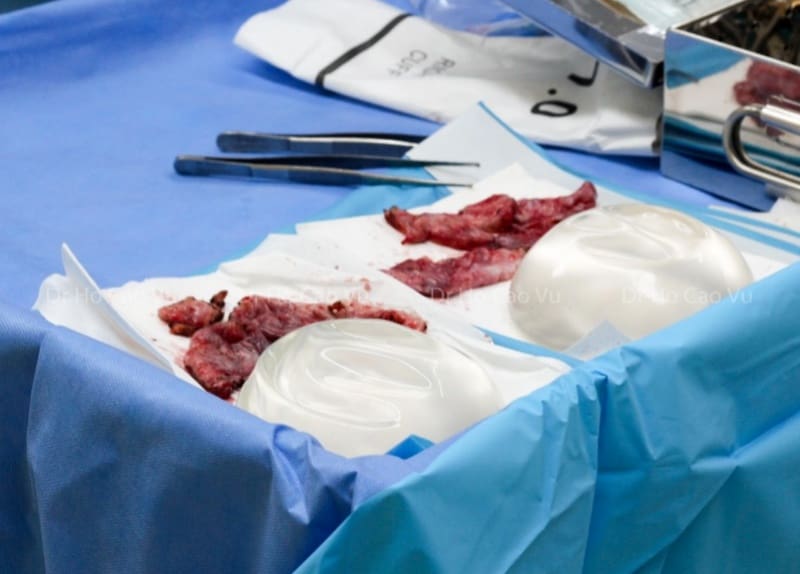
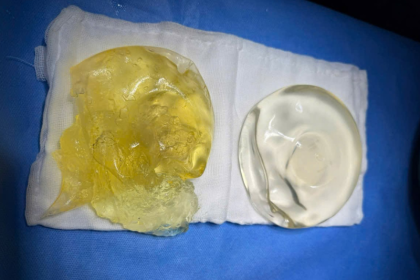
Capsular contracture, also known as capsular contracture after breast augmentation, is a condition in which fibrous tissues form a capsule surrounding the breast implant, known as the “POCKET”. In cases of capsular contracture, the pocket becomes thicker, with firm fibrous bands (due to fibrotic scar tissue forming around the breast implant), known as a fibrous capsule.
4 grades of capsular contracture after breast augmentation:
Capsular contracture after breast augmentation is common, but many women do not notice the clinical signs, leading over time to breast firmness and deformity, and in some cases, significant pain when moving the shoulder and chest area. Normally, capsular contracture occurs during the healing process. Approximately 75% of capsular contracture cases occur within two years after women receive breast implants.
Grade 1: The breasts remain soft and appear normal; however, mild firmness of the capsule may be felt on palpation when lying in the supine position.
Grade 2: The breasts appear normal, with no signs of swelling, pain, or deformity, but they feel firmer on palpation, especially when lying in the supine position.
Grade 3: The breasts become firm and show changes in shape due to contracture; they may become rounded, or the implants may be pulled upward or downward, causing deformity. Persistent dull pain from the contracture and breast deformity begin to appear.
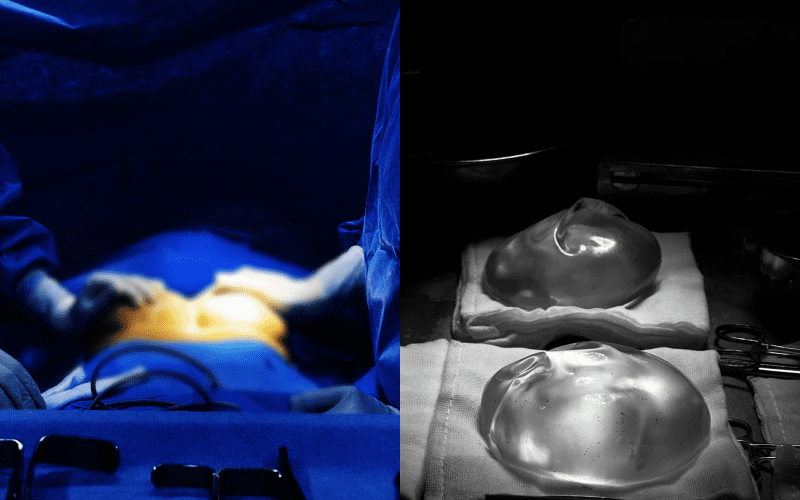
Grade 4: The breasts become completely distorted, displaced, and severely asymmetrical. The fibrous capsule is markedly firm, with severe contracture and persistent pain, causing discomfort in the chest area.
Signs of grade 1 and 2 capsular contracture are difficult to recognize, while grade 3 and 4 capsular contracture can be identified clinically by breast firmness in both standing and lying positions, deformity, and retraction in different areas.
Causes of capsular contracture:
Creating an implant pocket that is too narrow relative to the implant size:
All breast augmentation procedures are performed under general anesthesia, and muscle relaxants are used to facilitate the surgical procedure. The implant is typically placed beneath the muscle, between two tissue planes (known as the dual plane); during surgery, the muscle is completely relaxed, so if the pocket is created to fit the breast implant size exactly, after recovery from anesthesia the muscle contracts and the pocket becomes narrower relative to the implant size when the surgeon lacks sufficient experience to assess.
Use of blunt dissection technique in breast augmentation:
Breast augmentation using blunt dissection often does not precisely release the muscle at the intended locations around the implant. The muscle may be torn or injured by surgical instruments and is only temporarily stretched. During surgery, significant bleeding and fluid accumulation may not be completely absorbed by the body, affecting the process of implant pocket formation. This creates firm fibrous bands, causing the position of the implant pocket to deviate from the original plan.
In the lower areas of the pocket, blood may accumulate and form a hematoma and blood clots. The organization process may not result in complete absorption, leading to the formation of fibrotic areas and fibrous bands that cause localized contracture as well as traction on adjacent areas. As a result, the implant pocket becomes narrower and places pressure on the implant.
Pressure is always present within the implant pocket, and long-standing accumulated blood and fluid can create streak-like marks under the effect of mechanical forces. Over time, these streaks develop into contracting fibrous bands, causing folds. In addition, the use of an electrosurgical device without temperature control may lead to prolonged fibrotic tissue formation during the healing process, resulting in contracture.
How can capsular contracture be detected?
During the period from 3 to 6 months, grade 1 and grade 2 capsular contracture is often very difficult to detect. Women should pay attention to checking the breasts by palpation, particularly at the lower pole, medial side, and lateral side, both while standing and lying down. If firmness is felt at any specific points, this should be carefully noted.
After 6 months, when the pocket has stabilized, women can self-check breast symmetry in areas such as the upper pole, lower pole, medial side, lateral side, as well as breast softness over time. Careful examination is recommended to detect any abnormalities and monitor the development of capsular contracture, if present.
Treatment solution for capsular contracture – Breast implant removal and capsulectomy procedure
Step 1: Undergo a specialized breast MRI to assess the condition of the mammary glands, breast implants, pocket, and diseases related to breast implants.
Step 2: Screen for potential cancer risks and implant-related lesions.
Step 3: Perform a clinical examination to develop a surgical plan for breast implant removal and management of associated complications such as capsular contracture, implant rupture, implant displacement, symmastia…. And determine whether new implants should be placed?
Step 4: Preoperative tests for breast implant removal need to be performed at a specialized general hospital. Routine breast implant removal procedures take only about 30-45 minutes, but in difficult breast implant removal cases involving capsulectomy, reconstruction of the implant pocket, implant rupture… the duration of anesthesia will be longer.
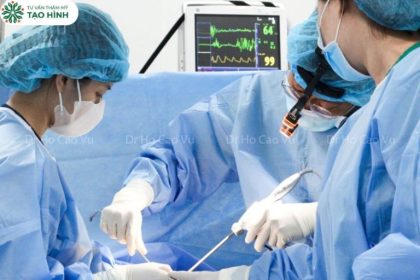
Step 5: The surgeon makes an incision of approximately 3 cm – 3.5 cm at the periareolar or inframammary fold incision site (in cases without abnormalities) and uses an Ultrasonic surgical scalpel to dissect through the tissue and remove the old breast implant. Check the implant brand, dimensions, implant size, and projection.
Step 6: Irrigation of the implant pocket; in cases of breast implant rupture or abnormal fluid, the surgical team must irrigate the implant pocket, perform fluid culture and antibiotic susceptibility testing – when the fluid appears cloudy.
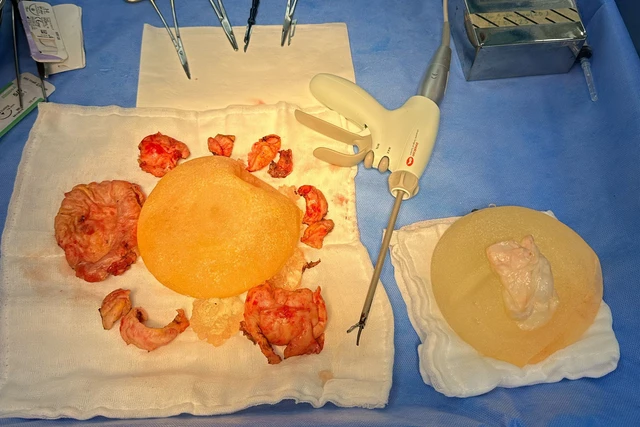
Step 7: Use an ultrasonic surgical scalpel to perform capsulectomy and collect fibrotic tissue for histopathological examination to determine whether the tissue is benign or malignant. Prepare for frozen section biopsy if malignancy is suspected.
Step 8: Reconstruct the implant pocket (in cases where a new implant is indicated), revise the pocket to improve conditions such as symmastia, implant bottoming out, an excessively wide pocket, or an excessively narrow pocket.
Step 9: Wear a compression garment. In routine cases of implant removal and replacement, drains are usually not required, and the patient can be discharged on the same day. In cases of implant removal with abnormalities such as capsulectomy or significant internal tissue trauma, drainage is required and patients need to stay in the hospital for one night before discharge.
Four years after breast augmentation, the patient developed capsular contracture in both breasts, with one side at grade 2-3 and the other at grade 3-4; what solution can be used to correct this condition?
Consultation and examination of a patient with capsular contracture 4 years after breast augmentation
View details of the consultation and examination of a patient with bilateral capsular contracture 4 years after breast augmentation
During her examination at Dr. Breast X with Dr Ho Cao Vu, the patient shared with Dr Vu that when she previously underwent breast augmentation at another surgical facility, more than 2 months after surgery she regularly massaged her breasts following the advice of a consultant at the previous breast augmentation facility; at that time, she noticed that one breast was soft while the other was firmer. However, 1 year after surgery, both breasts began to show signs of firmness.
Through clinical examination, the left breast was assessed as being very firm, and the doctor advised the patient to undergo a specialized breast MRI first; based on the MRI results, the doctor would be able to determine the condition of her old breast implants, assess the degree of capsular contracture inside the breasts, and additionally evaluate whether there were any other breast lesions, implant-related conditions, and mammary gland–related conditions.
After diagnosis, the doctor will proceed with surgery to explant the patient’s previous implants, then inspect the old implant pockets; any areas with capsular contracture that require excision will be excised, while areas that do not require treatment will not be intervened with, after which the doctor will proceed to reconstruct the new implant pockets. When discussing the new breast implants that the patient wishes to have placed, the doctor advises using breast implants that are smaller than the old implants and not using implants that are larger in size. Regarding the appropriate implant size, Dr Vu states that the selection will be considered depending on the condition and extent of capsular contracture inside the patient’s breasts.
For the right breast specifically: the doctor indicates that he would perform explantation of the previous implant + inspect the pocket, excise the contracted capsular tissue + reconstruct the pocket, the lower pole will be surgically corrected with sutures + a new breast implant will be placed.
The patient has a thin body frame, small arms and shoulders, and small clavicles; the doctor advises using breast implants with a moderate-high profile and not choosing a high-profile implant, as this would make the breasts project too prominently and appear less aesthetically pleasing. Because she prefers a natural breast shape, the appropriate breast implant for her would be the Mentor Classic implant.
When further asking Dr. Vu about the recovery period following breast implant explantation and replacement with new implants, the patient was concerned about how long it would take before she could return to work and normal daily activities. Dr Vu explained that this depends on the condition of the capsular contracture she is experiencing; currently, the left breast shows signs of relatively severe capsular contracture, and if a large amount of contracted capsular tissue inside the breast pocket needs to be excised, a drain must be placed, in which case she will need approximately 5-7 days of recovery before her condition stabilizes and she can return to work normally. However, if the capsular contracture is located on the posterior aspect and only limited dissection is required, everything may stabilize after 3 days.
Breast augmentation using a new-generation ultrasonic surgical scalpel – minimizing capsular contracture risk:
With the point dissection technique using the new-generation Ultrasonic surgical scalpel, the surgeon can easily dissect tissue layers and create the implant pocket, which is particularly advantageous for the plane-switching technique when creating the pocket in this area.
The Ultrasonic surgical scalpel can simultaneously perform coagulation, sealing, and cutting functions, providing many advantages in breast augmentation such as: effective bleeding control, minimizing tissue trauma and fluid exudation to the greatest extent possible with high precision during implant pocket creation, helping wounds heal faster after surgery and reducing complications.
Contact for plastic and reconstructive surgery consultation
* Phone number: 0911413443
* Doctor’s Facebook: Bác sĩ Hồ Cao Vũ
* Address: No. 2 My Toan 2, Tan Phong, Tan Hung Ward, Ho Chi Minh City, Vietnam
* View actual videos at: HERE
* View actual surgical case images at: Images