Silent Breast Implant Rupture: What Women Need to Know
Dr. Ho Cao Vu — Plastic, Reconstructive and Aesthetic Surgeon
Dr. Ho Cao Vu holds Practising Certificate No. 028475/BYT-CCHN, issued by the Ministry of Health on 28 June 2018. He has more than 15 years of experience in Plastic, Reconstructive and Aesthetic Surgery and more than 20 years of experience in General Surgery. Dr. Ho Cao Vu is a pioneer in Vietnam in applying the Harmonic Ultrasonic Scalpel to breast augmentation surgery.
A silicone gel-filled breast implant can rupture without causing a change that a woman can see or feel. In these cases, determining whether the implant remains intact usually requires imaging rather than symptoms or self-examination alone. This guide from Dr. Breast X explains silent breast implant rupture, the difference between intracapsular and extracapsular rupture, how implant age relates to risk, when imaging may be recommended and which options can be discussed if a rupture is identified. It is designed to help patients understand the subject and prepare useful questions before consultation.
What does a silent breast implant rupture mean?
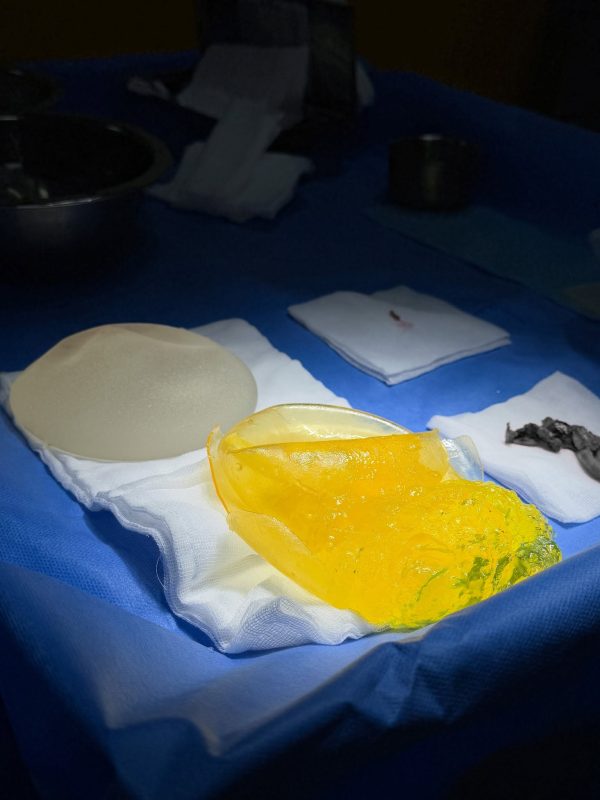
A breast implant rupture occurs when a tear or opening develops in the implant’s outer shell. It is described as silent when there is no obvious change in the breast’s size, shape or feel. According to the American Society of Plastic Surgeons, “some women with ruptured implants have no symptoms”, which is why a rupture may go unnoticed for a long time and why routine imaging is used to check for it.
This is particularly relevant to silicone gel-filled implants. Many contemporary silicone implants contain cohesive gel, which tends to hold together after the shell has failed, allowing the breast to look and feel much the same. Saline-filled implants behave differently: when the shell ruptures, the saline is absorbed by the body and the implant partially or completely deflates, usually causing a visible loss of breast volume.
How do intracapsular and extracapsular rupture differ?
After a breast implant is placed, the body naturally forms a layer of scar tissue around it, known as the fibrous capsule. The location of the silicone gel after the implant shell fails determines whether the rupture is classified as intracapsular or extracapsular.
With an intracapsular rupture, the silicone gel escapes through the implant shell but remains contained within the fibrous capsule. This is commonly associated with silent rupture because the gel has not passed beyond the capsule. With an extracapsular rupture, silicone gel extends beyond the fibrous capsule into the surrounding tissue. As the FDA explains, imaging is needed to identify these rupture patterns because physical examination alone may not reliably establish whether or where the gel has escaped.
How does implant age relate to rupture risk?
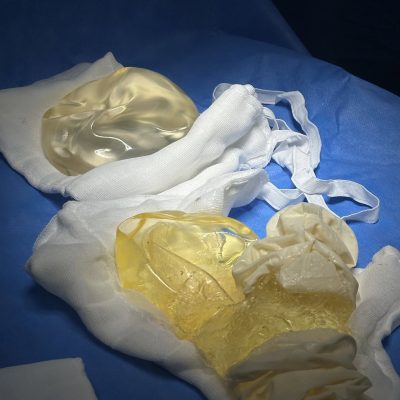
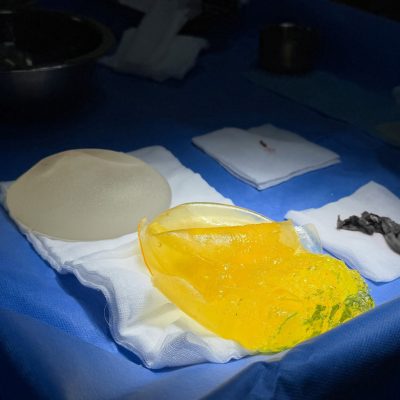
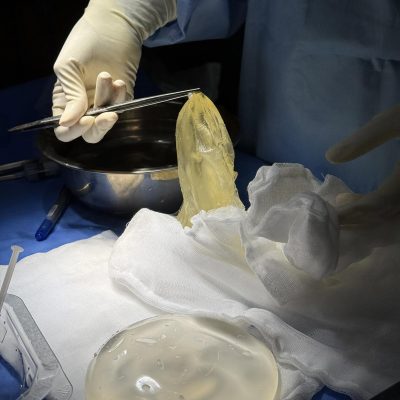
The likelihood of silicone gel-filled implant rupture generally increases the longer the implant remains in place. The FDA therefore advises that breast implants should not be regarded as lifetime devices. This does not mean that every implant has a fixed expiry date or that all patients need replacement surgery after the same number of years.
A normal ultrasound or MRI result also needs to be understood in context. It describes the condition of the implant at the time of the examination but cannot guarantee that the implant will remain intact indefinitely. This is why surveillance is repeated at recommended intervals rather than treated as a one-time check.
What imaging is recommended to check for rupture?
Because silent rupture may not be detected through symptoms, self-examination or clinical examination alone, imaging is recommended for surveillance of silicone gel-filled implants in patients without symptoms. According to the American Society of Plastic Surgeons (ASPS), the FDA recommends ultrasound or MRI beginning five to six years after silicone implant placement and every two to three years thereafter.
This schedule replaces the earlier recommendation for MRI three years after implantation and every two years thereafter. Ultrasound is now an accepted option for routine screening in asymptomatic patients. The FDA recommends MRI when symptoms are present or an ultrasound result is uncertain. The appropriate imaging pathway may also vary between countries and should be discussed with the treating clinician.
The professional who performs the scan and the doctor who interprets it may have different roles. A radiographer or imaging technologist conducts the examination, while a radiologist interprets the images and issues the report. When arranging breast implant rupture screening, patients may wish to confirm that the study will be interpreted by a radiologist experienced in breast implant imaging.
What are the options if a rupture is found?
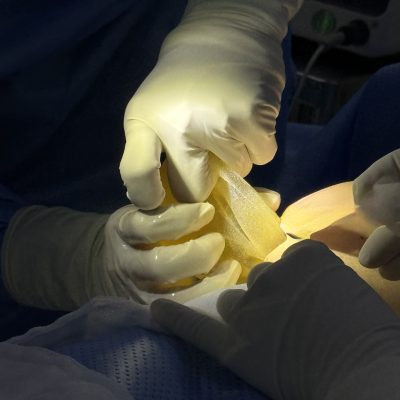
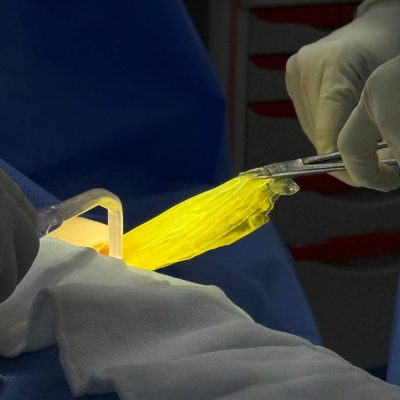

If imaging indicates a rupture, the next step is an individual discussion with the surgical team rather than an automatic operation based on a single rule. Planning takes into account the imaging findings, symptoms, location and extent of the silicone gel, condition of the capsule, previous surgery and the patient’s goals. Some features of the capsule may only be fully confirmed during surgery.
Several procedures may be discussed, and each has a distinct meaning:
- Implant removal (explantation): removal of the implant without inserting a new one.
- Implant replacement (implant exchange): removal of the existing implant followed by placement of a new implant.
- Partial capsulectomy: removal of part of the fibrous capsule, leaving some capsule in place.
- Total capsulectomy: removal of the entire capsule, which may be considered when an implant has ruptured.
- Total intact capsulectomy: removal of the entire capsule as a single intact unit, without opening it during the procedure. This may be feasible in selected cases.
One term requires particular care. According to the Breast Surgery Collaborative Community consensus statement, en bloc capsulectomy involves removing the implant capsule with a margin of surrounding uninvolved tissue. It is an oncological procedure reserved for suspected or confirmed breast implant-associated cancer following appropriate medical evaluation, not a routine treatment for an uncomplicated silicone implant rupture. A rupture does not automatically require removal of the entire capsule, and the extent of surgery should be determined for each patient.
What questions can you prepare for a consultation?
A focused set of questions can make the consultation more useful. Patients may wish to ask which implant is in place and when it was inserted, what the imaging shows, and whether the findings indicate an intracapsular or extracapsular rupture. It is also reasonable to discuss which procedures are being considered, why a particular approach is recommended, what each option involves and what to expect from recovery and follow-up. Decisions about surgery should be made with the surgical team after an individual assessment.
Recovery and when to seek help
Recovery after surgery for a ruptured implant varies with the patient and the procedure performed. Any expected timeline should therefore be based on the individual surgical plan rather than a general schedule. Early recovery usually centres on wound healing and a gradual return to activity in accordance with the surgical team’s instructions.
Whatever the expected recovery timeline, patients should contact the surgical team if the breast develops increasing swelling, redness or pain, or if fever or discharge from the incision occurs. These changes may require timely clinical assessment rather than waiting for the next scheduled appointment.
Frequently asked questions
Can a breast implant rupture without any symptoms?
Yes. A silicone gel-filled implant may rupture while the breast continues to look and feel much the same, particularly when the gel remains within the fibrous capsule. This is why imaging is used to screen for silent rupture rather than relying on symptoms alone.
What is the difference between an ultrasound and an MRI for checking implants?
Both ultrasound and MRI are included in current recommendations for routine surveillance of silicone gel-filled implants in patients without symptoms. If symptoms are present or ultrasound findings are uncertain, MRI may be recommended for further evaluation. The appropriate examination depends on the clinical situation and local imaging pathway.
Does a ruptured implant always need to be removed immediately?
Not every confirmed rupture requires emergency surgery. The timing and extent of treatment depend on the imaging findings, symptoms, location of the silicone gel, condition of the capsule and the patient’s goals. These factors should be assessed with the treating surgeon before a plan is agreed.
Contact
Contact for plastic and reconstructive surgery consultation
Phone number: 0911413443
Doctor’s Facebook: Dr Ho Cao Vu
Updated 24 August 2026.
References
- U.S. Food and Drug Administration. Risks and Complications of Breast Implants. FDA.
- American Society of Plastic Surgeons. Breast Implant Safety. ASPS.
- Breast Surgery Collaborative Community. Consensus Statement on Breast Implant Capsulectomy Definitions and Management. American Society of Plastic Surgeons; 2024.
This article provides general medical information and does not replace an individual consultation, examination or treatment plan.