
Capsular Contracture Removal: Capsulectomy vs. Capsulotomy and What the Surgery Involves
Dr. Ho Cao Vu — Plastic, Reconstructive and Aesthetic Surgeon
Dr. Ho Cao Vu holds Practising Certificate No. 028475/BYT-CCHN, issued by the Ministry of Health on 28 June 2018. He is a specialist in general surgery and plastic and reconstructive surgery, with more than 15 years of experience in aesthetic plastic surgery and more than 20 years of experience in general surgery for the treatment of benign diseases, breast cancer, and abdominal wall and intra-abdominal conditions at Cho Ray Hospital. In 2010, he received training in breast reconstruction after cancer at MD Anderson Cancer Center in Houston, Texas, under the direct guidance of Professor David Chang. He currently works at the Department of Surgery of Nam Sai Gon International General Hospital. In 2023, his “Harmo-5K” trademark was granted a Trademark Registration Certificate by the Intellectual Property Office of Vietnam. By 2025, Dr. Ho Cao Vu had performed more than 1,000 breast implant explantation cases and 3,000 plastic and reconstructive surgeries using the Ultrasonic Surgical Scalpel.
Updated September 2026 — reviewed against the U.S. Food and Drug Administration’s patient information on the risks and complications of breast implants and the American Society of Plastic Surgeons’ patient resources on breast implant removal.
Women searching for “capsular contracture removal” have usually already been told they have it. What they want to know next is more specific: what the operation actually removes, whether the whole capsule has to come out, whether the implant can be kept or replaced, and what the difference is between the two words surgeons keep using — capsulectomy and capsulotomy.
This article answers those questions in order. It is written for patients considering treatment, including international patients weighing surgery in Vietnam, and it describes the approach Dr. Ho Cao Vu uses at Dr. Breast X where that is relevant. It does not replace an examination; the right procedure depends on findings that only assessment and imaging can establish.
Quick answer: Capsular contracture is the hardening of the scar tissue capsule that forms around every breast implant. The FDA grades it from I (soft, natural) to IV (hard, painful, abnormal), and grades III and IV may require reoperation. Two surgical approaches exist. A capsulotomy releases the capsule by cutting into it but leaves it in place; a capsulectomy removes part or all of the capsule. Removing the capsule is generally preferred for severe or recurrent contracture and whenever the capsule itself is abnormal, while a release alone may be considered in selected milder cases. A non-surgical “closed capsulotomy”, where the breast is squeezed from outside to break the capsule, is not recommended by the FDA because it can rupture the implant.
Capsulectomy in Ho Chi Minh City
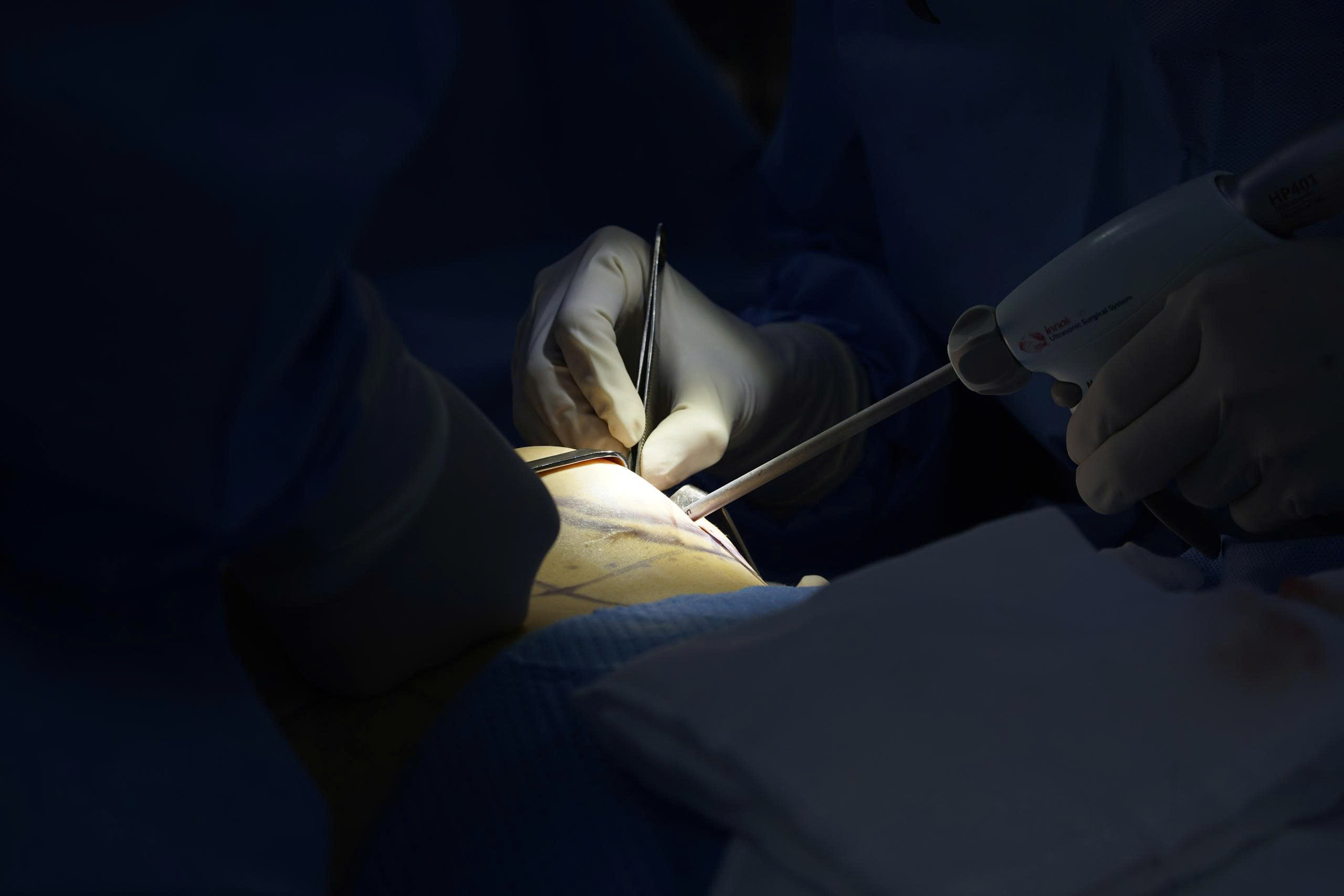
In Ho Chi Minh City, MD, MSc. Ho Cao Vu performs capsulectomy for capsular contracture at the Department of Surgery, Nam Sai Gon International General Hospital. Whether the capsule is removed partially, totally or intact, and whether the implant is removed, kept or exchanged, is decided before surgery from the history, a clinical examination and imaging. Dissection is done with an ultrasonic surgical scalpel, which divides and coagulates tissue in the same pass; by 2025 Dr. Ho Cao Vu had performed more than 1,000 breast implant explantation cases. Costs and the travel process are covered in our breast implant removal in Vietnam guide.
What capsular contracture is, and why the capsule matters
After any breast implant is placed, the body forms a thin layer of scar tissue around it. This is the capsule, and it is expected. In most patients it stays soft and pliable, and the breast feels natural. Capsular contracture is what happens when that capsule thickens and tightens around the implant, squeezing it into a firmer, rounder and sometimes higher position.
The FDA describes capsular contracture simply as “the hardening of the breast around the implant” and uses the four-grade Baker scale to describe how severe it is:
| Grade | FDA description |
|---|---|
| I | Breast is normally soft and looks natural |
| II | Breast is a little firm but looks normal |
| III | Breast is firm and looks abnormal |
| IV | Breast is hard, painful, and looks abnormal |
According to the FDA, “grades III and IV capsular contracture are considered severe and may require reoperation.” Grades I and II are usually observed rather than operated on. The causes and early signs are covered in more detail in the article on capsular contracture after breast augmentation.
The reason the capsule matters so much in planning surgery is that the capsule is where the problem lives. Simply taking out the implant and putting in a new one, while leaving a thickened, inflamed capsule behind, tends to leave the cause in place. That is the starting point for the capsulectomy versus capsulotomy question.
Capsulotomy: releasing the capsule
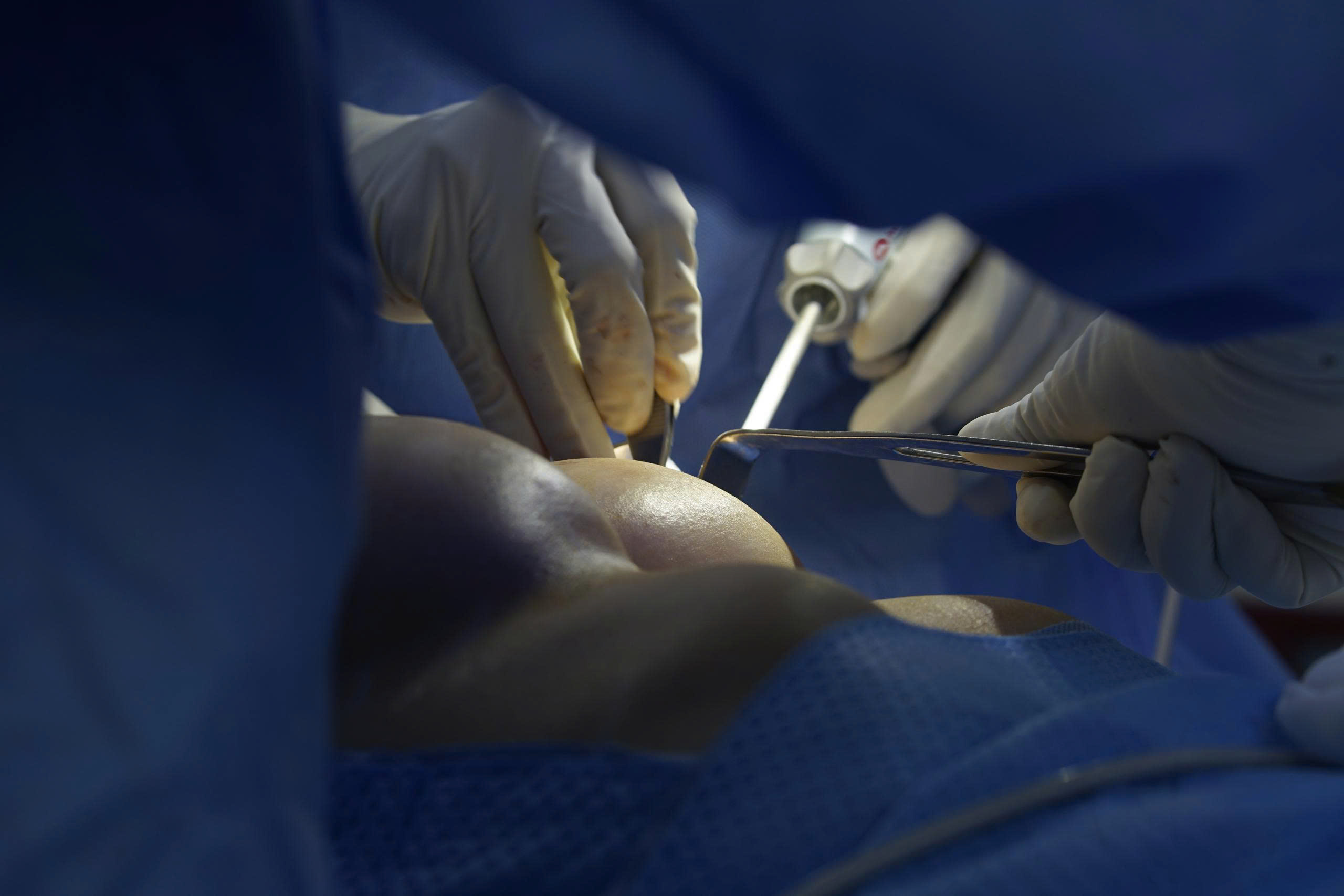
A capsulotomy is a procedure in which the surgeon cuts into the capsule to release the tightness, without removing the capsule tissue. It can be done in two ways, and they are very different.
Open capsulotomy is performed surgically. Through an incision, the surgeon makes cuts in the capsule so that it can expand and stop squeezing the implant. The implant may be kept or exchanged at the same time. The capsule stays in the body.
Closed capsulotomy is not a surgical procedure at all. It means squeezing the breast forcefully from the outside to break the capsule by pressure. The FDA specifically warns against this, describing it as a technique “involving manually squeezing the breast” that is “known to cause rupture and deflation” of the implant. Dr. Ho Cao Vu does not perform closed capsulotomy, and patients who are offered it elsewhere may wish to ask why the FDA advises against it.
The appeal of an open capsulotomy is that it is a smaller operation than removing the capsule. Its limitation is that the capsule that contracted once is still there, and in a proportion of patients it contracts again. For that reason it is generally reserved for milder cases where the capsule is thin and otherwise normal, or for patients in whom a more extensive operation is not appropriate.
Capsulectomy: removing the capsule
A capsulectomy removes the capsule rather than simply releasing it. It is the operation most patients searching for “capsular contracture removal” are actually asking about. There are three commonly described extents.
Partial capsulectomy removes the thickened or abnormal portion of the capsule and leaves the rest, usually the thin part along the chest wall. It is sometimes chosen when the capsule is stuck firmly to the ribs or to important structures, where removing every fragment would add risk without adding benefit.
Total capsulectomy removes the whole capsule. The surgeon opens the capsule, takes out the implant, and then dissects the entire capsule free from the surrounding tissue and removes it. This is the approach generally preferred when contracture is severe, when it has recurred after a previous operation, or when the capsule looks abnormal at surgery.
En bloc capsulectomy removes the capsule and the implant together as one sealed unit, without opening the capsule first. It is technically the most demanding and is discussed most often in the context of ruptured silicone implants, where keeping the capsule sealed may help contain gel, and in patients concerned about capsule-related disease. It is not feasible in every case, particularly where the capsule is thin and adherent to the chest wall, and surgeons may need to convert to a total capsulectomy during the operation.
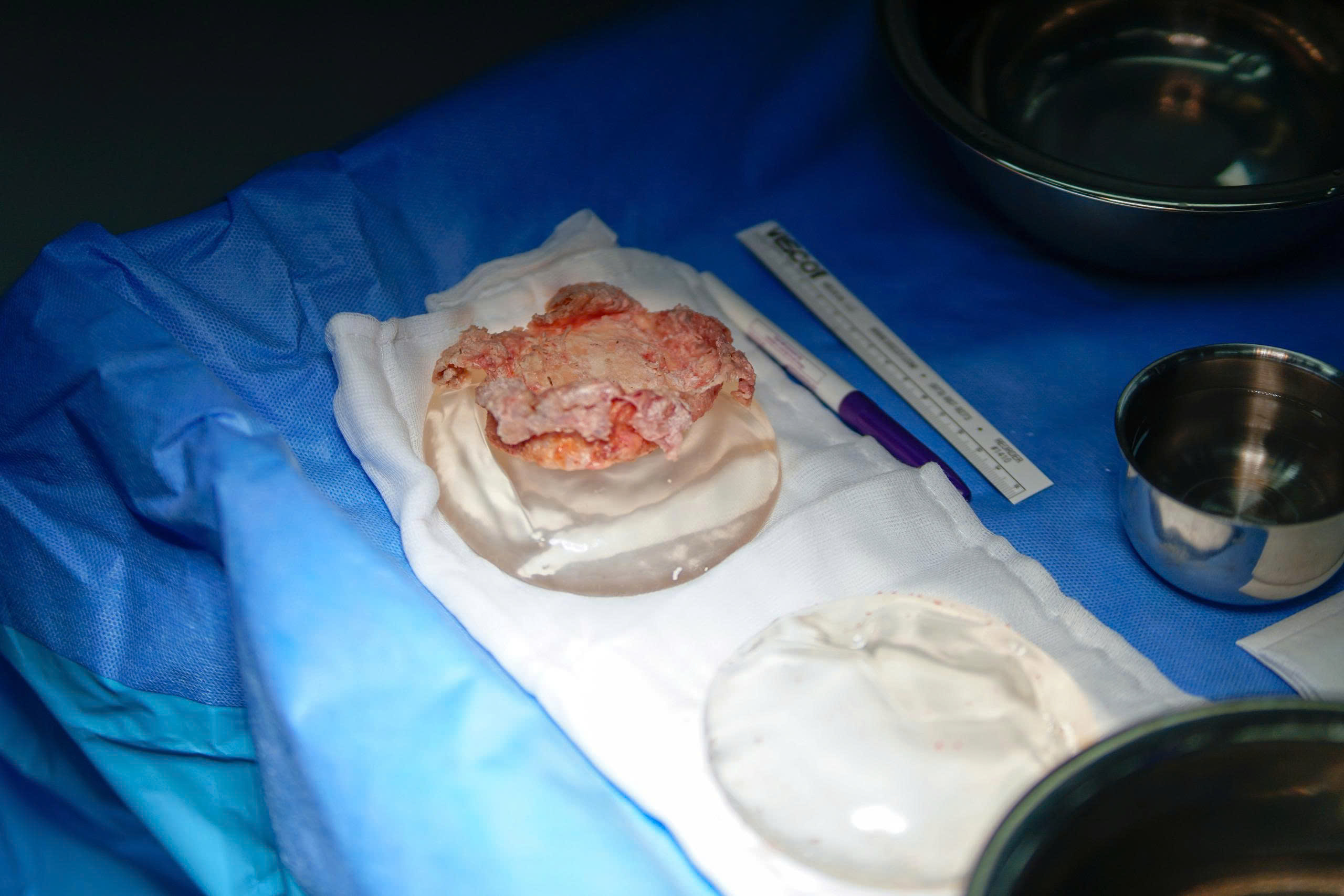
Dr. Ho Cao Vu’s general approach is to remove the capsule in patients with grade III or IV contracture, and to decide between total and en bloc removal according to the state of the implant and the capsule seen on imaging and at surgery. In his experience, what is found inside the capsule at explantation — mucus-like fluid, thickened or calcified tissue, inflamed lining, or gel from a ruptured implant — often explains why the breast became hard, and removing that tissue is part of treating the problem rather than only its symptom. A case of this kind is described in removal of textured breast implants after 11 years with grade IV capsular contracture.
How the two approaches compare
| Open capsulotomy | Capsulectomy (partial / total / en bloc) | |
|---|---|---|
| What is done to the capsule | Cut to release; left in place | Removed, in part or entirely |
| Typical role | Selected milder cases; thin, otherwise normal capsule | Grade III–IV, recurrent contracture, abnormal capsule, ruptured implant |
| Extent of surgery | Smaller | Larger; longer operating time |
| Tissue for examination | None removed | Capsule can be sent for pathology |
| Recurrence consideration | Capsule remains and can contract again | Contracted tissue is removed; a new capsule forms around any new implant |
Neither approach rules out recurrence, because a new capsule forms around any implant that is placed. What removal changes is that the tissue which already contracted is no longer there, and any factors found inside the capsule can be addressed.
What happens during a capsulectomy
Patients often find it helpful to know the sequence of the operation. The steps below describe a total capsulectomy with implant removal as Dr. Ho Cao Vu performs it; details vary with the individual case.
Step 1 — Assessment and imaging. Before surgery, the breast is examined and imaged, usually with ultrasound and in some cases MRI, to assess the capsule thickness, the state of the implant shell, and whether there is free gel or fluid. This is what determines the planned extent of removal. The article on breast implant removal and explant surgery covers the assessment stage in more detail.
Step 2 — Anaesthesia. The procedure is performed under general anaesthesia, at Dr. Breast X using laryngeal mask airway anaesthesia, in a fully equipped general hospital setting.
Step 3 — Incision. The existing scar is used where possible, most often in the inframammary fold, so that no new scar is created.
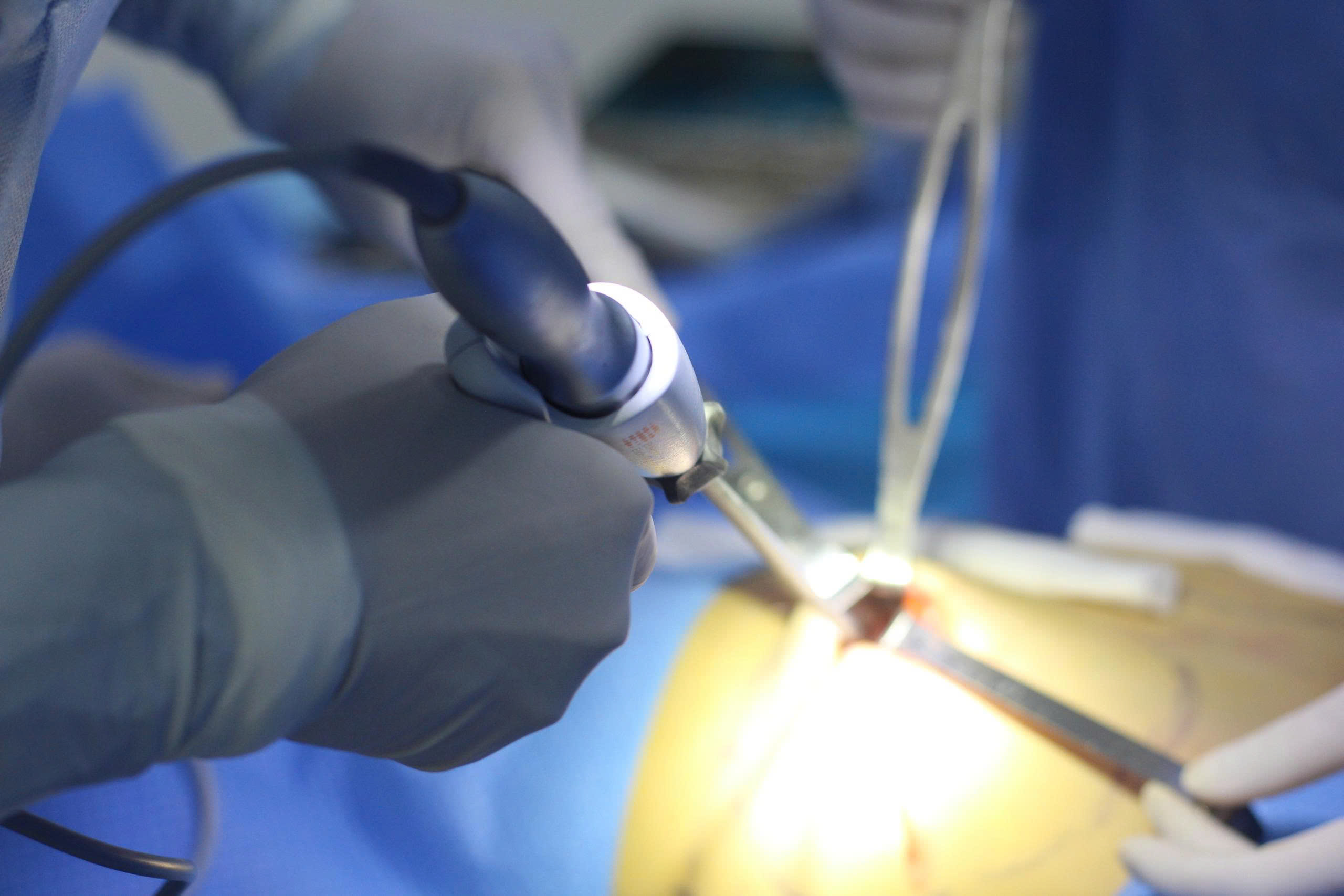
Step 4 — Dissection to the capsule. The surgeon dissects down to the outer surface of the capsule. Dr. Ho Cao Vu uses the Ultrasonic Surgical Scalpel for this dissection, which cuts and seals small vessels in the same motion.
Step 5 — Removal. Depending on the plan, the capsule is either opened and the implant removed followed by removal of the capsule (total capsulectomy), or the capsule and implant are freed and removed together as one unit (en bloc). The removed tissue is inspected and can be sent for pathological examination.
Step 6 — Assessment of the pocket. With the capsule out, the surgeon assesses the pocket: its size, whether it is too wide or too narrow for any new implant, the condition of the chest wall, and any remaining abnormal tissue.
Step 7 — Replacement or closure. If a new implant is planned, the pocket is adjusted and a new implant is placed, often in a different plane from the original. If the patient has chosen not to replace, the pocket is closed, with or without a lift depending on the amount of skin.
Step 8 — Recovery and follow-up. In uncomplicated cases at Dr. Breast X, patients are typically discharged within 4 to 6 hours under laryngeal mask airway anaesthesia, with follow-up to check healing and, later, to confirm the result with imaging.
Can the implant be kept or replaced?
This is one of the most common questions, and the answer depends on what the surgery is for.
If the contracture is severe and the implant is intact, a new implant can usually be placed at the same operation after the capsule has been removed and the pocket assessed. Surgeons often place the new implant in a different plane, for example moving from above the muscle to a partial subpectoral position, because changing the environment around the implant is one of the measures associated with lower recurrence.
If the implant has ruptured, it is removed with the capsule and the pocket is cleaned before any decision about replacement. If the patient prefers not to have implants again, the pocket is closed and, where there is excess skin, a lift can be combined. Patients considering this option can read about breast implant removal in older patients, which discusses removal without replacement.
Keeping the same implant after a capsulectomy is generally not recommended once contracture has been severe, because the implant surface may itself carry the biofilm or contamination thought to contribute to contracture.
Risks and what recovery involves
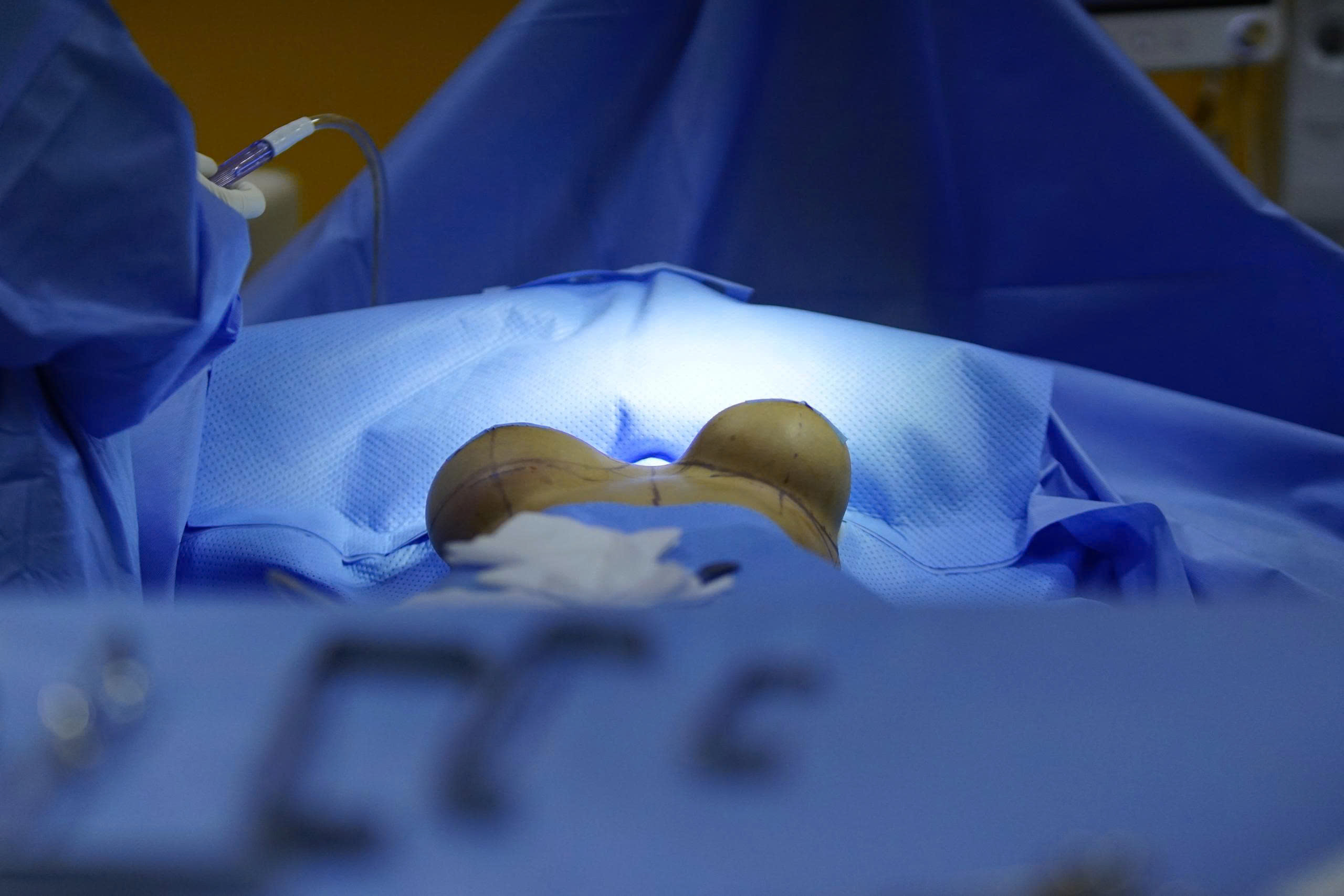
According to the American Society of Plastic Surgeons, capsulectomy carries the general risks of breast surgery — bleeding, infection, fluid collection, changes in nipple sensation, scarring and the risks of anaesthesia — together with some that are specific to capsule removal. Dissecting a thin capsule off the chest wall carries a small risk of injury to the underlying tissues, which is one reason a partial capsulectomy is sometimes chosen over a total one. Removing a large, calcified capsule takes longer and involves more dissection than a straightforward implant exchange.
Recovery is longer than for a simple exchange because more tissue has been disturbed. Most patients need to limit arm and chest activity for 4 to 6 weeks, and final shape settles over 3 to 6 months. The FDA notes that complications and their rates are listed in the patient labelling of each approved implant, and Dr. Ho Cao Vu reviews the specific risks with each patient during consultation rather than quoting a single figure for everyone.
Questions to ask before capsular contracture surgery
Patients comparing surgeons, including those considering travelling for the procedure, may find these questions useful:
- Which grade of contracture do I have, and what did imaging show about the capsule and the implant shell?
- Is a capsulotomy or a capsulectomy being proposed, and why?
- If capsulectomy, is it partial, total or en bloc, and what would make you change plan during surgery?
- Will the removed capsule be sent for pathology?
- Will a new implant be placed, and in which plane?
- What is your experience with revision and explant cases specifically?
- What is the follow-up plan, and how are complications recorded and reported?
Dr. Ho Cao Vu’s background and case experience are summarised on the doctor profile.
Frequently asked questions
Is capsulectomy the same as implant removal? No. Implant removal, or explantation, means taking out the implant. Capsulectomy means removing the scar capsule around it. They are often done together, but an implant can be removed without removing the capsule, and that is the distinction patients should ask about.
Do I need a capsulectomy for grade II contracture? Grade II is usually observed rather than operated on, according to the FDA’s classification. Surgery is generally considered at grades III and IV, or earlier if there are other problems such as rupture or pain.
Can capsular contracture be treated without surgery? Established grade III–IV contracture is a surgical problem. Closed capsulotomy by external squeezing is not recommended by the FDA because it can rupture the implant. Some medications have been studied for early contracture, but they are not a substitute for surgery in severe cases.
Will capsular contracture come back after capsulectomy? It can, because a new capsule forms around any new implant. Removing the contracted capsule, changing the implant plane and using a new implant are measures associated with lower recurrence, but no approach eliminates the possibility.
What is the difference between total and en bloc capsulectomy? Both remove the whole capsule. In a total capsulectomy the capsule is opened and the implant removed first, then the capsule is removed. In en bloc removal the capsule and implant are removed together without opening the capsule, which is more demanding and not feasible in every case.
How long does recovery take? Longer than a simple implant exchange because more tissue is disturbed. Most patients limit strenuous arm and chest activity for several weeks, and the final result settles over months. Individual recovery varies and is discussed at consultation.
Summary
Capsular contracture is treated at the capsule, not only at the implant. A capsulotomy releases the capsule but leaves it in place; a capsulectomy removes it, in part, entirely, or together with the implant as one unit. For severe or recurrent contracture and for abnormal capsules, removal is the approach Dr. Ho Cao Vu generally recommends, with the extent decided by imaging and by what is found at surgery. Whichever approach is proposed, patients benefit from knowing which one it is, why, and what the plan is if findings change during the operation.
References
- Risks and Complications of Breast Implants — U.S. Food and Drug Administration. Definition and Baker grading of capsular contracture; warning against closed capsulotomy.
- Breast Implant Removal — American Society of Plastic Surgeons. Patient information on explantation and capsule removal.
Last reviewed September 2026. This article provides general medical information and does not replace consultation with a qualified surgeon. The appropriate procedure depends on individual assessment and imaging.
