
Breast Implant Removal Without Replacement: What to Expect
Short answer: yes, breast implants can be removed without putting new ones in, and many women who have carried implants for a decade or more choose exactly this. Whether the result looks and feels acceptable to you afterwards depends mainly on how much of your own breast tissue remains, whether the skin has kept enough elasticity, and whether the surgeon combines removal with a lift or areola reduction where needed. This article sets out what removal-only surgery involves, using two anonymised cases from Dr Ho Cao Vu’s own practice, and what a careful decision process looks like.
This is a satellite article to our main guide, Breast Implant Removal (Explant Surgery): A Complete Guide, which covers reasons for removal, capsulectomy terminology and the wider decision. Here, the focus is narrower: what changes when nothing goes back in.

Who considers removal without replacement?
In Dr Ho Cao Vu’s practice, three groups of patients most often choose removal-only surgery. The first is women who have carried implants for many years — often a decade or longer — and whose priorities have shifted: they want a lower-maintenance result rather than continued surveillance and eventual re-operation. The second is women whose implants feel disproportionate to their current build, sometimes because the body has changed since the original surgery. The third is women being treated for a specific complication — capsular contracture, a suspected rupture, or a textured-implant concern — who decide, once the problem is being addressed anyway, not to replace what is taken out.
None of these reasons is universal, and none is a medical requirement. Evidence suggests that an implant’s age alone is not a reason to remove it in someone without symptoms; the U.S. Food and Drug Administration does not recommend removing textured implants in patients who have no symptoms, and there is no fixed expiry date on a well-functioning implant. Removal without replacement is a personal decision made after assessment, not something imposed by a rule of thumb about years in place.
What determines whether your own tissue can hold its shape?
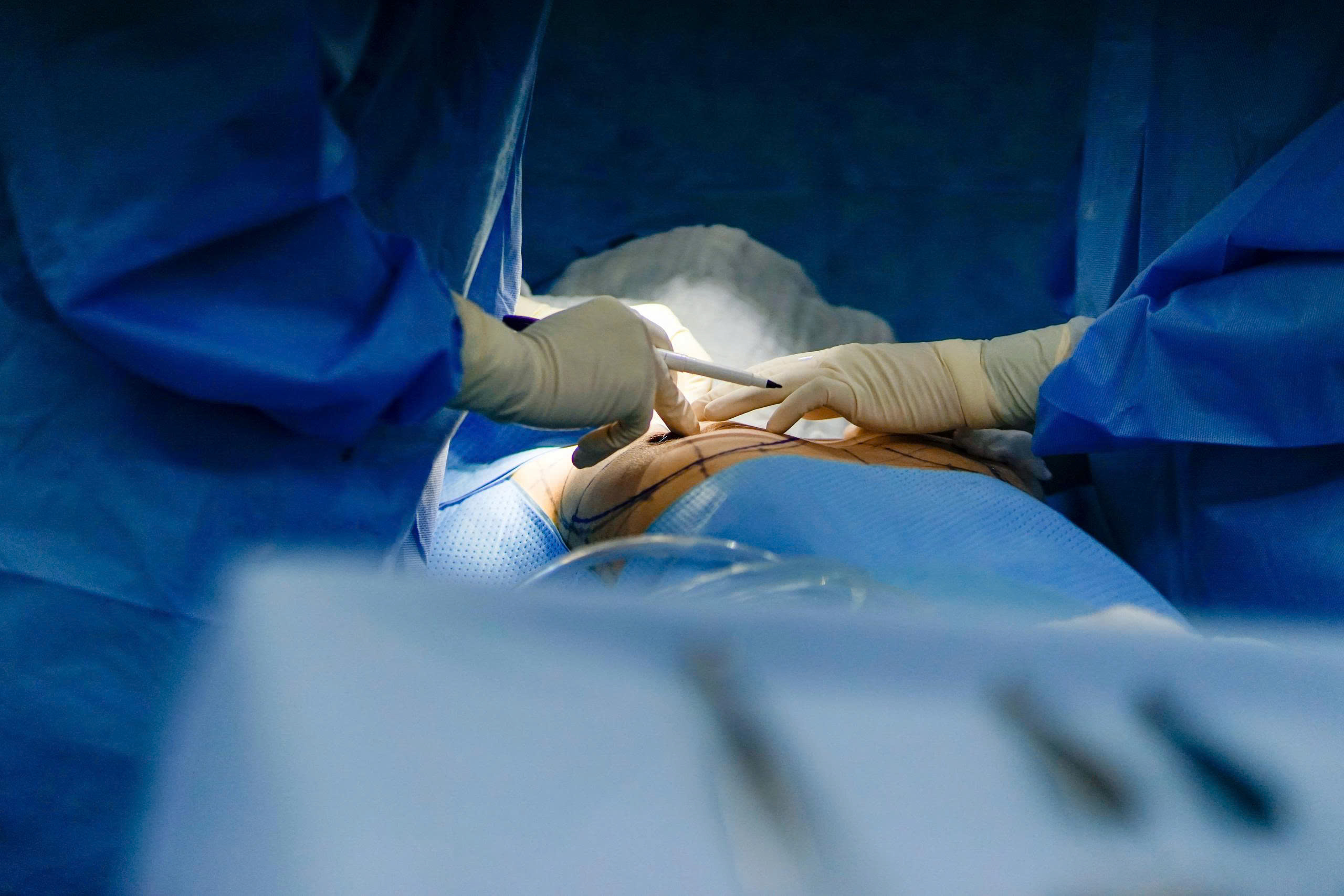
Before recommending removal without replacement, the surgeon needs to assess how much native breast (glandular) tissue is present and how the skin envelope is likely to behave once the implant’s volume is gone. A woman with substantial glandular tissue of her own may keep a reasonably natural contour after removal; someone with very little native tissue and stretched skin is more likely to see visible ptosis (sagging) or a hollow, deflated appearance, and may benefit more from a lift performed at the same time.
This assessment is clinical, not something a patient can reliably judge from a mirror alone — it is one of the main reasons a hands-on consultation, rather than a remote quote, should come before this decision is finalised.
Two illustrative cases
The following two cases are drawn from Dr Ho Cao Vu’s practice and are presented here anonymised, without identifying details, to show how removal-only surgery is actually planned and carried out. They illustrate two different starting points — one where a lift-type procedure was combined with removal, one where it was not needed.
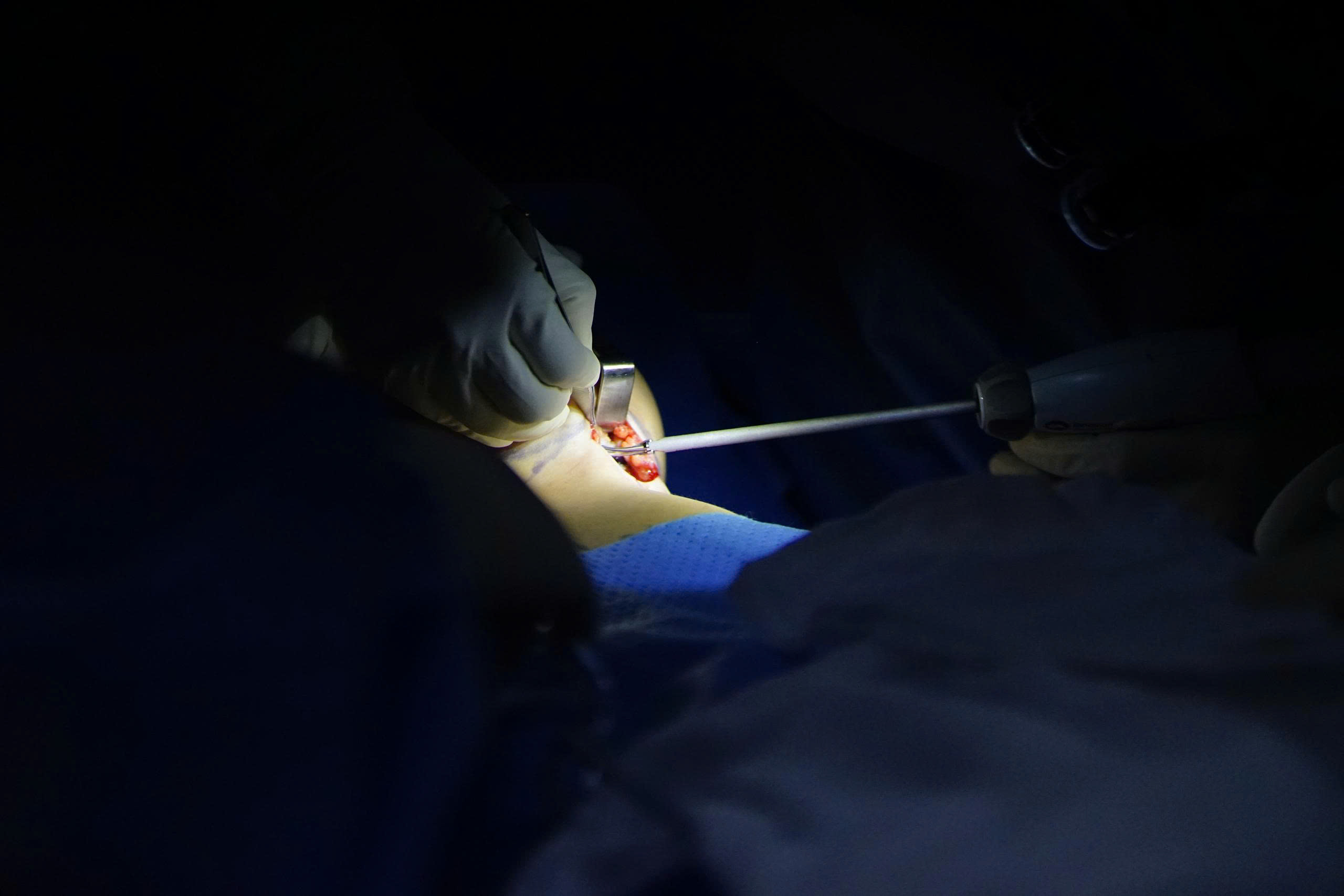
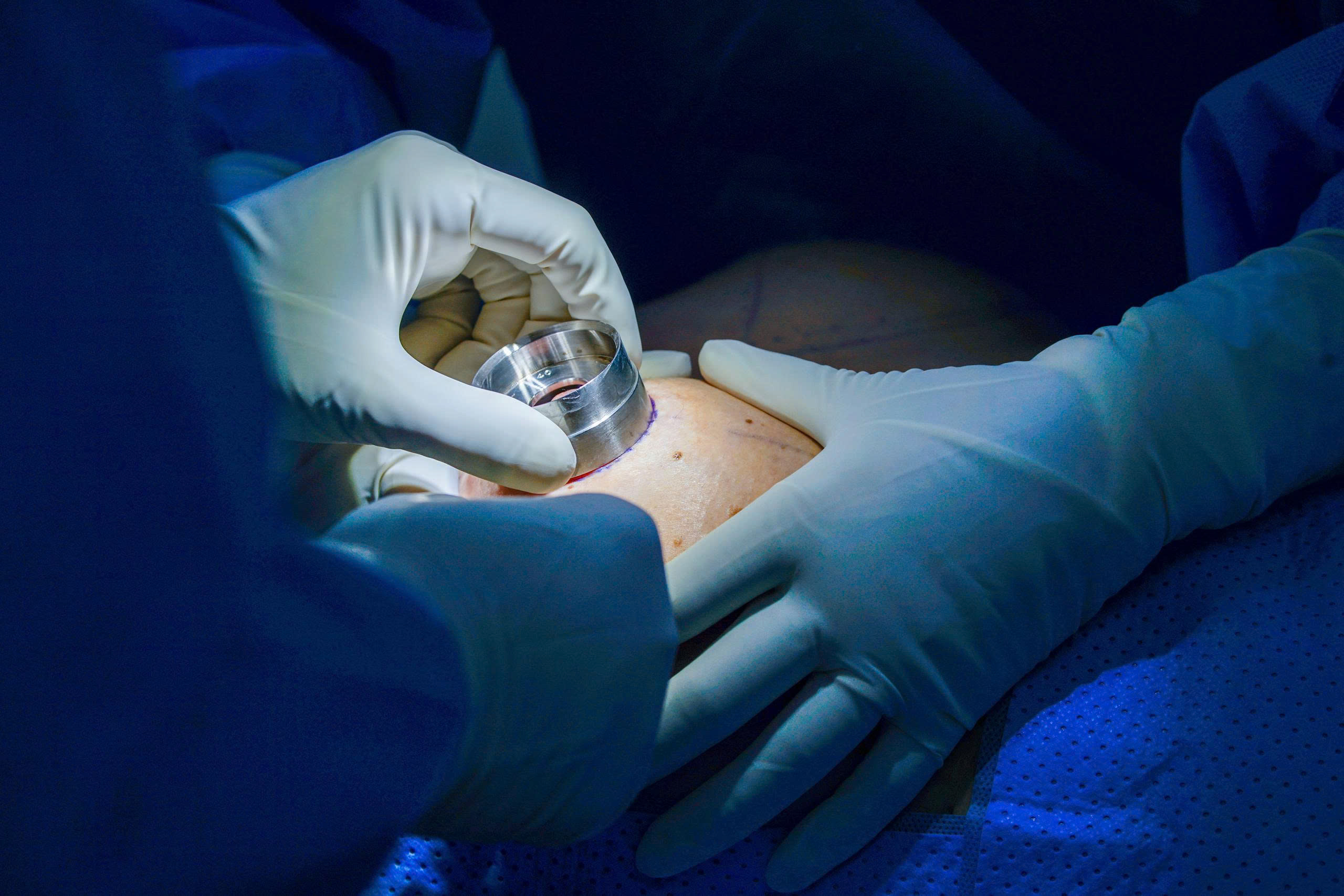
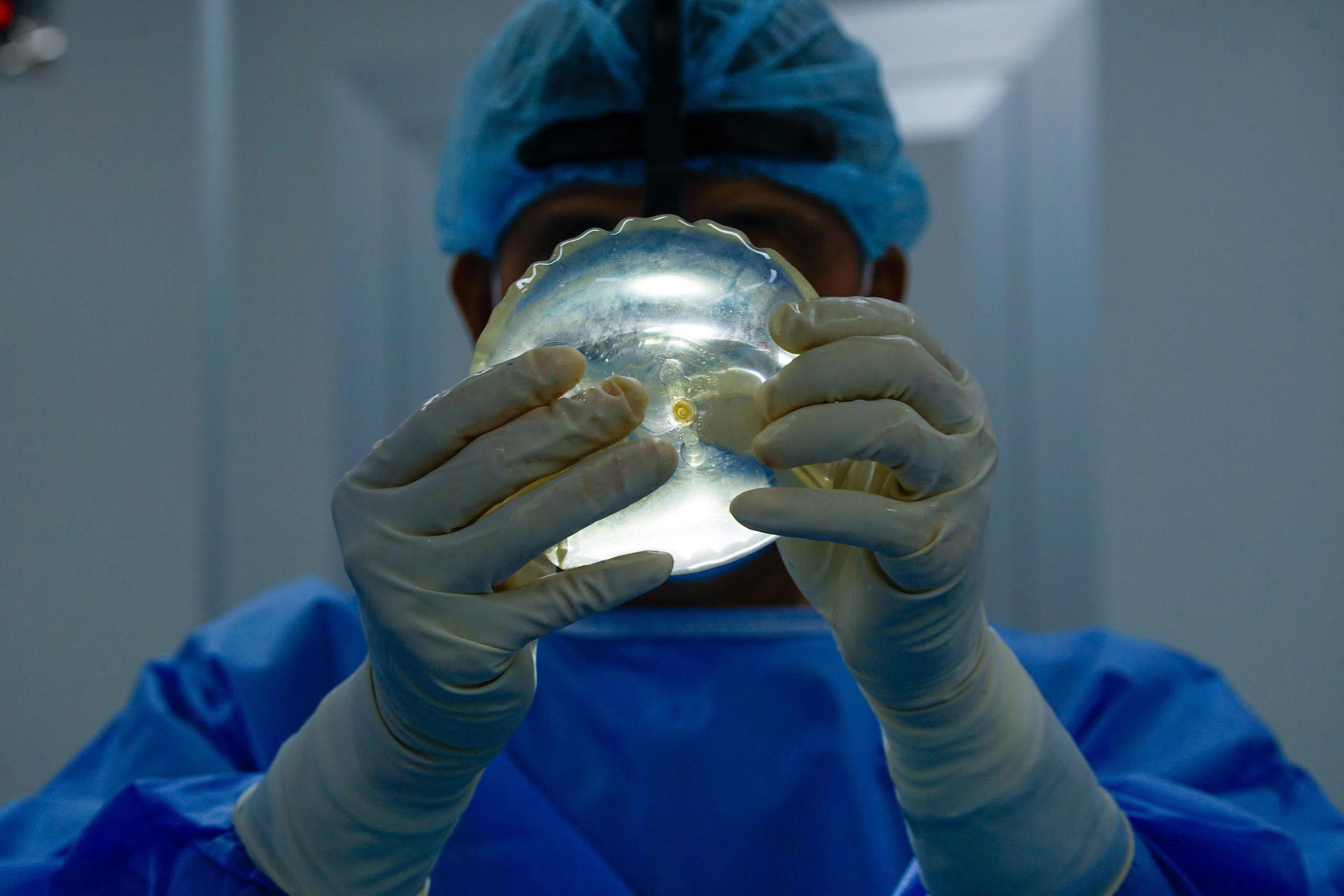
Case 1 — removal combined with areola reduction, implant in place more than 10 years. A woman in her early 60s, who had carried textured Allergan implants (250cc) for more than 10 years, asked for removal without replacement. On examination there was no rupture and no acute complication; the surgeon’s assessment was that, given her age and stated priorities, a smaller, lower-maintenance result made more sense for her than continued implant use. Surgery was carried out under general anaesthesia through a periareolar incision, using an Ultrasonic Surgical Scalpel for dissection. Both implants were removed intact, and each side’s capsule was inspected: it was fibrous but showed no abnormal tissue, and samples were sent for routine pathology as a precaution, which is standard practice whenever a capsule is opened. Removal was combined with an areola reduction to keep the result proportionate. No implant was placed, and no electrocautery was used during the dissection.
Case 2 — asymmetric capsule findings, no drains needed. A woman in her late 30s, who had carried textured Allergan implants (322cc) for 6 years, felt her breasts had become too large for her current frame and asked for removal without replacement. Preoperative assessment found adequate glandular tissue to support a natural contour afterwards. During surgery, the two sides were not identical: on one side, the surgeon found a small amount of cloudy fluid and fibrous banding around the implant, and a portion of the anterior capsule was removed and sent for pathology; on the other side, the tissue was cleaner, with a smaller amount of fibrosis, and part of a double-layered posterior capsule was likewise removed and sent for analysis. No drains were placed. The patient was discharged around 6 hours after surgery, alert and without needing opioid pain medication or antibiotics.
Neither case should be read as predicting what will happen in another patient. Capsule findings, whether drains are needed and how a breast looks afterwards vary from patient to patient — these two cases simply show the range of what removal-only surgery can involve within one practice.
Will my breasts sag after removal?
This is the question patients ask most often, and it deserves a direct, unhedged answer: yes, this can happen. The clinical term for this is breast ptosis — the breast sitting lower or looser than before, most often because the skin stretched to accommodate the implant. Cleveland Clinic states plainly that “after implant removal, your breasts may sag, droop or appear misshapen” — this is a normal consequence of the skin having stretched to accommodate an implant, not a sign that anything went wrong in surgery. Because of this, Cleveland Clinic notes that “many people choose to have implant removal with a breast lift (mastopexy)” performed at the same time, so that skin laxity is addressed directly rather than left to settle on its own.
Whether you personally need a lift depends on skin elasticity, how much glandular tissue you have, and how much ptosis (sagging) you are prepared to accept. Case 1 above shows one lift-adjacent option — areola reduction combined with removal — chosen because it suited that patient’s anatomy and preference; a full mastopexy is a separate, larger operation that may be more appropriate for others. This is a decision to make with your surgeon after examination, not before it.
What the operation involves
Removal without replacement is carried out under general anaesthesia. The surgeon accesses the implant pocket through either a periareolar incision (around the edge of the areola) or an inframammary incision (in the breast crease), depending on the original scar, the planned combined procedure and personal anatomy. Once the implant is out, the fibrous capsule — scar tissue the body has formed around the implant, not breast tissue itself — is inspected. Depending on what is found, the surgeon may leave the capsule, remove part of it, or remove it in full; a portion is commonly sent for routine pathology whenever the capsule is opened, as in both cases above. Total or en bloc capsulectomy is a different, more extensive procedure typically reserved for a confirmed or suspected cancer-related indication — see our companion article on en bloc, total and partial capsulectomy for how surgeons decide between them — and is not a routine part of straightforward removal-only surgery.
Dr Ho Cao Vu’s practice uses an Ultrasonic Surgical Scalpel for this dissection, which is intended to reduce bleeding and support a cleaner surgical field. Whether drains are placed depends on how much fluid and tissue disruption the surgeon finds intraoperatively; Case 2 above needed none, though Cleveland Clinic notes that when drains are used, they typically stay in place for a few days and occasionally longer.
What happens, step by step
- Step 1 — Consultation and history. The surgeon reviews why you want removal, how long you have carried your implants, and any symptoms (pain, swelling, a change in shape) that need to be ruled out before anything else is planned.
- Step 2 — Assessment and imaging. Clinical examination, and where indicated, ultrasound or MRI, are used to check the implant and capsule and to judge how much of your own glandular tissue is present — the main factor in how the breast will look afterwards.
- Step 3 — Planning the approach. The surgeon and patient agree the incision site, whether a combined procedure (areola reduction or lift) is needed, and what will be done with the capsule if it is found to be abnormal.
- Step 4 — Surgery under general anaesthesia. The implant is removed through the agreed incision; the capsule is inspected and managed as planned; a sample is commonly sent for pathology whenever the capsule is opened.
- Step 5 — Recovery and follow-up. Drains, if used, are managed and removed; activity is limited for a period set out by the surgical team; a follow-up appointment confirms healing and reviews any pathology results.
Recovery
Cleveland Clinic advises that, in the first 1 to 2 weeks after surgery, patients should avoid some usual activities such as driving, and should limit strenuous activity and heavy lifting during recovery more broadly. In practice, how quickly someone returns to normal depends on whether the capsule was extensively handled and whether a combined procedure, such as areola reduction or a lift, was performed at the same time — a removal-only case with minimal capsule work, as in Case 2, can involve a shorter initial recovery than one combined with additional surgery. Your surgeon should set out a recovery plan specific to what was actually done in your case, rather than a single generic timeline. Patients who are also being assessed for a suspected rupture as part of the same visit may find our article on silent breast implant rupture useful background before consultation.
Removal-only compared with two common alternatives
The table below is a general orientation, not a personal recommendation — which option suits you is a clinical decision made after examination.
| Option | Typical candidate | Skin/shape consideration | Added procedure time |
|---|---|---|---|
| Removal only | Adequate glandular tissue, comfortable with a smaller result | Mild-to-moderate sag possible | None |
| Removal + areola reduction | Some excess areolar skin, moderate sag expected | Addresses areolar skin directly (Case 1) | Modest |
| Removal + breast lift (mastopexy) | Significant skin laxity, larger implants carried for many years | Repositions tissue more fully | Greater |
| Removal + new implant (replacement) | Wants to keep implant volume | Shape closer to pre-removal | Similar to original augmentation |
Textured implants and the question of timing
Because both cases above involved textured Allergan implants carried for six to ten-plus years, it is worth being precise about what the evidence does and does not say. In 2019 the FDA requested a recall of Allergan BIOCELL textured implants after data linking them to breast implant-associated anaplastic large cell lymphoma (BIA-ALCL), a lymphoma of the immune system — not breast cancer. The FDA states that “because BIA-ALCL has generally only been found in patients with textured implants, and the overall incidence appears to be low, the FDA does not recommend the removal of textured implants in patients without symptoms.” A systematic review found that published lifetime BIA-ALCL risk estimates in women with textured implants range from roughly 1 in 355 to 1 in 30,000, depending on implant surface and population studied.
In other words, having carried a textured implant for years is a reason to stay assessed and to seek review if new symptoms such as persistent swelling appear — not, on its own, an automatic instruction to operate. Both patients above chose removal for their own reasons (age and lower-maintenance preference; body proportion), not because of an FDA mandate, which is an important distinction when weighing your own decision. A longer-interval example — a textured implant carried for 11 years with Grade IV capsular contracture — is covered in our case report on Polytech implant removal, which shows how the same decision plays out when a complication, rather than personal preference alone, is the trigger.

Risks and honest limitations
Any surgery carries risk, and removal-only surgery is no exception: bleeding, infection, changes in nipple or skin sensation, and a cosmetic result that does not match expectation are all possible. The specific risk that matters most for this decision is aesthetic — ptosis (sagging), asymmetry or a deflated appearance are common enough that Cleveland Clinic addresses them directly, as quoted above, rather than treating them as rare exceptions. A frank conversation about how your particular breast tissue and skin are likely to behave, before surgery, goes a long way towards avoiding a result that disappoints.
Questions to ask before deciding
- Based on my own tissue and skin, is removal alone likely to leave my breasts looking the way I want, or would a lift or areola reduction serve me better?
- Will you know whether I need a lift before surgery, or is that decided once the implant is out?
- What will you do with the capsule, and will any of it be sent for pathology?
- Am I likely to need drains, and if so, for how long?
- What does recovery look like specifically for a removal-only case, versus one combined with a lift?
- Is there anything about my implant type or how long I have carried it that changes your recommendation?
FAQ
Can breast implants be removed without putting new ones in?
Yes. Removal without replacement is a routine option, chosen for reasons ranging from a preference for a lower-maintenance result to a change in body proportion or a complication being treated. It is a personal decision made with your surgeon after assessment, not a default recommended for everyone.
Will my breasts look different after removal without replacement?
Often, yes. Skin that has stretched to hold an implant does not always retract fully once the implant is gone, and some ptosis (sagging) or a change in shape is common. How much depends on your own tissue, skin elasticity and whether a lift or areola reduction is performed at the same time.
Do I need a breast lift if I have my implants removed?
Not always, but many people choose one. Whether you personally need it depends on examination findings — how much native tissue you have and how the skin has responded to the implant — and is a decision made with your surgeon rather than a fixed rule.
Will I need drains after removal-only surgery?
It depends on what the surgeon finds during the operation. In one of the cases described above, no drains were needed; in general, Cleveland Clinic notes that drains, when used, are usually removed after a few days but can stay longer in some cases.
What if I’m an international patient comparing where to have this done?
Removal-only surgery is available in Vietnam as well as in your home country, and cost, safety criteria and how to choose a surgeon are covered separately in our guide for international patients, so that this article can stay focused on what removal without replacement itself involves.
References
- Breast Implant Removal: What to Expect, Surgery & Recovery, Cleveland Clinic (reviewed 2021)
- Questions and Answers about Breast Implant-Associated Anaplastic Large Cell Lymphoma, U.S. Food and Drug Administration (2024)
- Allergan Voluntarily Recalls BIOCELL Textured Breast Implants, U.S. Food and Drug Administration (2019)
- The Risk of Breast Implant-Associated Anaplastic Large Cell Lymphoma: A Systematic Review and Meta-Analysis, PMC / National Center for Biotechnology Information (2024)
- Breast implants, NHS (2023)
Reviewed by Dr Ho Cao Vu — Practising Certificate No. 028475/BYT-CCHN. This article is for general information and does not replace an individual consultation. Consultations and preoperative assessments are provided at Dr Breast X; all aesthetic surgical procedures are performed directly by Dr Ho Cao Vu at Nam Sai Gon International Hospital.
Read next
- Comparing Complications: Subglandular Placement Leading to Implant Visibility vs. Dual-Plane Resulting in Bottoming-Out and Implant Malposition
- Unilateral Breast Implant Rupture After 18 Years: An Australian-Vietnamese Patient With A History Of Breast Cancer Treatment Opts For Explantation In Vietnam
- Breast Implant Removal in Vietnam: Cost & Safety Guide


