Unilateral Breast Implant Rupture After 18 Years: An Australian-Vietnamese Patient With A History Of Breast Cancer Treatment Opts For Explantation In Vietnam
Ms. Nguyen Hong Nga (born in 1968, height 1.52 m, weight 50 kg) presented to Dr. Ho Cao Vu’s clinic seeking explantation without replacement. She reported undergoing breast augmentation in 2008 at Bumrungrad Hospital (Bangkok, Thailand), using Mentor implants (275 cc on the right and 250 cc on the left).
In April 2013, she was diagnosed with right breast cancer in Australia. Her treating surgeon performed local excision of the tumor and a margin of surrounding healthy tissue (local resection / breast-conserving surgery) combined with radiotherapy to the tumor site. Throughout the treatment course, she retained the implant without explantation.
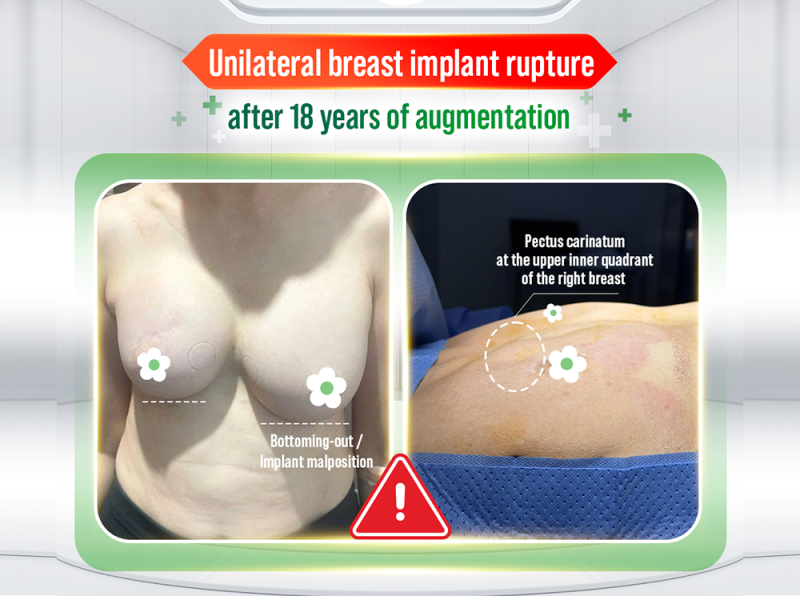
Preoperative Assessment
- Breast asymmetry.
- In a supine position, the left breast displayed natural lateral displacement, whereas the right breast did not.
- Pectus carinatum at the upper inner quadrant of the right breast.
- The right breast was firm and exhibited signs of retraction, although no clear evidence of capsular contracture was noted.
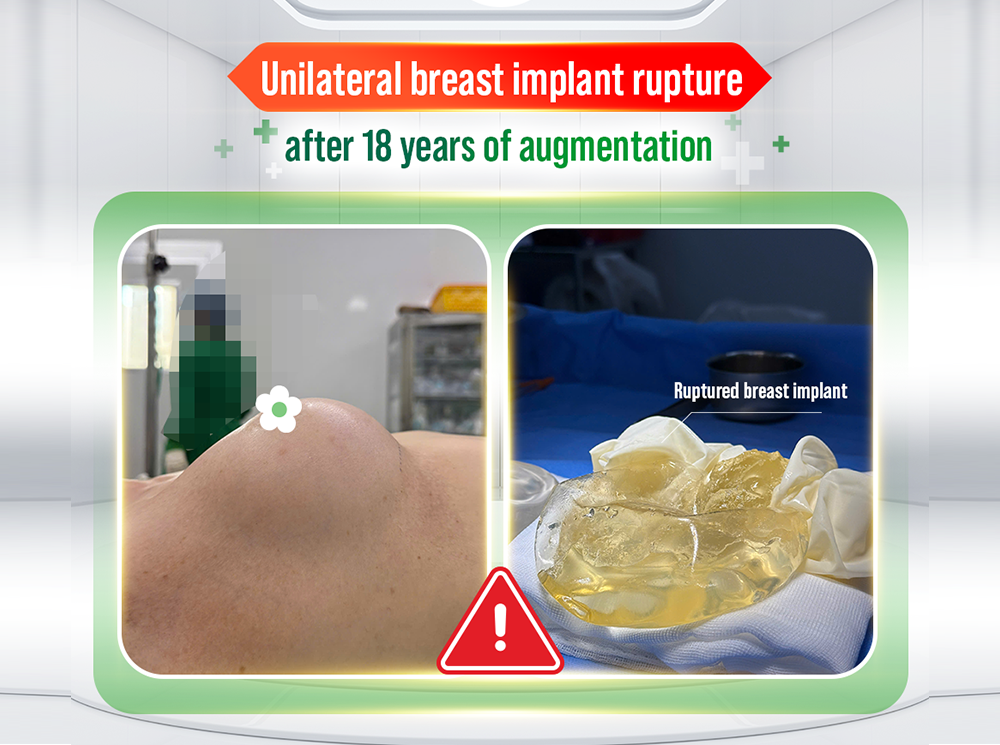
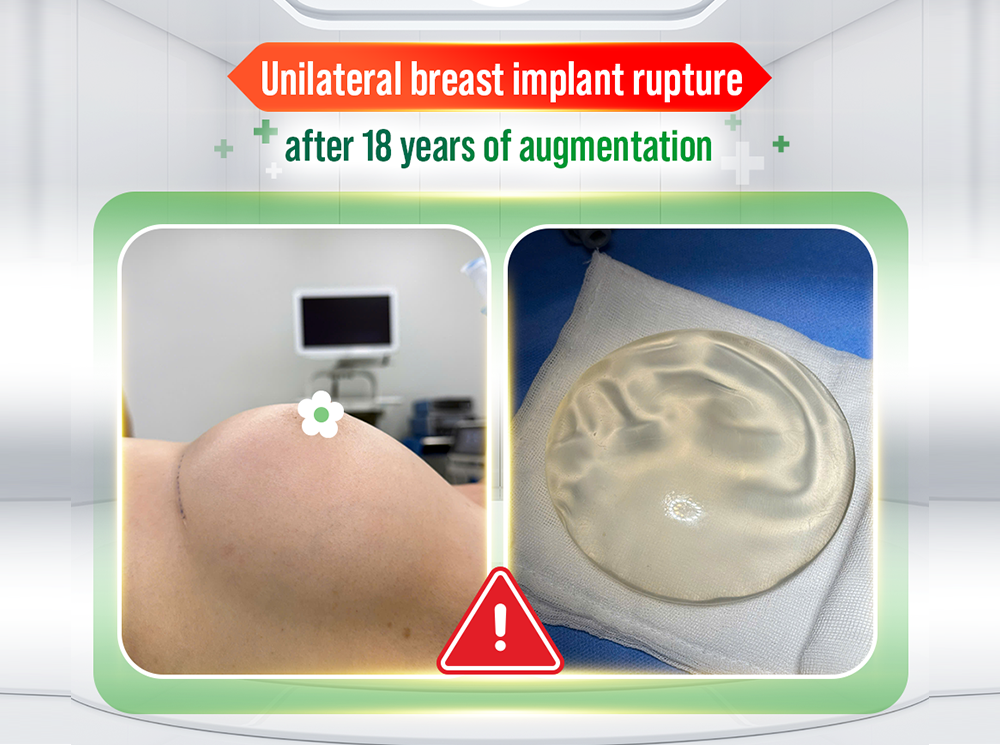
Explantation Surgery
- General anesthesia via laryngeal mask airway (LMA).
- Dissection utilizing an ultrasonic scalpel.
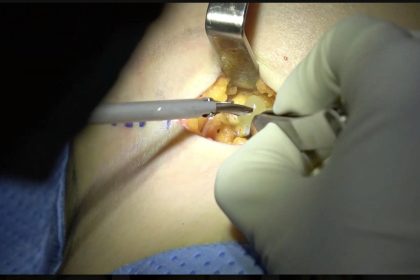
- Right breast: The 275 cc Mentor implant was ruptured. The pocket at the previously irradiated area was thicker than in other areas. No abnormalities were noted at the cancer treatment site. Fibrosis of the tissue and muscle following the lumpectomy and radiotherapy was observed. Additionally, the inferior pole of the pocket was thicker than surrounding areas.
- Left breast: The 250 cc Mentor implant remained intact, and the pocket was thin.
- Explantation via the inframammary fold (IMF) incision.
Why Was the Right Breast Firm and Retracted Compared to the Left, Without Capsular Contracture?
Intraoperative assessment of the right breast revealed no capsular contracture. However, an insufficient pocket, combined with tissue and muscle fibrosis secondary to the lumpectomy and radiotherapy, as well as the pectus carinatum at the upper inner quadrant, created an uneven pressure distribution across the implant over an extended period.
According to MSc, MD. Ho Cao Vu, the combination of an inappropriate pocket, post-treatment fibrosis, and abnormal thoracic anatomy subjected the right implant to continuous mechanical stress over time, which is a contributing factor leading to the implant rupture after 18 years.