
Ultrasonic Scalpel in Breast Lift Surgery (Mastopexy): How It Is Used at Dr. Breast X
Dr. Ho Cao Vu — Plastic, Reconstructive and Aesthetic Surgeon
Dr. Ho Cao Vu holds Practising Certificate No. 028475/BYT-CCHN, issued by the Ministry of Health on 28 June 2018. He specialises in General Surgery and Plastic, Reconstructive and Aesthetic Surgery, with more than 15 years of experience in plastic, reconstructive and aesthetic surgery and more than 20 years of experience in general surgery, including the treatment of benign conditions, breast cancer, and abdominal wall and abdominal disorders at Cho Ray Hospital in Ho Chi Minh City. Dr. Ho Cao Vu is a pioneer in Vietnam in applying the Harmonic Ultrasonic Scalpel to breast augmentation surgery.
Reviewed September 2026.
The Ultrasonic Surgical Scalpel can be used during breast lift surgery, medically known as mastopexy, to support tissue dissection and bleeding control. This article explains the procedure, how the instrument works and how Dr. Ho Cao Vu incorporates it into the Harmo 5K approach. It also covers candidacy, preoperative assessment, recovery and surgical risks, giving international patients a clear understanding of the method without implying that any particular result is guaranteed.
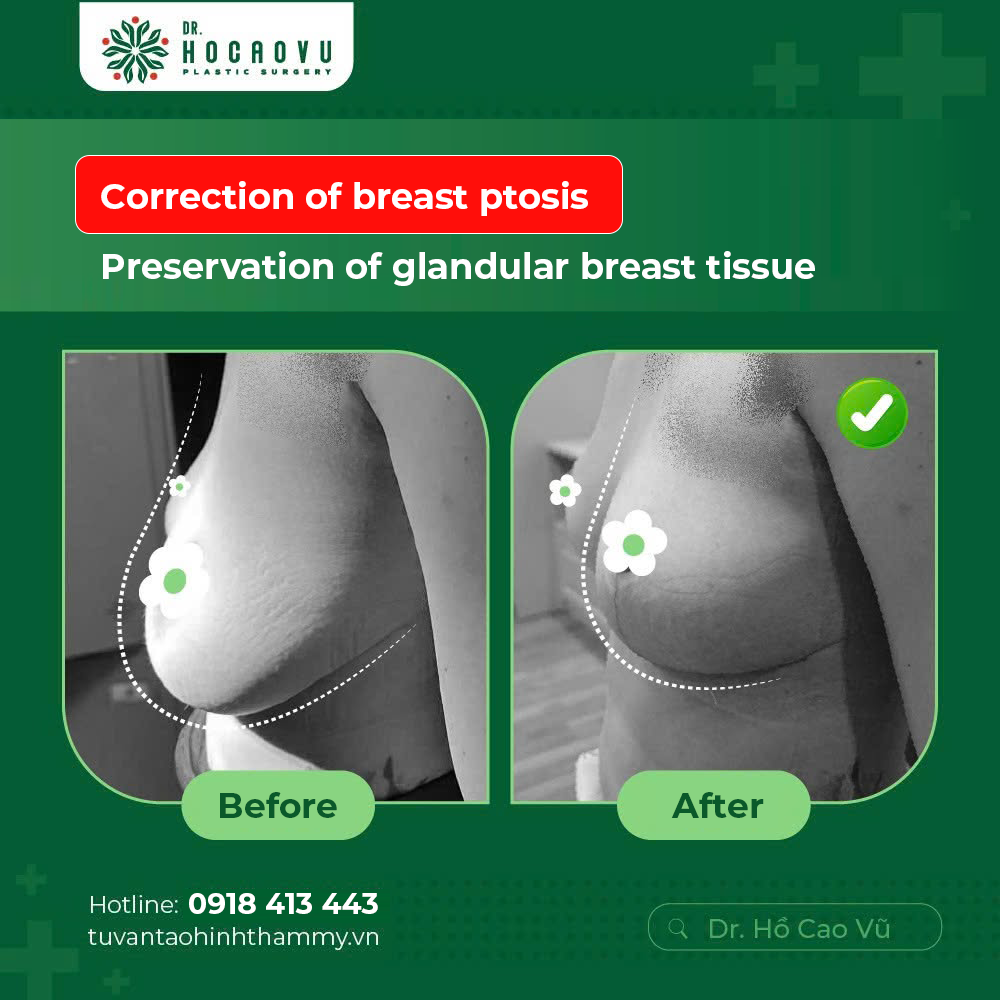
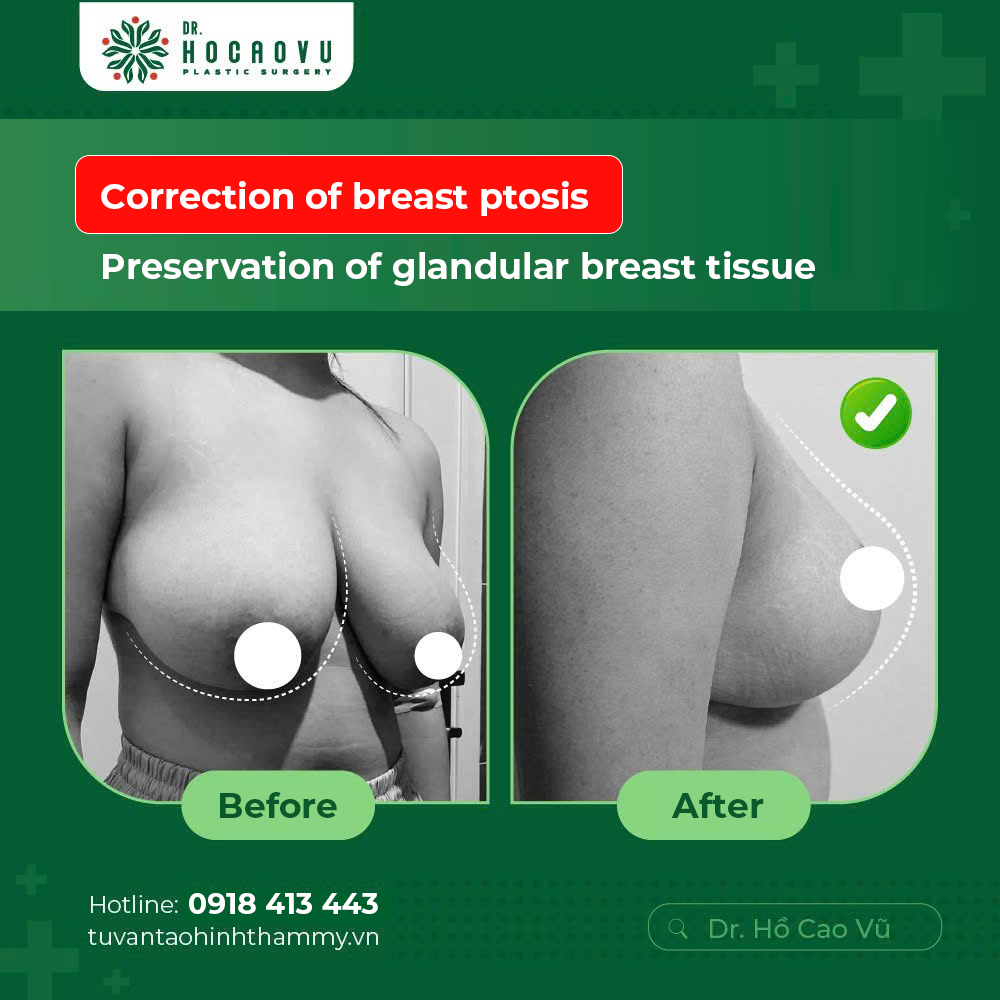
What is mastopexy (breast lift)?
Mastopexy is the medical term for breast lift surgery. The procedure raises and reshapes sagging breasts by removing excess skin, tightening the supporting tissue and, where required, repositioning the nipple and areola. It reshapes the breast using the patient’s existing tissue but does not add volume on its own.[1]
Breast sagging, medically described as breast ptosis, commonly develops following pregnancy and breastfeeding, changes in weight or the natural ageing process. Ptosis varies in severity and is often classified as grade 1 (mild), grade 2 (moderate) or grade 3 (severe), based partly on the position of the nipple in relation to the inframammary fold. The degree of ptosis is one of the factors used to plan the lift. Mastopexy may therefore suit a patient who is satisfied with breast size but wants to correct sagging, whereas someone seeking additional fullness may also need to discuss implant placement.
What is the Ultrasonic Surgical Scalpel?
The Ultrasonic Surgical Scalpel converts electrical energy into high-frequency mechanical vibration at the tip of the instrument. This vibration enables the instrument to cut, coagulate and seal tissue during surgery. Dr. Ho Cao Vu uses a Harmonic Ultrasonic Scalpel system.
The ultrasonic scalpel should be distinguished from other surgical energy systems. It operates through mechanical vibration, unlike electrosurgery, which uses high-frequency electrical current passing through tissue. Electrocautery works differently again: electricity heats the instrument, but the current does not pass through the patient’s tissue. Bipolar vessel-sealing systems such as LigaSure use controlled bipolar energy together with pressure. HARMONIC is the name of a specific ultrasonic system, not a generic term for every ultrasonic scalpel.
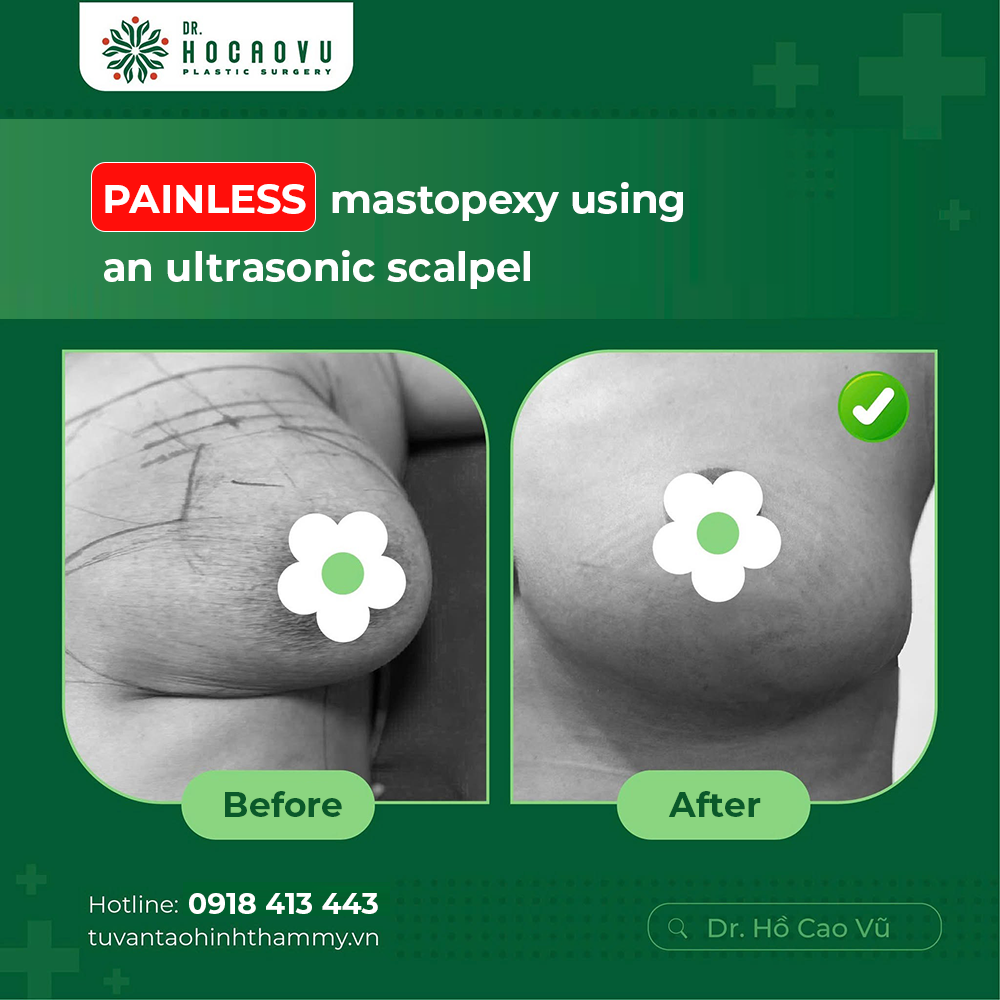
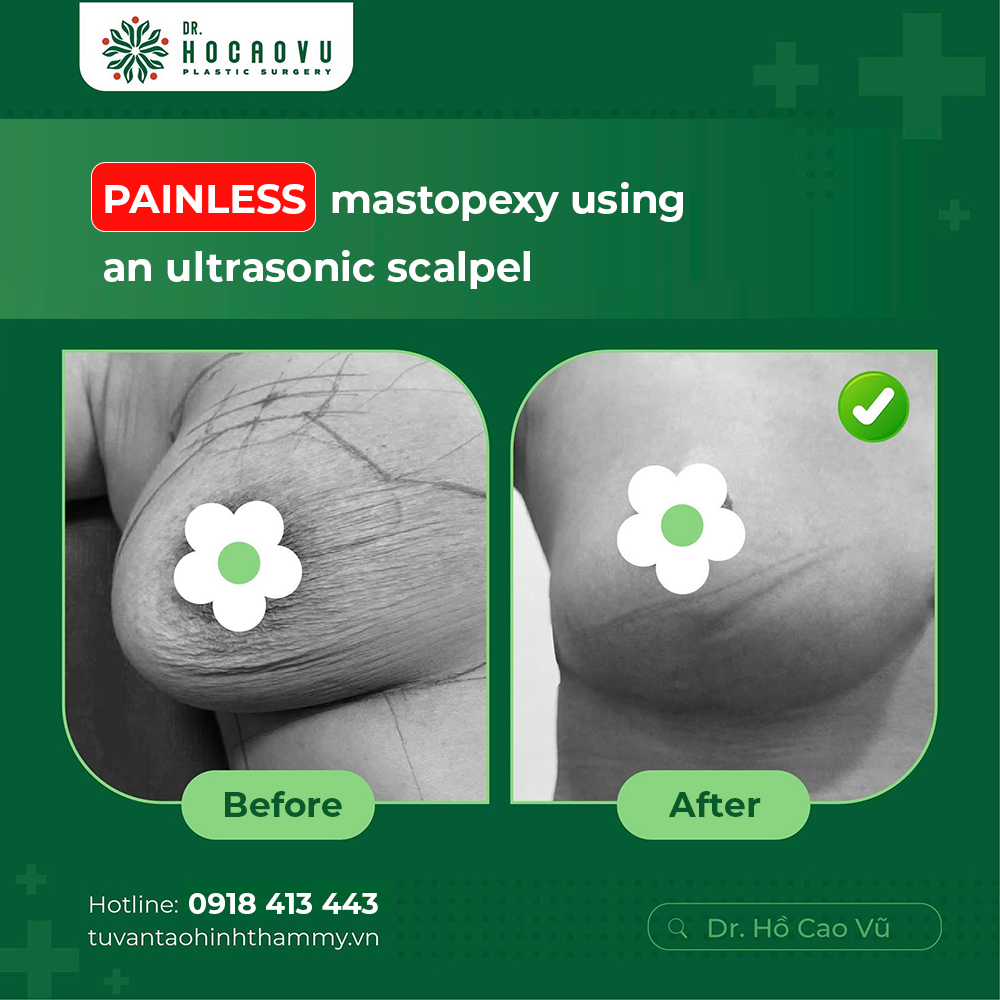
What is its role in dissection and bleeding control?
Dissection refers to the controlled separation of tissue during surgery. By cutting, coagulating and sealing tissue as the surgeon operates, the Ultrasonic Surgical Scalpel supports controlled tissue handling and bleeding control throughout dissection. Both are important when the breast tissue is being reshaped during mastopexy.
The ultrasonic scalpel should not be described as a cold-cutting instrument or as operating without heat. It creates a thermal tissue effect, although through a different mechanism from electrosurgical instruments. The temperature reached and the extent of lateral thermal spread vary according to the device, power setting, tissue characteristics, activation time and surgical technique.[2]
What does current evidence show, and what are its limits?
Ultrasonic instruments have been evaluated across a range of procedures and are established in several surgical fields. In modified radical mastectomy, comparative studies have reported differences between the Harmonic scalpel and electrosurgery in measures including blood loss, operating time, postoperative pain and drainage.[3,4] These studies involved breast cancer surgery rather than aesthetic mastopexy, so their findings cannot be treated as direct evidence of equivalent benefits in breast lift surgery. Within mastopexy, the instrument is more appropriately understood as part of the surgeon’s approach to dissection and bleeding control, not as a guarantee of a specific outcome.
What are Harmo 5K and the point dissection technique?
Dr. Ho Cao Vu applies the Harmo 5K approach in all of his mastopexy cases. The method combines the Ultrasonic Surgical Scalpel with the point dissection technique, in which tissue is separated in a controlled manner at selected points defined by the surgical plan. The same ultrasonic scalpel system is used across these cases, making Harmo 5K a consistent component of his mastopexy protocol rather than an option selected on a case-by-case basis.
Harmo 5K describes the surgical method used by Dr. Ho Cao Vu; it does not mean that the recognised risks of surgery are eliminated. The outcome of mastopexy also depends on the patient’s anatomy, the surgical plan and the individual healing response.
Who may be considered for mastopexy?
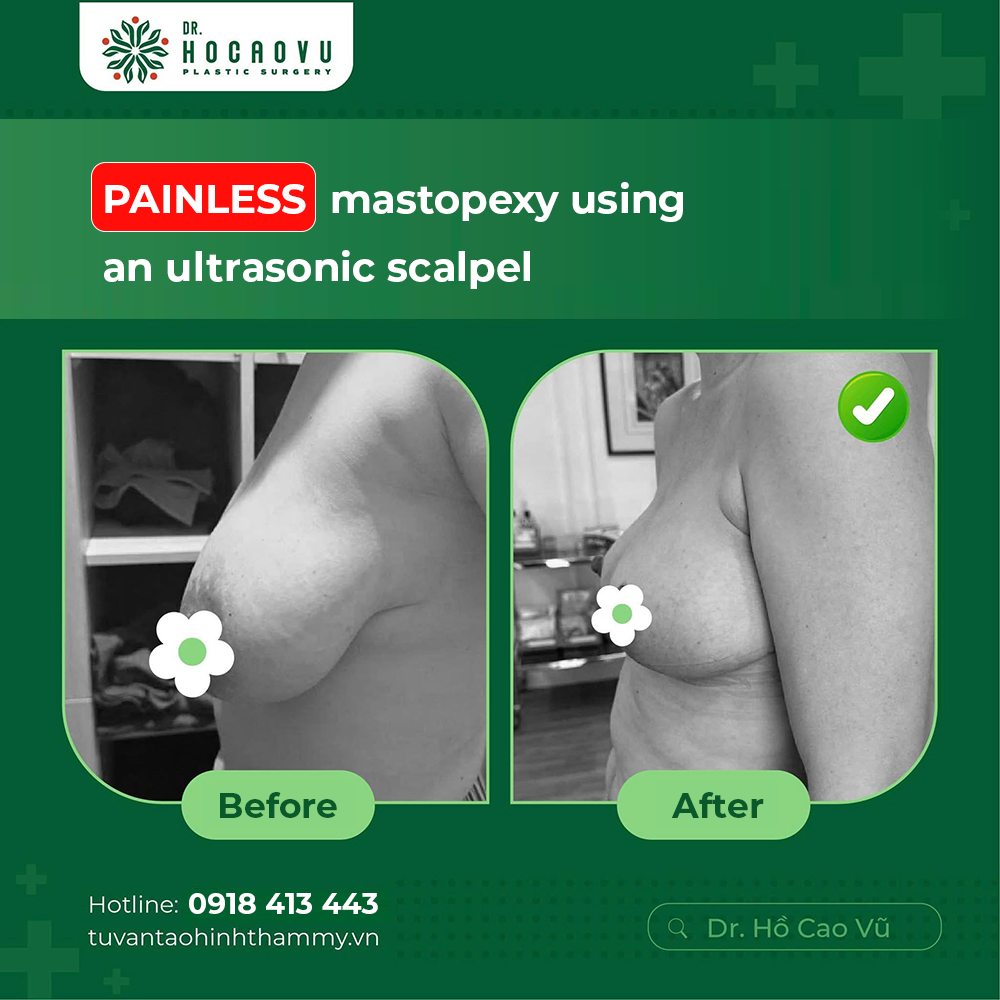
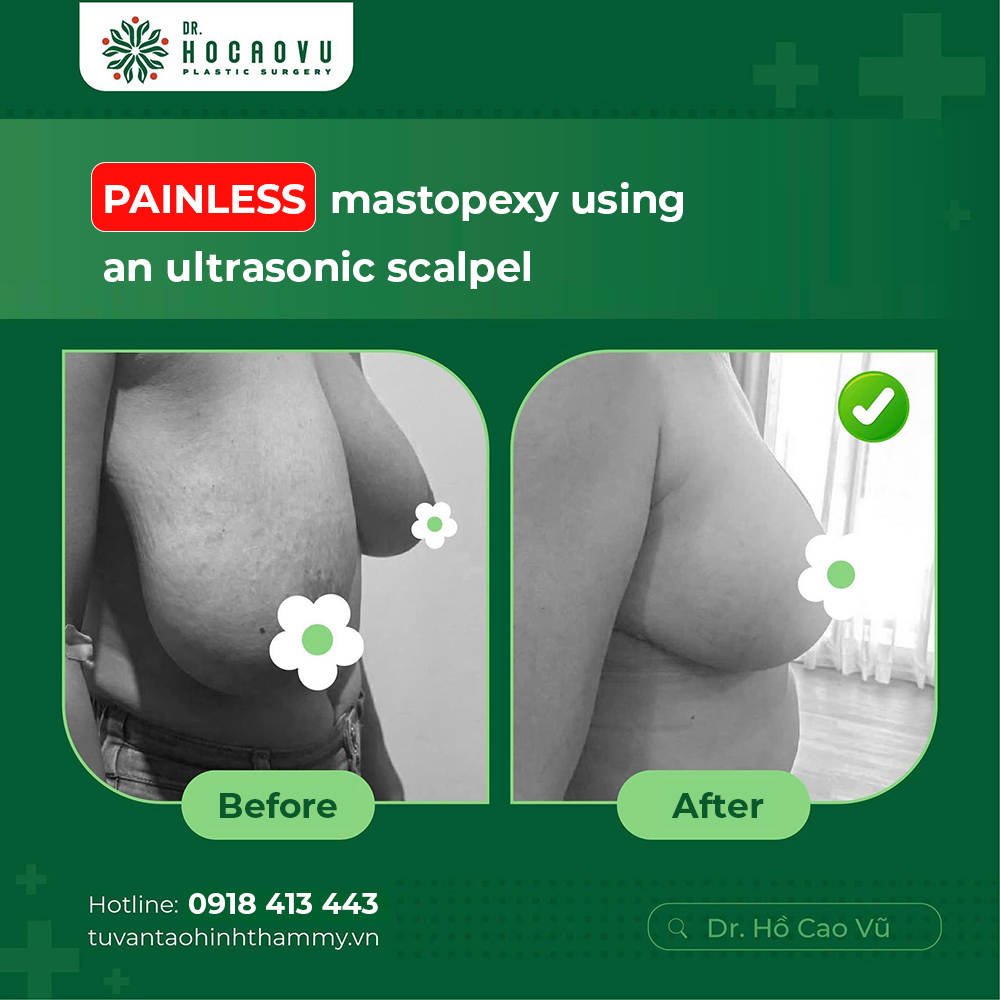
Mastopexy may be considered when the breasts have sagged and the patient wants them raised and reshaped while maintaining a broadly similar size. This may follow pregnancy and breastfeeding, significant weight loss or ageing. By contrast, a patient who is satisfied with breast position but wants greater fullness may be better suited to a discussion about implants rather than a breast lift alone.[5]
Appearance alone is not enough to determine candidacy. The assessment must also consider general health, breast tissue, skin quality, the degree of ptosis and the patient’s goals. An individual examination therefore provides a more reliable basis for planning than comparison with photographs alone.
How do assessment and planning work?
The surgical approach is determined during assessment and planning. At consultation, the surgeon examines the breasts, assesses the degree of ptosis and amount of excess skin, discusses the patient’s goals and explains where the scars are expected to lie. Because mastopexy involves skin removal, scarring is unavoidable; the scars generally fade over time but do not disappear completely.[6]
At Dr. Breast X, each patient is assessed individually and discusses the proposed surgical plan with Dr. Ho Cao Vu. The operative technique and incision positions are selected after this assessment rather than according to a standard formula, as the appropriate approach depends on the patient’s anatomy and surgical goals.
What do recovery and risks involve?
Recovery after mastopexy varies according to the patient and the extent of surgery. Any timeline provided should therefore reflect the individual operative plan rather than be treated as a universal schedule. Early recovery generally focuses on incision care, use of a support garment when advised and a gradual return to activity in accordance with the surgical team’s instructions.[7]
Like any surgical procedure, mastopexy carries risks that should be discussed before surgery. These include anaesthesia-related complications, bleeding or haematoma, infection, fluid accumulation, delayed wound healing, unfavourable scarring, temporary or permanent changes in nipple or breast sensation, asymmetry, contour irregularities and the possibility of revision surgery.[8] The likelihood and clinical significance of each risk vary with the patient and the planned procedure, making careful assessment, informed consent and individualised planning essential.
Mastopexy, breast augmentation, or augmentation-mastopexy?
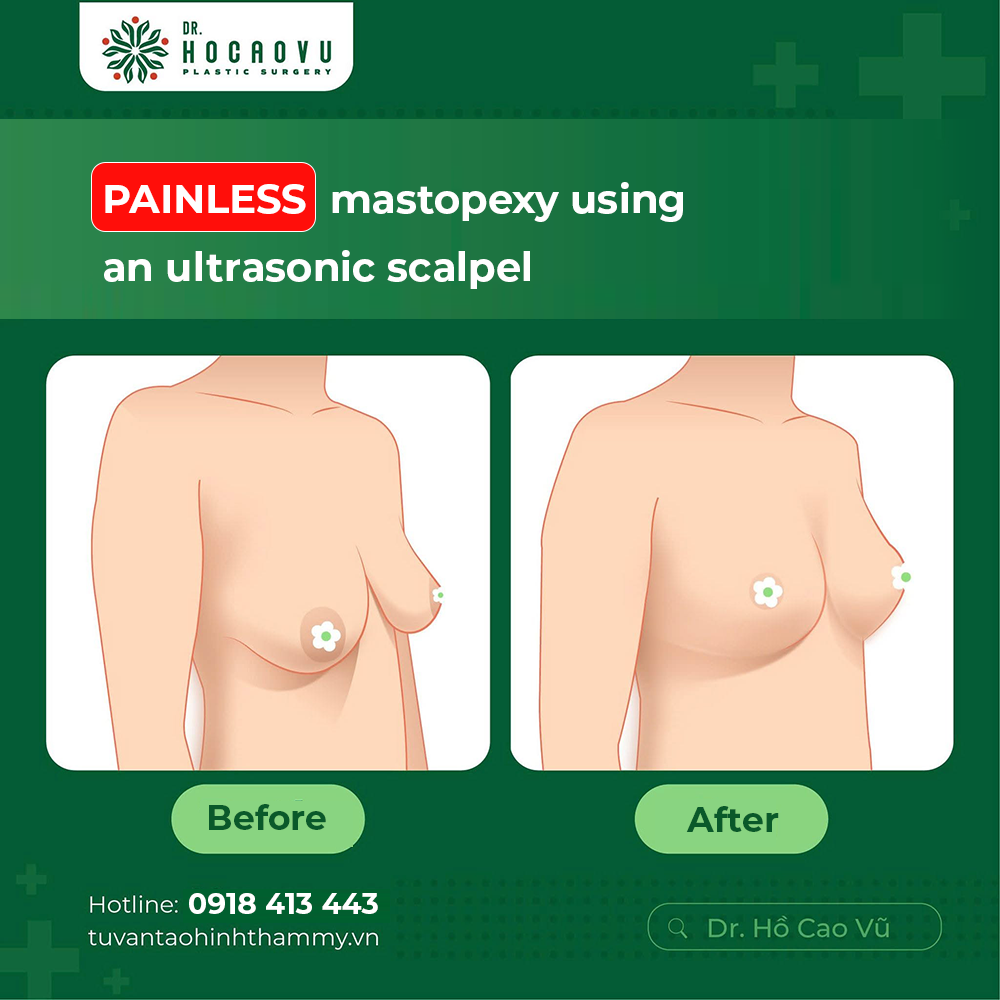
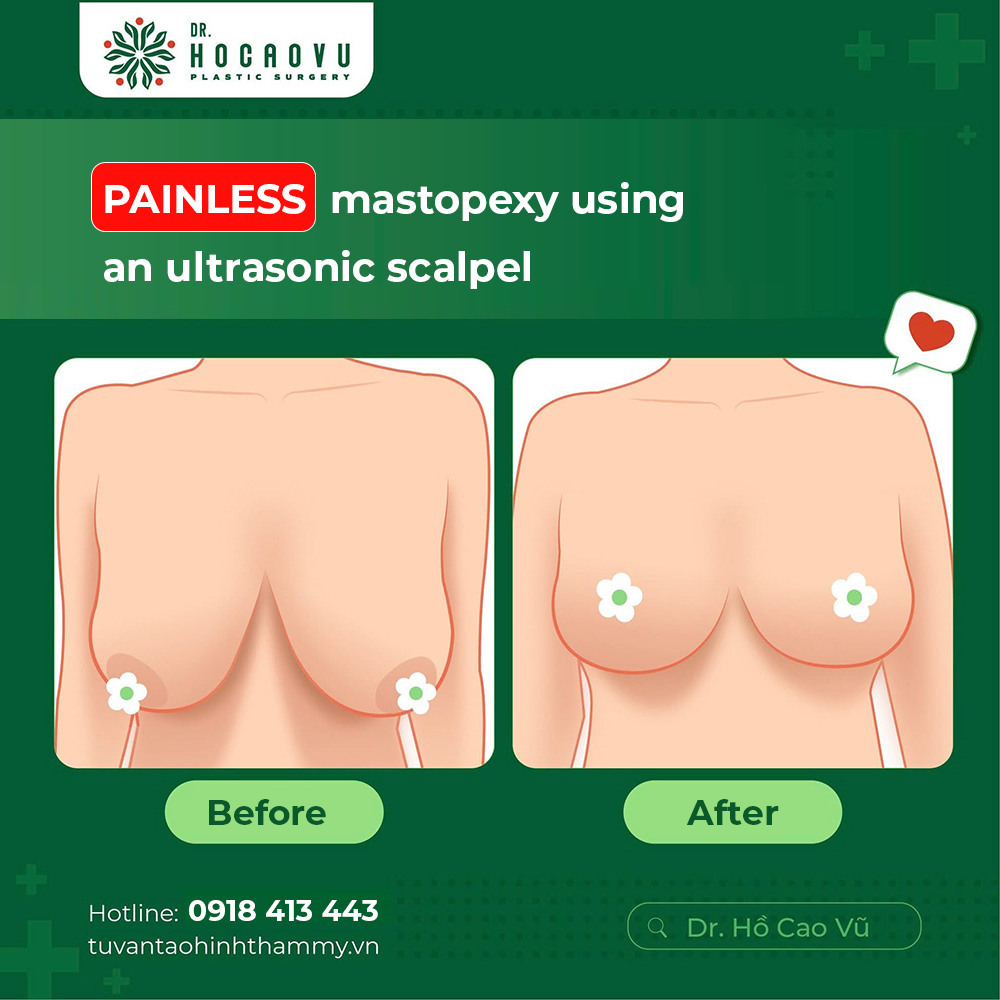
Although they are often confused, these three procedures address different concerns. Mastopexy raises and reshapes sagging breasts using the patient’s own tissue but does not add volume on its own. Breast augmentation increases volume with an implant but cannot, by itself, correct significant ptosis. Augmentation-mastopexy combines lifting with implant placement and may be considered when a patient has both sagging and a desire for additional volume that neither procedure alone would adequately address.
| Mastopexy (breast lift) | Breast augmentation | Augmentation-mastopexy | |
|---|---|---|---|
| Main concern addressed | Sagging (ptosis) | Loss of volume or small breast size | Sagging together with a wish for more volume |
| Adds volume? | No | Yes, with an implant | Yes, with an implant |
| Corrects significant sagging? | Yes | No | Yes |
| Uses the patient’s own tissue? | Yes | Implant plus existing tissue | Both |
The most appropriate option depends on the degree of ptosis, the amount and quality of the existing breast tissue and the patient’s goals. This decision is made with the surgeon after an individual assessment.
Frequently asked questions
Is a breast lift the same as breast augmentation?
No. Mastopexy raises and reshapes sagging breasts using the patient’s existing tissue, whereas breast augmentation adds volume with an implant. If both sagging and loss of fullness need to be addressed, augmentation-mastopexy may be discussed.
Does a breast lift leave scars?
Yes. Because a breast lift requires incisions and removal of excess skin, it leaves scars. Their position and length depend on the degree of ptosis and the surgical technique. They generally fade over time but do not disappear completely, and their expected location is discussed during planning.[6]
What does the Ultrasonic Surgical Scalpel do in a breast lift?
It uses high-frequency mechanical vibration to cut, coagulate and seal tissue, supporting dissection and bleeding control during surgery. The instrument forms part of the surgeon’s overall technique and does not independently guarantee a particular result.
Consultation and contact
Consultations and preoperative assessments are provided at Dr. Breast X. All aesthetic surgical procedures are performed directly by Dr. Ho Cao Vu at Nam Sai Gon International Hospital in accordance with the hospital’s clinical and safety protocols.
- Phone: 0911 413 443
- Facebook: Dr. Ho Cao Vu
References
- American Society of Plastic Surgeons. Breast lift. ASPS.
- Družijanić N, Pogorelić Z, Perko Z, Mrklić I, Tomić S. Comparison of lateral thermal damage of the human peritoneum using monopolar diathermy, Harmonic scalpel and LigaSure. Can J Surg. 2012;55(5):317–321.
- Haval S, Nichkaode P. A comparative study of Harmonic scalpel versus electrocautery dissection in modified radical mastectomy in breast carcinoma cases. Cureus. 2024;16(8).
- Huang J, Yu Y, Wei C, Qin Q, Mo Q, Yang W. Harmonic scalpel versus electrocautery dissection in modified radical mastectomy for breast cancer: a meta-analysis. PLoS One. 2015;10(11).
- American Society of Plastic Surgeons. Breast lift candidates. ASPS.
- American Society of Plastic Surgeons. Breast lift results. ASPS.
- American Society of Plastic Surgeons. Breast lift recovery. ASPS.
- American Society of Plastic Surgeons. Breast lift risks and safety. ASPS.
- Spear SL, Pelletiere CV, Menon N. One-stage augmentation combined with mastopexy: aesthetic results and patient satisfaction. Aesthetic Plast Surg. 2004;28(5):259–267.
This article provides general medical information and does not replace an individual consultation, examination or treatment plan.

