
Breast Implant Removal and Breast Lift: Does Ptosis Follow Explant?
MD, MSc. Ho Cao Vu
Practising certificate No. 028475/BYT-CCHN, issued by the Ministry of Health on 28 June 2018. Specialist in general surgery and plastic–aesthetic surgery, with more than 15 years in plastic and aesthetic surgery and more than 20 years of general surgical practice covering benign breast disease, breast cancer, and abdominal wall and abdominal surgery at Cho Ray Hospital. In 2010 he trained in post-cancer breast reconstruction at MD Anderson Cancer Center, Houston, Texas, USA, under the direct supervision of Prof. David Chang. He currently practises in the Department of Surgery, Nam Sai Gon International General Hospital. By 2025 he reported more than 1,000 breast implant removal cases and 3,000 plastic and aesthetic procedures, using the ultrasonic surgical scalpel.
Updated September 2026 — cross-checked against American Society of Plastic Surgeons (ASPS) patient material on breast implant removal and breast lift, US Food and Drug Administration (FDA) information on breast implant risks, and Cleveland Clinic patient information on mastopexy.
Short answer: most breasts look softer and lower after implants are removed, because the tissue has been stretched around a volume for years. Whether that amounts to visible ptosis depends on how much volume was removed, how long it was in place, skin quality, and whether ptosis was present before the original augmentation. A lift is one option, not an automatic next step, and it can be done at the same operation or staged.

What actually changes when an implant comes out
An implant occupies space. Over years the skin envelope and breast tissue adapt to that volume, and the supporting structures stretch. When the volume is taken out, the envelope does not immediately return to its previous dimensions.
Three things tend to be noticed in the weeks after surgery. The upper part of the breast loses fullness, because implants usually contribute much of the volume in that area. The breast feels softer, since glandular tissue alone is less firm than tissue over an implant. And the nipple may sit lower relative to the fold under the breast — the change most patients describe as drooping, and what is assessed clinically as ptosis.
How noticeable this is varies widely. The general framework for the operation itself, including the options of removal alone, removal with replacement and removal with a lift, is set out in our complete guide to breast implant removal.

What determines whether ptosis is visible
Five factors carry most of the weight in this assessment, and they are what the surgeon measures at consultation.
Volume removed. A larger implant leaves a larger envelope behind. Removing a device of 300 cc or more usually produces a more visible change than removing a smaller one.
Time in place. Tissue that has been stretched for 10 or 15 years has less capacity to retract than tissue stretched for 2 or 3 years.
Skin quality. Elastic skin with few stretch marks retracts better. Skin that is thin, with established stretch marks, retracts less, and this is often the single most useful predictor at examination.
Whether ptosis existed before augmentation. Many patients originally chose implants because the breast had already lost volume and position after pregnancy or weight loss. When the implant comes out, that starting point reappears — the implant was covering it rather than correcting it.
Glandular volume remaining. A breast with substantial tissue of its own has more to work with after removal than a breast where most of the projection came from the device.
| Factor | More retraction expected | Less retraction expected |
|---|---|---|
| Implant volume | Smaller device | 300 cc and above |
| Years in place | Shorter duration | 10 years or more |
| Skin | Elastic, few stretch marks | Thin, stretch marks present |
| Before augmentation | Breast was full and well positioned | Ptosis already present |
| Own breast tissue | Substantial glandular volume | Mostly implant volume |
When a lift is discussed
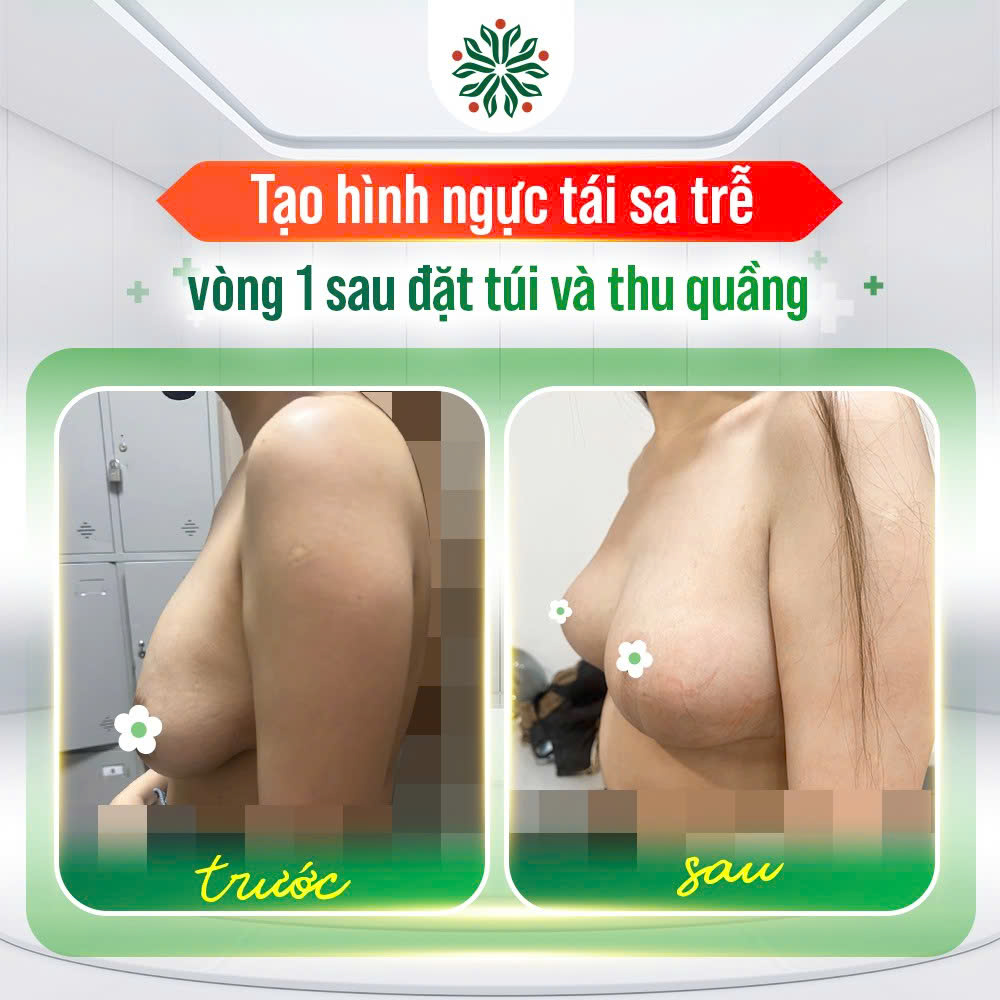
A mastopexy repositions the nipple, reshapes the remaining tissue and removes excess skin. It is worth discussing when the nipple sits at or below the fold under the breast once the implant is out, when there is clearly more skin than the remaining tissue can fill, or when the patient’s goal is a defined shape rather than simply having the implants gone.
Equally, a lift is not always needed. Patients whose main goal is removal, who accept a softer and lower breast, or who prefer the shortest possible recovery with the fewest scars, may choose removal alone — and a proportion of them decide after several months that nothing further is wanted. Our article on breast implant removal without replacement covers that path in more detail.
The trade-off is straightforward: a lift adds scars and operating time in exchange for shape and nipple position. The ASPS patient information on breast lift sets out the scar patterns used internationally.
Same operation or staged: how the decision is made
Step 1 — Assess the tissue, not just the wish. The surgeon measures nipple position relative to the fold, skin quality, breast base width and the amount of glandular tissue. Where the capsule is thickened, contracted or contains free silicone, the extent of capsule removal also enters the calculation, since a wider dissection changes how much additional work is reasonable in one sitting.
Step 2 — Weigh the blood supply. Removing an implant and its capsule, then lifting the breast in the same operation, means operating on tissue whose blood supply has already been disturbed once during that procedure. This is the main technical reason surgeons are cautious about combining a full capsulectomy with an extensive lift.
Step 3 — Consider how predictable the result will be. Tissues that have been under tension for years do not settle immediately. Planning a lift against a breast whose final position is not yet known makes the outcome less predictable, which is why staging is often preferred after long-standing or large implants.
Step 4 — Agree the plan and the interval. When staged, the second procedure is usually considered around 6 months later, once swelling has resolved and the tissues have settled. Some patients decide at that point that they no longer want it. A staged decision of exactly this kind is described in our case report on removal of textured implants after 10 years.
What a combined operation involves
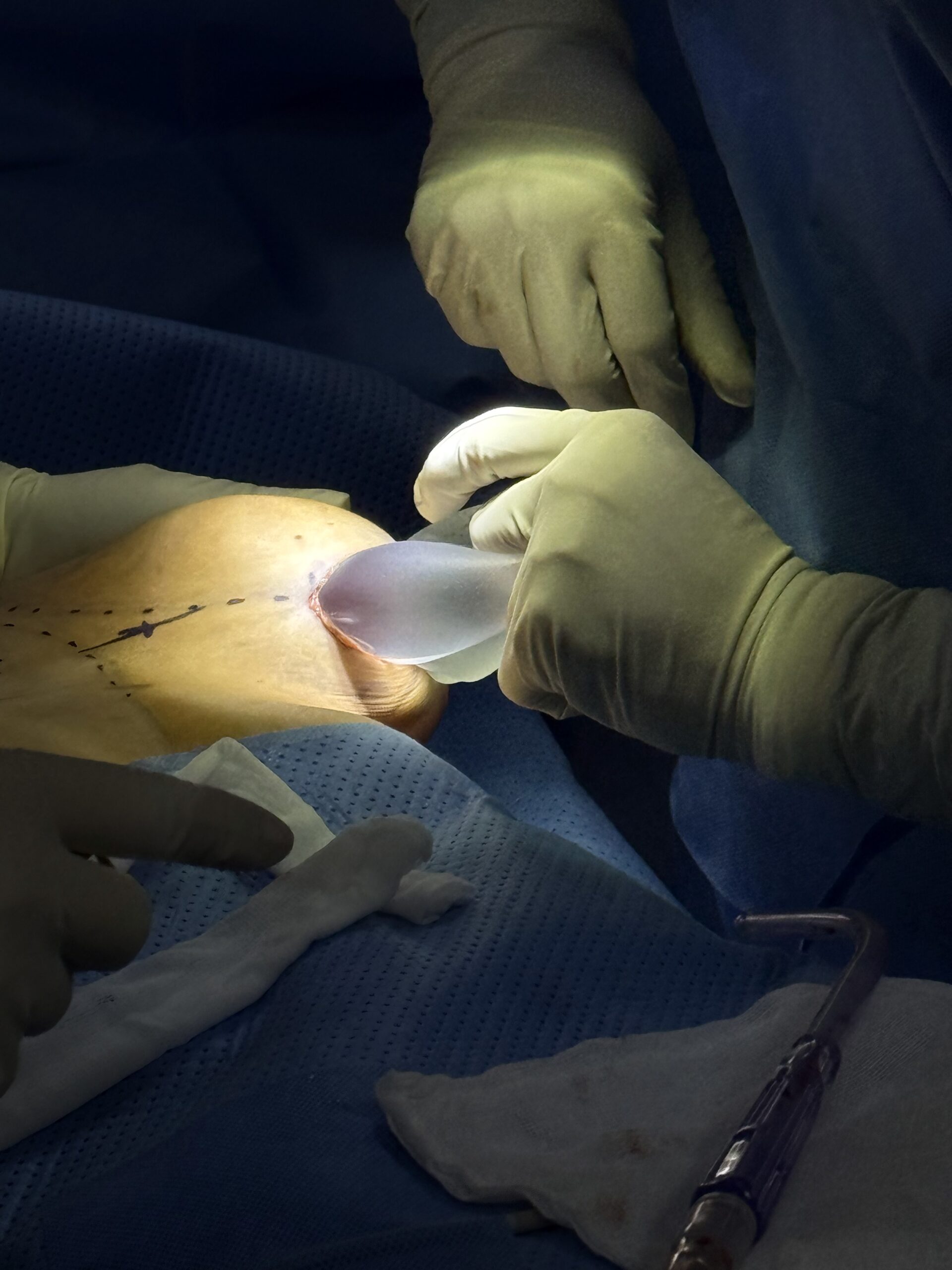
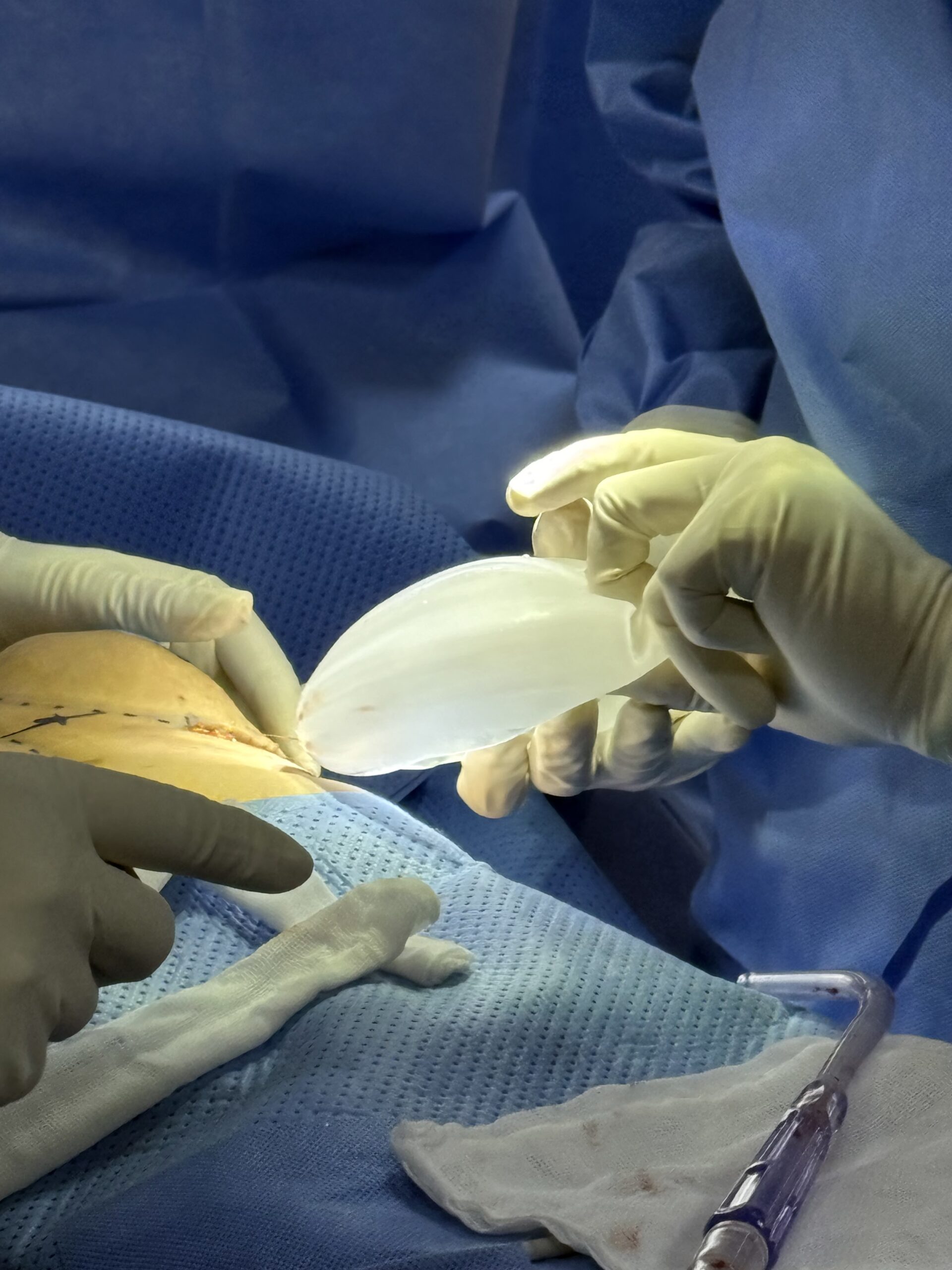
Where the assessment supports doing both at once, the sequence is: removal of the implant, removal of the capsule to the extent planned, then reshaping.
The dissection is carried out with the ultrasonic scalpel, which divides and coagulates tissue in the same pass and limits the number of separate steps needed to control small bleeding points. Once the pocket is dealt with, the remaining tissue is repositioned and the nipple is moved to the planned level, with skin removed according to the chosen scar pattern.
Where the capsule proves more adherent than expected, or bleeding is more than anticipated, the reasonable decision may be to complete the removal well and stage the lift. This is part of what should be agreed before surgery, so that a change of plan during the operation is understood rather than experienced as a surprise.
Recovery differences
Recovery after removal alone is generally shorter than after removal combined with a lift, because less tissue is handled and there are fewer incisions.
Common planning figures discussed at consultation are a return to desk-based work within 1–2 weeks and a staged return to full activity over 4–6 weeks, with the combined operation usually at the longer end of those ranges. These are planning figures rather than promises, and they vary with the extent of the capsule work, the scar pattern used and individual healing.
In both cases, supportive garments are worn as directed, upper-body exertion is restricted early and increased in stages, and review appointments monitor wound healing and the settling of shape. Final shape is assessed after several months, which is why patients are asked not to judge the result in the first few weeks.
Risks worth knowing about
Combining procedures adds to the risk profile rather than simply adding time. Alongside the risks of implant removal itself — bleeding, fluid collection, infection and the risks associated with more extensive capsule dissection — a lift introduces the possibility of wound-healing complications along the incisions, changes in nipple sensation, asymmetry requiring revision, and scars that are more noticeable than expected.
The FDA’s risks and complications material is explicit that additional surgery carries its own risks. This is part of why a surgeon may recommend doing less in one sitting rather than more, and it is a recommendation worth taking seriously rather than treating as reluctance.
What patients most often misjudge
Three expectations come up repeatedly at consultation, and correcting them early makes the decision easier.
“The breast will go back to how it looked before the implants.” The starting point a patient remembers is often from before pregnancy, weight change or the intervening years, not from the day before augmentation. Photographs from that period, where available, make the comparison honest. Skin that has carried a device for a decade behaves differently from skin that has not.
“A lift will replace the volume.” A lift repositions and reshapes what is there; it does not add volume. Patients who want fullness in the upper part of the breast after removal are asking a different question, and the options for that — including replacement with a smaller device, or accepting a softer shape — are separate discussions.
“Waiting means wasting time.” Staging is not delay for its own sake. Tissue position continues to change for months, and a lift planned against a settled breast is planned against something knowable. For patients who travel for surgery this has practical consequences, and it is worth raising early so travel is planned around the real timeline.
How the two operations differ in what they achieve
It helps to separate what each part of the procedure is responsible for.
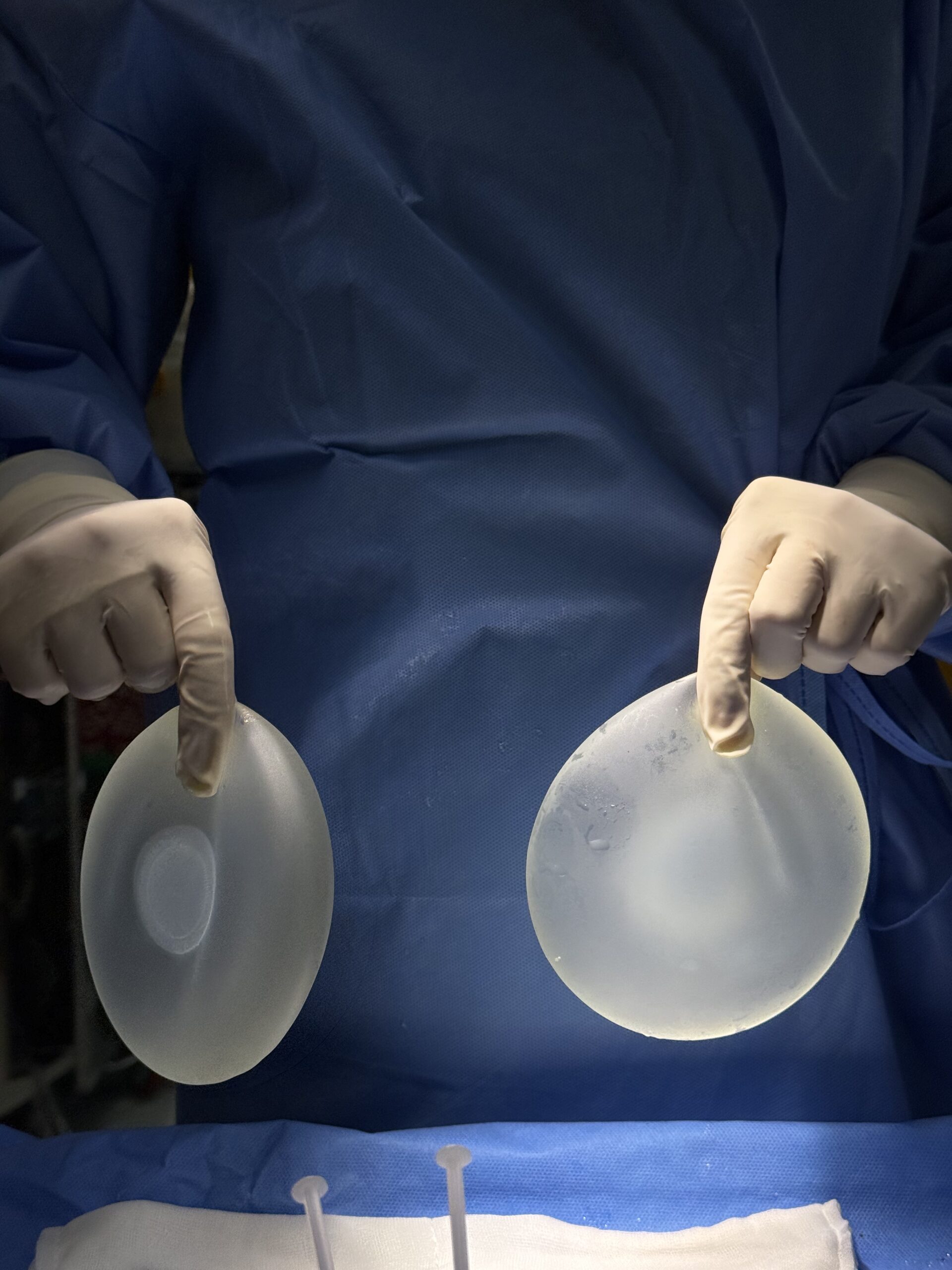
Removing the implant and capsule addresses the device and the tissue the body formed around it. It resolves symptoms caused by the implant — firmness from contracture, discomfort, concerns after rupture — and it removes the volume. What it does not do is reposition the nipple or reduce the skin envelope.
A lift addresses position and envelope. It raises the nipple, reshapes remaining glandular tissue and removes excess skin, at the cost of the scars required for that particular pattern. What it does not do is add volume or change what is happening inside the breast.
Seen this way, the question is not which operation is better but which problems a patient actually has. Someone whose only concern is the implant may need nothing beyond removal. Someone whose concern is shape and position will not be satisfied by removal alone, regardless of how well that part is done.
Questions worth asking at consultation
- Based on my measurements, where will my nipple sit after the implants are removed?
- Do you recommend a lift now, later, or not at all — and what in my examination points to that?
- If a lift is done, which scar pattern would you use and why?
- If findings during surgery differ from the plan, what will you do?
- How long would you suggest waiting before deciding on a second stage?
Photographs taken at consultation and reviewed afterwards are useful here, because they make the discussion concrete rather than hypothetical.
Planning the timeline when travelling for surgery
Patients who travel for explant surgery have a practical question on top of the clinical one: how long to stay, and whether to plan one trip or two.
For removal alone, the early review appointments and wound checks are the fixed points, and the surgeon will specify how long to remain within reach before flying. For a combined removal and lift, that period is usually longer, since there are more incisions to monitor and more that can need early attention.
Where a staged plan is chosen, the second procedure falls several months later, which for an international patient means a second trip. Some patients prefer a combined operation for that reason alone. This is a legitimate factor to raise at consultation, but it sits alongside the tissue assessment rather than replacing it — a combined operation is not advisable purely because it is more convenient to travel once.
Flight timing, compression garments and activity restrictions during travel are covered with each patient individually, and the general arrangements for international patients are described in our guide for international patients.
Frequently asked questions
Will my breasts droop, or develop ptosis, after implant removal? Most breasts sit lower and feel softer after removal, and whether this reads as ptosis depends on the factors set out above. Patients whose breast had ptosis before augmentation are the most likely to see it return, because the implant was providing volume rather than correcting position.
Can a lift be done at the same time as removal? Often yes, when the tissue assessment supports it. It is not recommended in every case, particularly after large or long-standing implants, or when extensive capsule removal is planned in the same operation.
How long should I wait before deciding on a lift? When staged, around 6 months is the usual interval discussed, so that swelling has resolved and the tissues have settled. Deciding earlier means deciding against a shape that is still changing.
Will insurance or the clinic decide this for me? The recommendation comes from the clinical assessment, and the decision is the patient’s. What the surgeon can do is explain what each option achieves, what it costs in scars and recovery, and what the likely appearance is either way. Practical planning for international patients is covered in our cost and safety guide.
Does removing the capsule affect whether I need a lift? Indirectly. The extent of capsule removal affects how much dissection the breast undergoes in one operation, which in turn affects whether adding a lift at the same time is reasonable. It does not by itself determine nipple position.
Summary
Breasts generally sit lower and feel softer after implant removal, and how visible that is depends on implant volume, years in place, skin quality, the starting point before augmentation and the amount of the patient’s own tissue. A lift addresses position and shape but adds scars, operating time and risk. Whether it is done at the same operation or staged is a clinical judgement based on tissue assessment and the extent of capsule work planned — and for many patients, waiting to see the result of removal alone is a reasonable first step.
References
- Breast Lift — American Society of Plastic Surgeons
- Breast Implant Removal — American Society of Plastic Surgeons
- Risks and Complications of Breast Implants — U.S. Food and Drug Administration
- Breast Implant Surgery — U.S. Food and Drug Administration

