
Does the Ultrasonic Scalpel Improve Breast Lift (Mastopexy) Outcomes? What the Evidence Shows — and What It Does Not
Dr. Ho Cao Vu — Plastic, Reconstructive and Aesthetic Surgeon
Dr. Ho Cao Vu holds Practising Certificate No. 028475/BYT-CCHN, issued by the Ministry of Health on 28 June 2018. He specialises in General Surgery and Plastic, Reconstructive and Aesthetic Surgery, with more than 15 years of experience in plastic, reconstructive and aesthetic surgery and more than 20 years of experience in general surgery, including the treatment of benign conditions, breast cancer, and abdominal wall and abdominal disorders at Cho Ray Hospital in Ho Chi Minh City. Dr. Ho Cao Vu is a pioneer in Vietnam in applying the Harmonic Ultrasonic Scalpel to breast augmentation surgery.
Reviewed September 2026.
Women considering a breast lift increasingly ask a specific question: does using an ultrasonic scalpel actually make mastopexy safer, less painful or better in its results? This article answers that question from the published evidence. It explains what the instrument does at tissue level, what comparative studies in breast surgery have and have not shown, why results from cancer surgery cannot simply be transferred to aesthetic breast lift surgery, and how Dr. Ho Cao Vu’s Harmo 5K approach relates to that evidence — so that the role of the ultrasonic scalpel is presented accurately, without overstating its clinical benefits. A companion article describes how the procedure itself is planned and performed.
What exactly does an ultrasonic scalpel do to tissue?
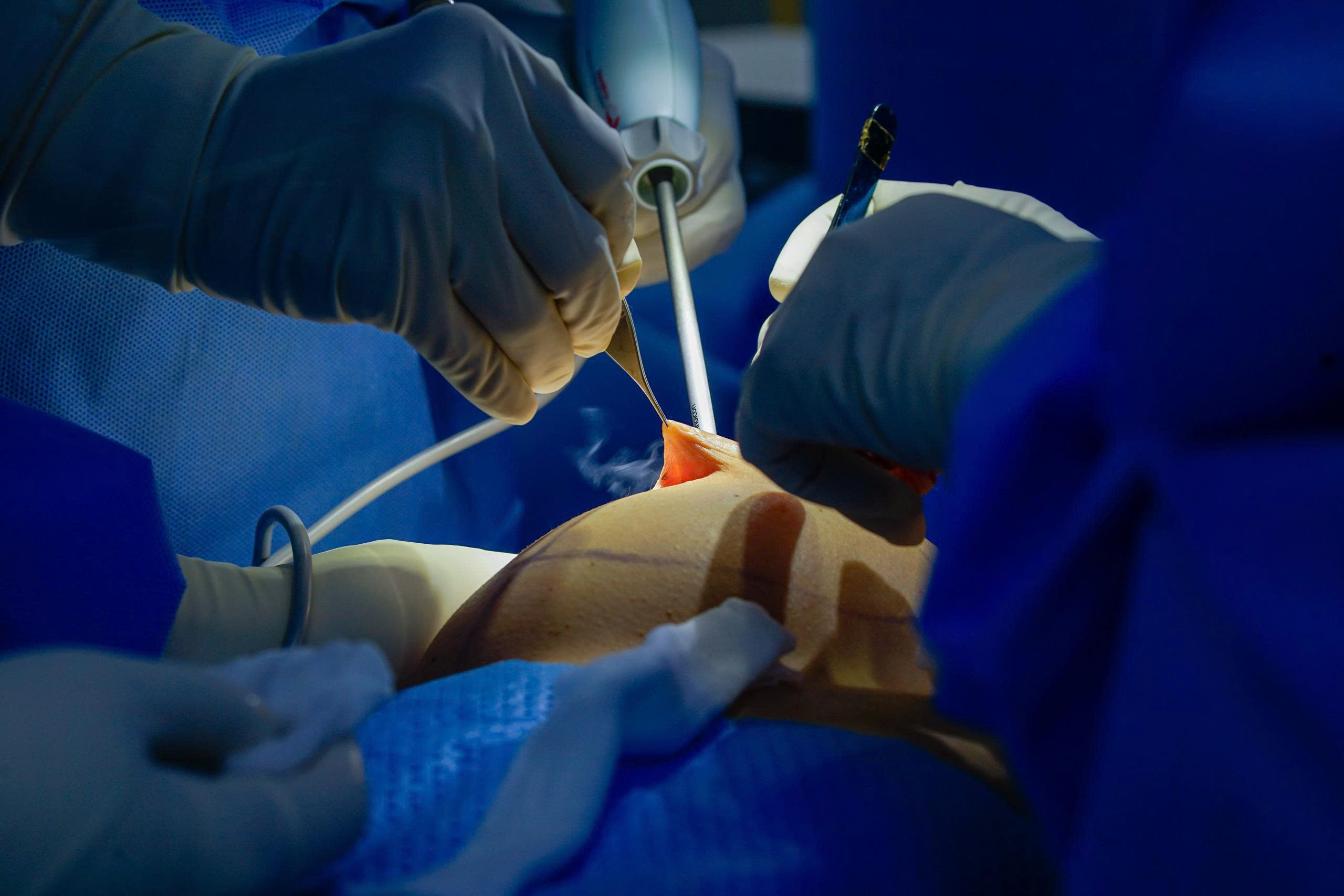
An ultrasonic scalpel converts electrical energy into high-frequency mechanical vibration at the active blade, allowing it to cut, coagulate and seal tissue during dissection.[1] Two aspects of this technology require clarification because they are often described inaccurately.
First, the ultrasonic scalpel is sometimes described as providing “cold cutting”, but this term is misleading because the instrument generates heat during activation. What distinguishes it from electrosurgery is the mechanism used to produce the tissue effect, not an absence of heat. Operating temperature and thermal spread vary according to the specific instrument, power setting, activation time, pressure applied during use, tissue type and surgical technique.[1] A single temperature or thermal-spread value should therefore not be presented as applicable in every situation.
Second, ultrasonic scalpels and advanced bipolar vessel-sealing systems use different energy modalities. According to Medtronic, LigaSure combines pressure and bipolar electrosurgical energy to seal tissue and blood vessels; it is not an ultrasonic scalpel.[2] The Harmonic Ultrasonic Scalpel is a specific ultrasonic surgical system. When referring to the instrument generally, the appropriate term is ultrasonic scalpel, whereas ultrasonic dissection refers to the surgical technique performed with the instrument.
| Ultrasonic scalpel | Monopolar electrosurgery | Bipolar vessel-sealing (e.g. LigaSure) | |
|---|---|---|---|
| How the tissue effect is produced | High-frequency mechanical vibration of the blade | High-frequency electrical current passing through tissue | Bipolar electrical energy combined with pressure between the jaws |
| Does it generate heat? | Yes, by friction at the blade | Yes, by electrical resistance in tissue | Yes, by electrical resistance in tissue |
| Cuts and seals in one activation? | Yes | Cuts or coagulates depending on mode | Seals; cutting by a separate blade in some devices |
| Lateral thermal spread | Device- and technique-dependent[1] | Device- and technique-dependent[1] | Device- and technique-dependent[1] |
Why do dissection and bleeding control matter in mastopexy?
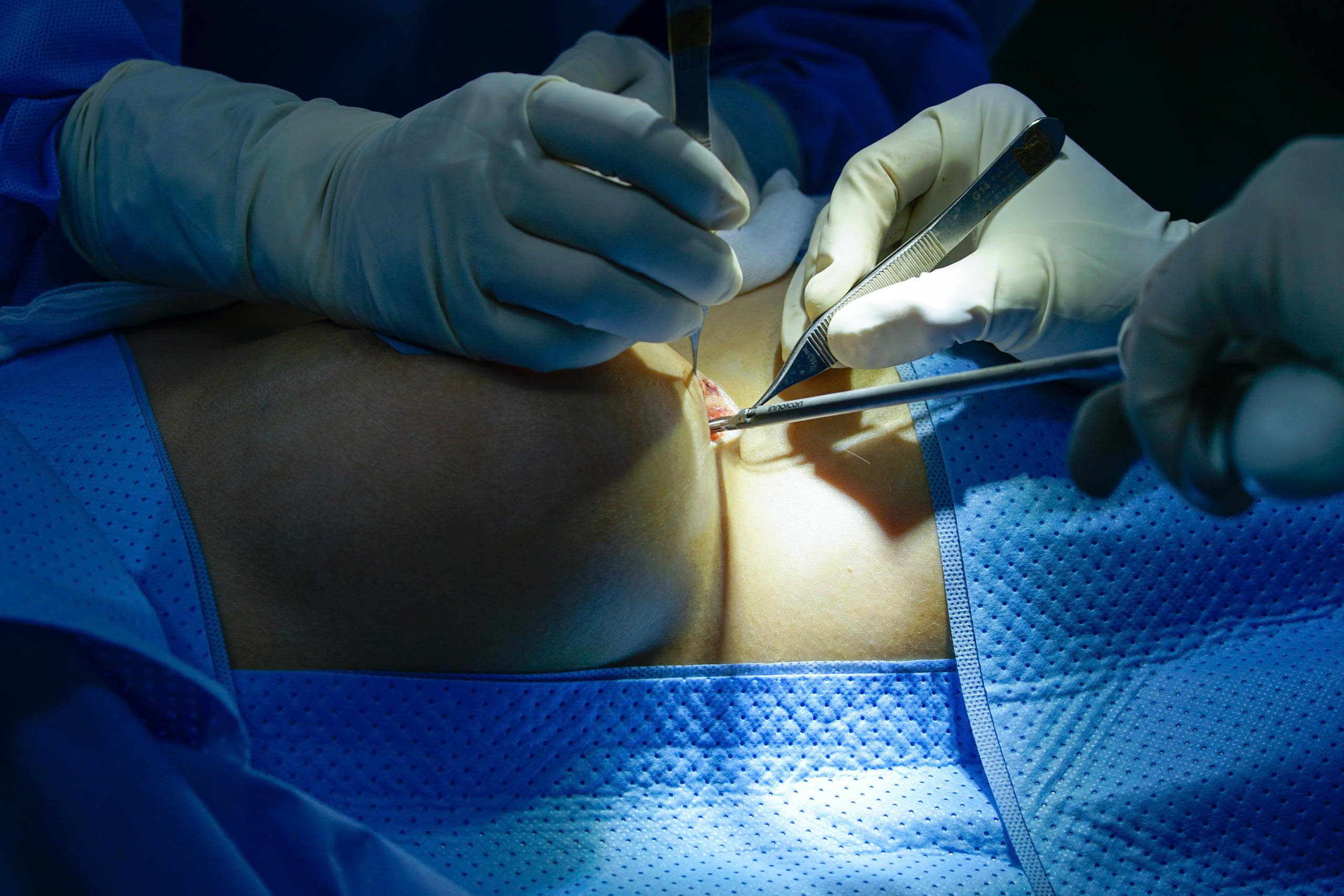
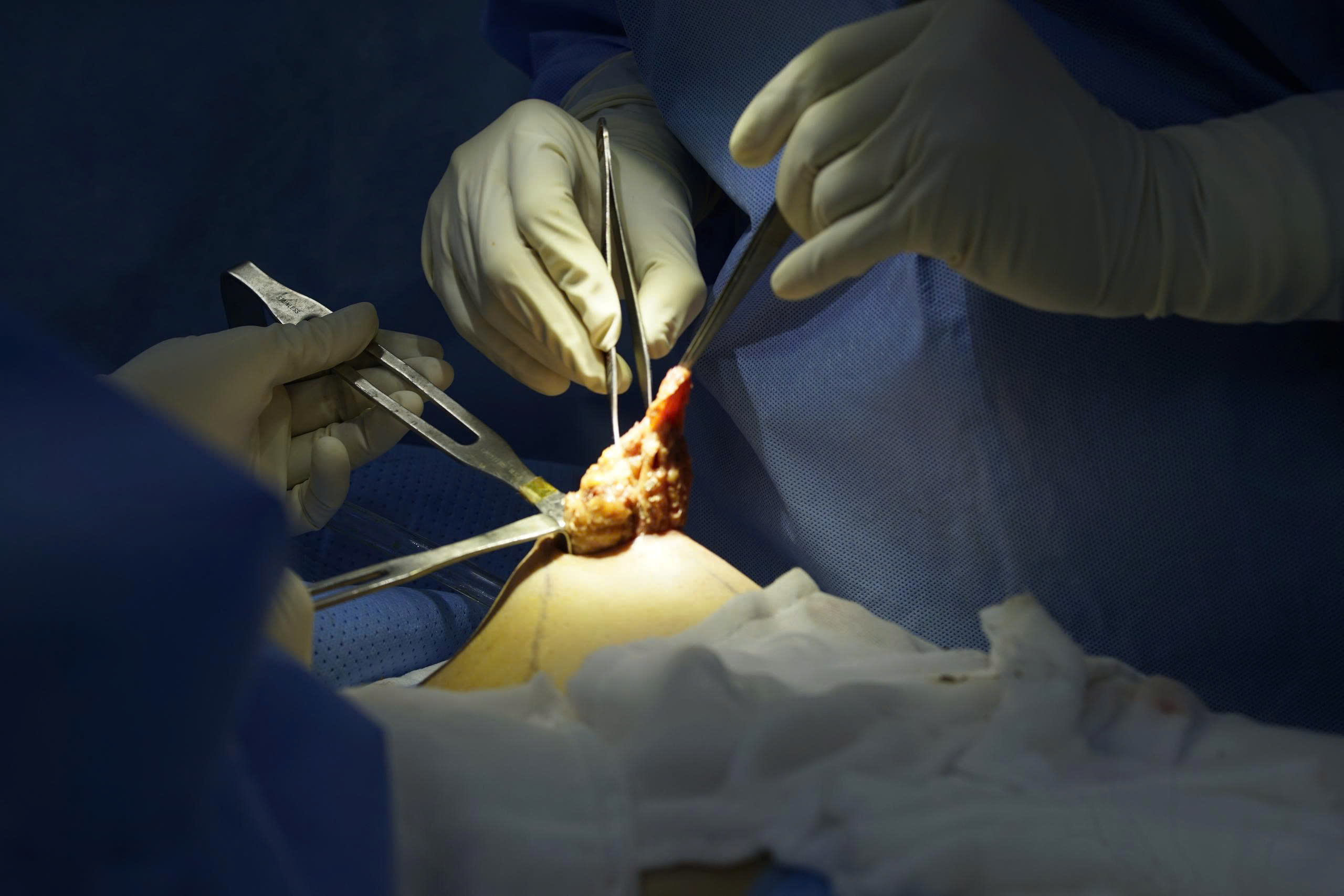
During mastopexy, the surgeon dissects breast tissue with an extensive blood supply while working near the vessels that supply the nipple-areola complex. Maintaining a clear operative field and controlling bleeding throughout the dissection are therefore important considerations.
By cutting tissue and coagulating or sealing the tissue around small blood vessels during the same activation, the ultrasonic scalpel enables dissection and haemostasis to be performed concurrently rather than as separate steps. In practice, this may reduce instrument changes and help maintain a clearer operative field during dissection.
This mechanism does not, by itself, establish that the ultrasonic scalpel results in better clinical outcomes in mastopexy. The instrument supports the surgeon’s technique but does not replace surgical judgement regarding where to dissect, how much tissue to remove, or how to preserve the blood supply to the nipple-areola complex.
What does the published evidence actually show?
The comparative evidence most often cited for ultrasonic scalpel use in breast surgery comes from studies of modified radical mastectomy, an oncological operation. In this setting, comparisons with conventional electrosurgery have reported reductions in intraoperative blood loss and postoperative drainage volume with the Harmonic scalpel; a 2015 meta-analysis pooled these comparative studies.[3] A 2024 comparative study in modified radical mastectomy reported differences in similar measures, including operating time and postoperative pain.[4] Laboratory comparison of lateral thermal damage between monopolar diathermy, the Harmonic scalpel and LigaSure has also been published, again showing that thermal effect depends on the device and how it is used.[1]
These findings must be interpreted within their original surgical context. Modified radical mastectomy differs from aesthetic mastopexy in the extent of dissection, the tissue planes involved, the patient population and the outcomes measured. Results from oncological breast surgery therefore do not directly establish the same benefits in mastopexy and should not be presented as evidence that they do.
At present, there is insufficient mastopexy-specific comparative evidence to support claims that ultrasonic scalpel use reduces complication rates, accelerates recovery or improves long-term breast shape. Descriptions of how the instrument is used in this article therefore reflect Dr. Ho Cao Vu’s surgical approach rather than outcomes established by comparative clinical trials.
| Claim sometimes made about the ultrasonic scalpel in breast lift surgery | What the evidence supports |
|---|---|
| “It reduces blood loss” | Reported in modified radical mastectomy comparisons;[3,4] not established specifically for mastopexy |
| “It means no pain after surgery” | Not a property of the instrument alone; postoperative comfort depends on the whole surgical approach and protocol |
| “It is cold cutting / produces no heat” | Incorrect — the blade generates heat; thermal spread is device- and technique-dependent[1] |
| “It reduces complications and speeds recovery in breast lift” | No mastopexy-specific comparative trial evidence to support this claim |
| “It replaces surgical skill” | No — it supports dissection and haemostasis; judgement about tissue planes and blood supply remains the surgeon’s |
How does the Harmo 5K approach relate to this evidence?
At Dr. Breast X, Dr. Ho Cao Vu applies the proprietary Harmo 5K approach in mastopexy, combining the Harmonic Ultrasonic Scalpel with the point dissection technique. Harmo 5K is the name of the surgical approach, not the ultrasonic scalpel itself, and it is a registered trademark in Vietnam. The point dissection technique involves performing the dissection in small, controlled increments rather than with long, sweeping passes. The active blade of the ultrasonic scalpel is applied to defined points along the intended tissue plane. The aim is to maintain controlled dissection within that plane and achieve haemostasis as blood vessels are encountered.
Some Harmonic systems use feedback technology to regulate energy delivery during activation. The availability and operation of this feature depend on the specific generator and instrument combination; Johnson & Johnson MedTech describes Adaptive Tissue Technology as continuously delivering energy in Harmonic devices used with the GEN11 Generator.[5]
The Harmo 5K approach was developed through more than ten years of Dr. Ho Cao Vu’s experience applying ultrasonic scalpels in aesthetic surgery. Its official criteria are stated as: no pain, no bleeding, no fluid secretion, no oral analgesics or antibiotics, and no downtime. These criteria describe the approach and protocol as performed by Dr. Ho Cao Vu — the combination of instrument, point dissection technique, surgical experience and perioperative protocol — and are not claims about the ultrasonic scalpel as a stand-alone device. Their reported advantages have also been evaluated in a large-sample cross-sectional study conducted by Dr. Ho Cao Vu; this is an internal evaluation of the approach and is not presented here as published, peer-reviewed evidence for ultrasonic scalpels in general.
What the evidence means for the risks of mastopexy
Mastopexy carries recognised surgical risks, including bleeding, infection, delayed wound healing, changes in nipple or breast skin sensation, breast asymmetry, and unfavourable or more visible scarring. Compromised blood supply to the nipple-areola complex is also a recognised complication of breast lift surgery. These risks are included in the mastopexy safety guidance published by the American Society of Plastic Surgeons.[6] The risk to the nipple-areola complex relates to the extent of dissection and the surgical technique used rather than to the instrument alone.
Patients should receive clear instructions on when to seek prompt medical review. Warning signs include increasing pain, spreading redness, fever, unusual swelling affecting one breast, or discharge from the wound. Postoperative wound guidance from Guy’s and St Thomas’ NHS Foundation Trust similarly advises patients to contact their medical team if they develop increasing redness or soreness, wound discharge, or fever.[7] Any change to prescribed medication should be made only under the direction of the surgical team and the clinician who originally prescribed it.
Mastopexy scars mature over a period of months. Early postoperative photographs taken before the scars have matured do not represent their final appearance, so the timing of the images should be considered when evaluating or comparing surgical results — including images used to illustrate any surgical technique or instrument.
Candidacy and planning, in brief
Mastopexy may be considered by women with breast ptosis whose primary goal is to reposition and reshape the breasts rather than increase their volume. Planned future pregnancy, ongoing significant weight changes, smoking and medical conditions that may impair wound healing require further consideration before surgery. These factors do not necessarily preclude mastopexy in every case, but they may affect candidacy, surgical timing, the planned technique and expected outcomes. Stable weight, general health and non-smoking status are also identified as relevant candidacy considerations by the American Society of Plastic Surgeons.[8]
The assessment usually records the degree of ptosis, the sternal notch-to-nipple distance, the nipple-to-inframammary-fold distance, breast base width, skin quality and the estimated amount of skin to be removed. Breast imaging may be requested according to the patient’s age, risk factors and clinical history, in line with applicable breast-screening guidance.[8] Two key decisions should normally be established before surgery: the planned scar pattern and whether breast volume will be addressed during the same procedure. Recovery timelines vary according to the individual patient and the surgical technique used; any timeline discussed during consultation reflects Dr. Ho Cao Vu’s protocol for the specific procedure being planned and should not be interpreted as a fixed recovery schedule for every patient.
Frequently asked questions
Is there research proving that an ultrasonic scalpel gives better breast lift results?
Not for mastopexy specifically. The comparative studies cited for ultrasonic scalpels in breast surgery come from modified radical mastectomy, where reduced blood loss and drainage have been reported.[3,4] Those results cannot be transferred directly to aesthetic breast lift surgery, and there is currently insufficient mastopexy-specific comparative evidence to claim fewer complications, faster recovery or better long-term shape.
Does using an ultrasonic scalpel mean that I will have no pain?
Not by itself. At Dr. Breast X, “no pain” is one of the defining criteria of Dr. Ho Cao Vu’s proprietary Harmo 5K approach. It reflects the combined use of the Harmonic Ultrasonic Scalpel, the point dissection technique, Dr. Ho Cao Vu’s surgical experience and his established protocol, rather than the use of an ultrasonic scalpel alone. The advantages of the Harmo 5K approach have also been evaluated in a large-sample cross-sectional study conducted by Dr. Ho Cao Vu.
Is “cold cutting” an accurate description of the ultrasonic scalpel?
No. The instrument generates heat at the blade during activation; what differs from electrosurgery is the mechanism, not the absence of heat. Thermal spread depends on the device, settings, activation time and technique.[1]
Is mastopexy the same as a breast lift?
Yes. Mastopexy is the medical term for a breast lift; both terms refer to the same surgical procedure. Mastopexy does not add breast volume; increasing volume requires a breast implant or fat grafting, which is a separate decision addressed during surgical planning.
Can I breastfeed after mastopexy?
Breastfeeding may remain possible after mastopexy, but it cannot be guaranteed. The surgical technique and the extent of dissection involving the nipple-areola complex and milk ducts may affect the ability to breastfeed; the American Society of Plastic Surgeons notes that breastfeeding ability varies between individuals after breast lift surgery.[8] If future breastfeeding is important to you, discuss this with the surgeon before the technique is selected.
How visible will the scars be?
The scar pattern depends on the amount of skin removed and the extent of nipple-areola complex repositioning. Mastopexy scars mature over a period of months, and their final visibility and appearance vary between individuals.
Arrange a consultation with Dr. Ho Cao Vu
Book a consultation with Dr. Ho Cao Vu at Dr. Breast X for an individual assessment and surgical planning. Consultations and preoperative assessments are provided at Dr. Breast X. All aesthetic surgical procedures are performed directly by Dr. Ho Cao Vu at Nam Sai Gon International Hospital under strictly controlled safety protocols.
- Phone: +84 911 413 443
- Facebook: Dr. Ho Cao Vu
References
- Družijanić N, Pogorelić Z, Perko Z, Mrklić I, Tomić S. Comparison of lateral thermal damage of the human peritoneum using monopolar diathermy, Harmonic scalpel and LigaSure. Can J Surg. 2012;55(5):317–321.
- Medtronic. LigaSure™ Technology. Vessel sealing using bipolar energy and pressure.
- Huang J, Yu Y, Wei C, Qin Q, Mo Q, Yang W. Harmonic scalpel versus electrocautery dissection in modified radical mastectomy for breast cancer: a meta-analysis. PLoS One. 2015;10(11).
- Haval S, Nichkaode P. A comparative study of Harmonic scalpel versus electrocautery dissection in modified radical mastectomy in breast carcinoma cases. Cureus. 2024;16(8).
- Johnson & Johnson MedTech. ETHICON™ GEN11 Generator with Adaptive Tissue Technology.
- American Society of Plastic Surgeons. Breast lift — risks and safety.
- Guy’s and St Thomas’ NHS Foundation Trust. Surgical wounds and preventing infections.
- American Society of Plastic Surgeons. Breast lift — candidates.
This article provides general medical information and does not replace an individual consultation, examination or treatment plan.
EDITOR NOTE — DO NOT PUBLISH THIS SECTION
v3 re-angled per anh Bảo’s 15/09 topic-cluster decision (KIT-CONG-THUC-topic-cluster-vs-1-bai.md): the 17/08 review of this article and the 26/08 review of dbx-007 had converged on the SAME title, which is why the two drafts became near-duplicates. This version keeps the reviewer’s 17/08 corrected paragraphs verbatim wherever used (mechanism, cold-cutting/LigaSure clarifications, evidence and its limits, Harmo 5K positioning, cross-sectional-study wording, risks, FAQ answers) but takes the evidence-review angle: new title/H1, evidence-led intro, one new comparison table (energy modalities) and one claim-vs-evidence table built only from the reviewer’s approved statements, and a compressed candidacy/planning section so it does not repeat dbx-007 (the procedural explainer). Cross-links between the two to be added when both are live (no URL invented). Doctor bio: reviewer’s “25 years” replaced by the client-confirmed CHỐT bio (06/09; anh Bảo approved site-wide sync 15/09). Harmo 5K trademark date: reviewer wrote “25 January 2024”, the client’s official 06/09 profile says 2023 (Cục Sở hữu trí tuệ) — per reviewer §20, SEO articles need not state the number/date, so the article says only “registered trademark in Vietnam”; please confirm which date if the client wants it stated. Cross-sectional study handled exactly per §11 (no name, sample, date, journal; not in References). Gate overrides:do_dai(~1.9k words; reviewer §3 asks the evidence section to stay concise),quy_trinh,lien_ket_noi(companion not yet live); style and GEO gates enforced. All 8 reference URLs checked 16/09 (J&J and Cureus pages block bots — 403 to curl, confirmed live via fetch).

