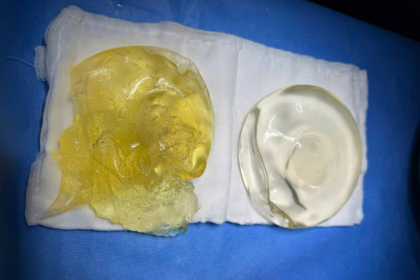
Does Insurance Cover Breast Implant Removal? When Removal Counts as Medically Necessary
MSc, MD Ho Cao Vu
Medical practice licence No. 028475/BYT-CCHN, issued by the Ministry of Health of Vietnam on 28 June 2018. Specialist in General Surgery and Plastic & Aesthetic Surgery, with over 15 years of experience in plastic and aesthetic surgery and over 20 years of general surgical experience in benign breast disease, breast cancer, abdominal wall and abdominal surgery at Cho Ray Hospital.
Updated October 2026 — cross-checked against the FDA’s page on risks and complications of breast implants, Anthem’s 2026 medical policy on breast procedures and implants and the NHS Central East commissioning policy on breast implant removal.
Many women who want their implants out ask the same thing first: will my insurance pay? The answer depends less on the wish to remove the implants than on the reason for removing them, why they were put in, and what your own policy says. Removal for a documented complication is often covered, while replacement after a cosmetic augmentation usually is not. The detail differs between insurers and countries, as the published policies below show.
Why insurers separate “medically necessary” from “cosmetic”
Insurers and public health systems generally fund treatment of a medical problem, not changes in appearance. Anthem, one of the large US insurers, sets out the distinction in its policy on breast procedures (document SURG.00023, last reviewed in May 2026). A procedure counts as medically necessary when there is a significant functional impairment that the operation can be expected to improve. It counts as reconstructive when it addresses a significant variation from normal caused by disease, injury, its treatment or a congenital defect. It counts as cosmetic when it changes an appearance that is within normal human variation.
The same document notes that not every benefit contract includes reconstructive services, and that the wording of your own contract takes precedence over the policy. Meeting the clinical criteria is therefore necessary but does not by itself settle the question.
The FDA gives the same warning from the patient’s side. Its page on risks and complications states that some insurance companies do not cover implant removal or replacement, even if there are complications and even if the first implant surgery was covered. Its page of things to consider before getting implants adds that, even with complications, the cost of removal or replacement may not be covered by insurance.
How often does the question come up?
For a sizeable minority of women with implants, removal becomes a real decision at some point. A population study from Olmsted County, Minnesota (Peterson and colleagues, Aesthetic Plastic Surgery, 2023) reviewed the records of 948 women who had implants between 1992 and 2017. The risk of a first removal rose from 13.2% at 5 years to 35.3% at 20 years. At 15 years it was 14.4% for women with cosmetic implants, compared with 45.2% after reconstruction for cancer and 55.9% after risk-reducing surgery.
The same study also shows why replacement matters for the bill. Of the 209 women whose implants were first removed, 67% had new implants put in during the same operation, 11% had them replaced later and 22% chose no replacement. Our article on how long breast implants last discusses these figures and their limits.
Which reasons for removal are usually accepted?
Published policies tend to agree on a short list of complications in which removal treats a real medical problem. The table compares one US insurer with two NHS commissioning bodies in England. It is an illustration, not a summary of every policy.
| Reason for removal | Anthem, US (2026) | NHS Central East ICB (2026) | NHS Humber and North Yorkshire (2024) |
|---|---|---|---|
| Silicone implant rupture | Covered when documented by mammography, ultrasound or MRI | Funded after leakage or rupture | Commissioned for rupture inside or outside the capsule |
| Capsular contracture | Pain related to Baker Class IV | Baker grade III or IV, confirmed by a specialist | Grade 4 with severe pain, or a capsule that interferes with mammography |
| Infection | Infection of the implant or surrounding tissue | Recurrent infection or seroma | Severe recurrent infections |
| Implant exposed through the skin | Covered | Not listed | Not listed |
| Confirmed BIA-ALCL | Covered | Funded | Listed indication is “breast disease”; the rationale names BIA-ALCL |
| Systemic symptoms (breast implant illness) | Not medically necessary | Outside the listed indications, so not funded | Not commissioned |
The Baker scale used here grades how hard the breast has become around the implant. Kaiser Permanente of Washington summarises it in four classes: in Class I the breast feels as soft as a normal breast; in Class II it is less soft and the implant can be felt but not seen; in Class III it is firm and the implant or a distortion is visible; and in Class IV it is hard, painful, cold, tender and distorted. Our article on capsular contracture explains how the grade is assessed.
Anthem also lists removal before surgical treatment of breast cancer. BIA-ALCL, which appears in every column, is a rare lymphoma linked mainly to textured implants.
Reasons that are usually not covered
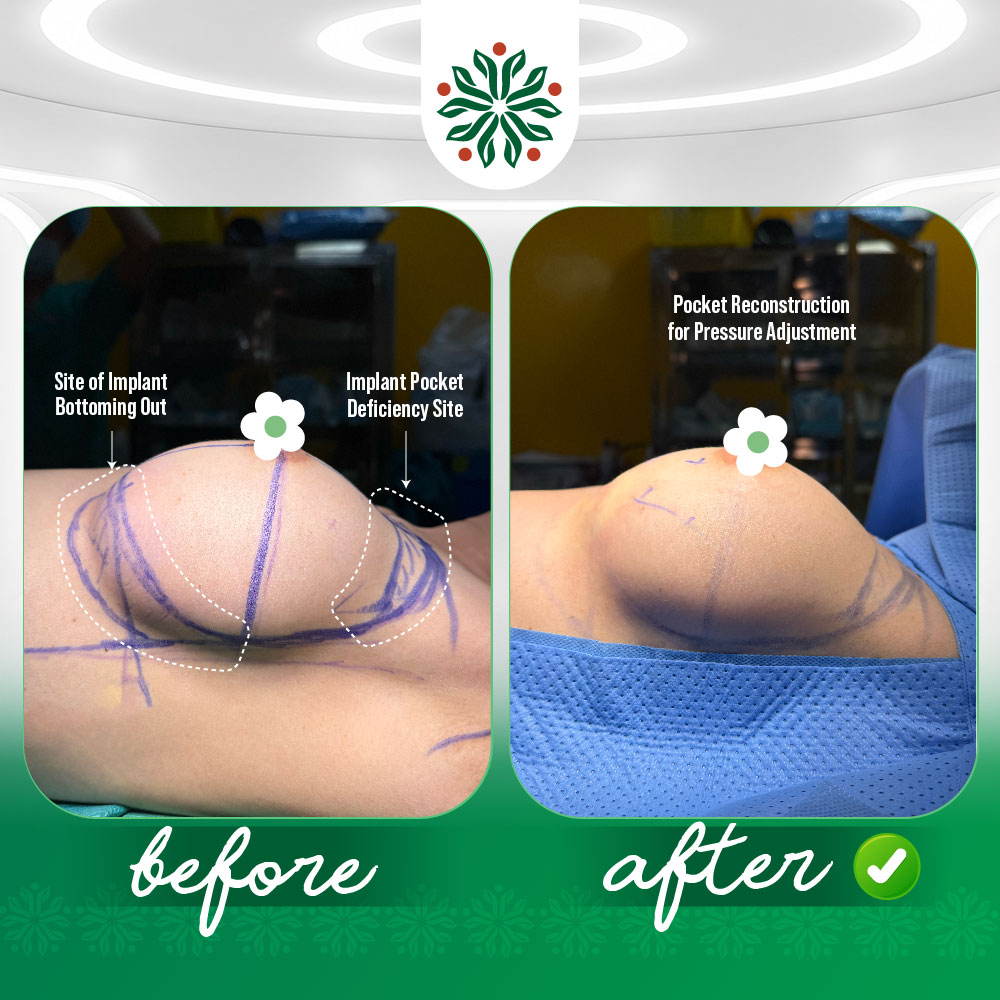
Systemic symptoms and worry about future risk are where policies most often say no. Anthem considers removal of any type of implant not medically necessary for systemic symptoms attributed to connective tissue or autoimmune disease, for personal anxiety, or for pain that is not related to contracture or rupture. It also treats removal of a ruptured saline implant as not medically necessary when the implant was placed for cosmetic reasons, because the medical concerns about rupture relate to silicone gel. The NHS policy in Humber and North Yorkshire does not commission removal for symptoms described as breast implant illness.
The Humber and North Yorkshire policy cites the UK medicines regulator, the MHRA, as saying that it is currently unknown whether there is a link between breast implants and the reported symptoms. Our article on breast implant illness looks at what the research does and does not show.
A refusal from an insurer is a funding decision, not a medical judgement on whether removal is reasonable for you. Women who are not covered can still choose removal and pay for it themselves, and that decision belongs to the patient after a proper consultation.
Removal and replacement are judged separately
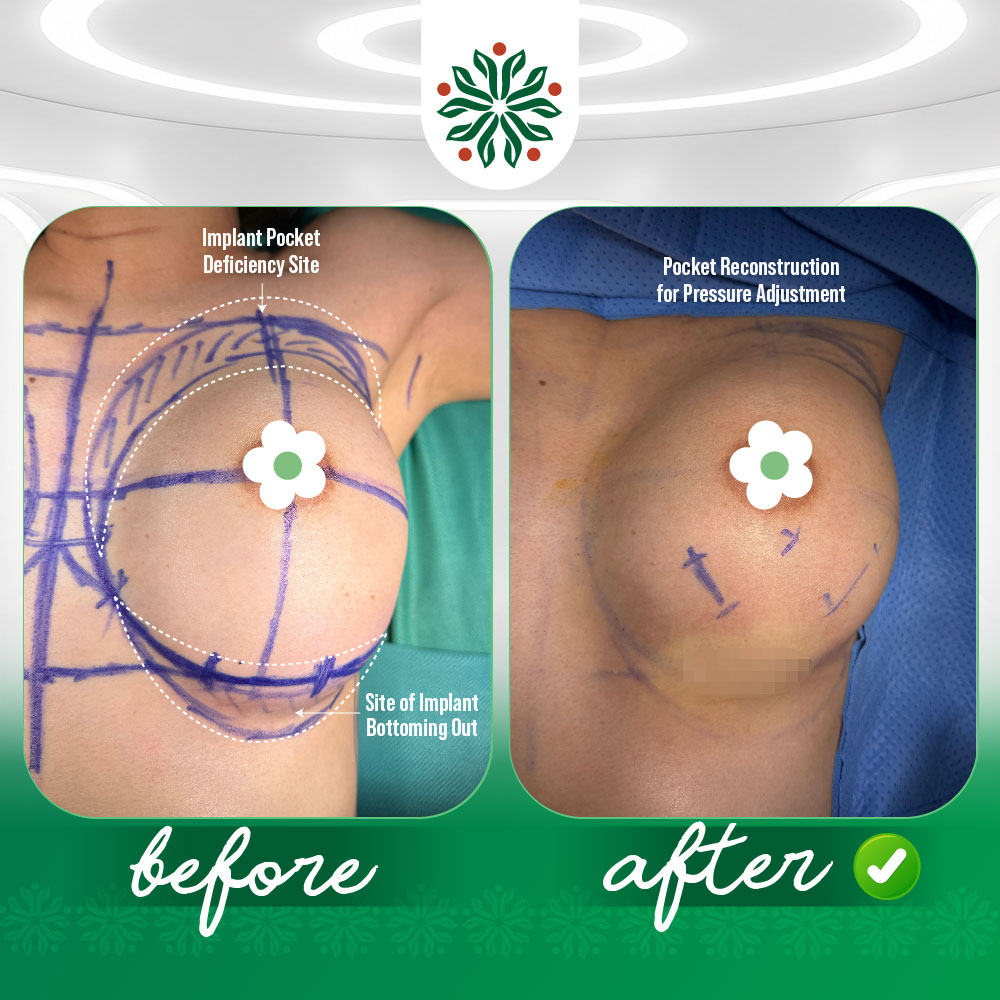
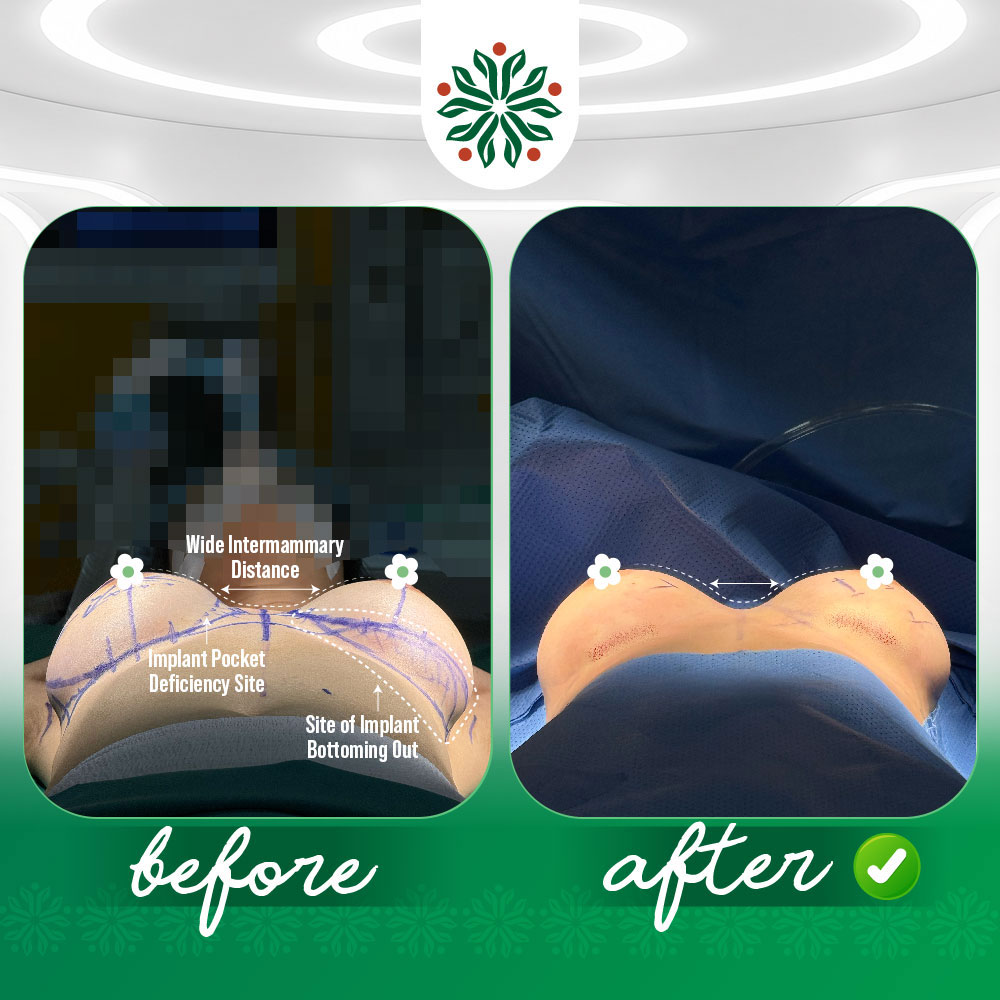
A covered removal does not mean a covered replacement. Under Anthem’s policy, putting new implants back after implants that were originally inserted for cosmetic reasons is considered cosmetic, even when the removal itself was medically necessary. Breast lift, implant repositioning and augmentation are treated in the same way unless they form part of a covered reconstruction.
The two NHS policies take a similar line for implants inserted privately. Central East states that privately inserted implants may be removed by the NHS but not replaced, and that no subsequent cosmetic procedure will be funded. Humber and North Yorkshire commissions replacement only when the original insertion was funded by the NHS and followed cancer surgery, trauma or congenital asymmetry.
Australia’s Medicare Benefits Schedule follows a comparable logic. Items 45553 and 45554 cover removal and replacement only after medical complications (rupture, migration of implant material or symptomatic capsular contracture), and only if intra-operative photographs show that removal alone would cause unacceptable deformity or the original implant was inserted for breast cancer or a developmental abnormality.
The practical result for many women is a split bill: the removal may be funded, while any replacement or lift is paid privately. Ask in advance how the surgeon’s, anaesthetic and facility fees would be divided, because the parts of one operation can be billed differently. What removal without replacement looks like is described in our complete guide to explant surgery.
Implants placed after a mastectomy
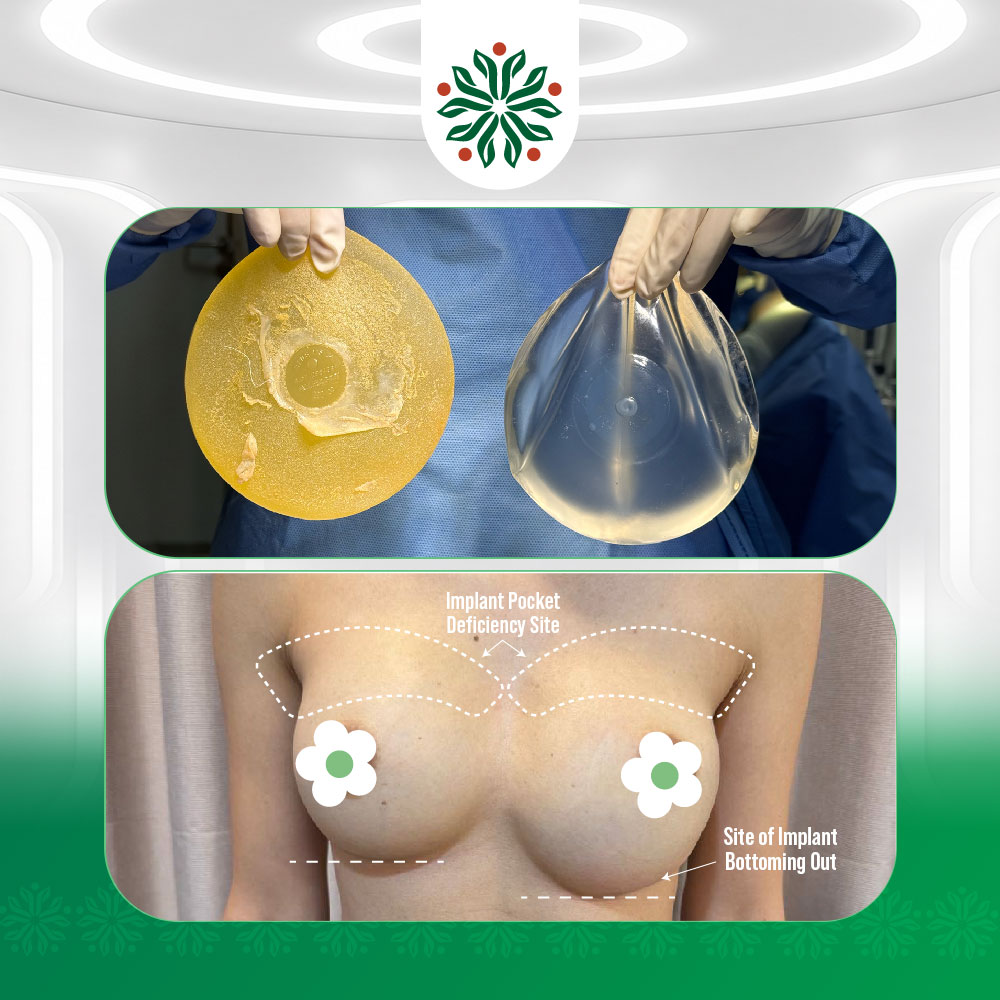
Implants used to rebuild the breast after a mastectomy are in a different category. In the United States, the Women’s Health and Cancer Rights Act of 1998 (WHCRA) applies when a group health plan or insurer covers mastectomies. According to the US Department of Labor, such plans must cover all stages of reconstruction of the affected breast, surgery on the other breast to produce a symmetrical appearance, prostheses, and treatment of physical complications of the mastectomy, including lymphoedema.
The Department of Labor adds that the law applies whether or not the mastectomy was for cancer, and that deductibles or coinsurance may apply but should be no greater than for other benefits in the plan. Some church and government plans are exempt, and individual policies fall under state insurance departments.
Anthem’s policy reflects this. For implants originally placed for reconstruction after mastectomy, lumpectomy or breast cancer treatment, removal with or without new implants is considered reconstructive when a Baker Class III contracture has caused visible distortion, and when a saline implant has ruptured. Kaiser Permanente of Washington goes further in the other direction: its criteria for members outside Medicare list removal and re-implantation as medically necessary only when the implants were part of a reconstructive procedure and a complication such as infection, extrusion, rupture, Baker Class II to IV contracture or interference with cancer diagnosis or treatment is present.
How the NHS handles removal in England
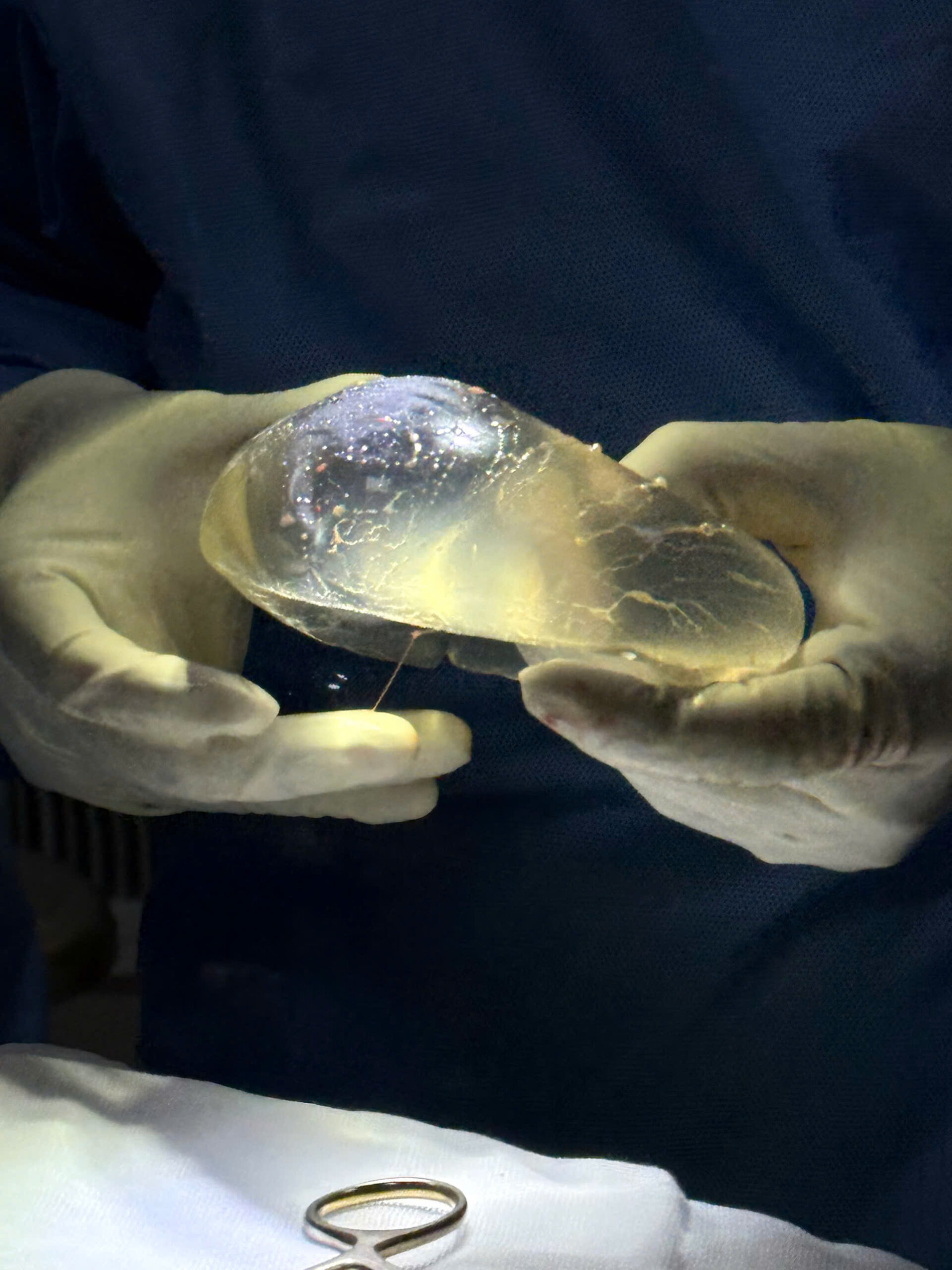
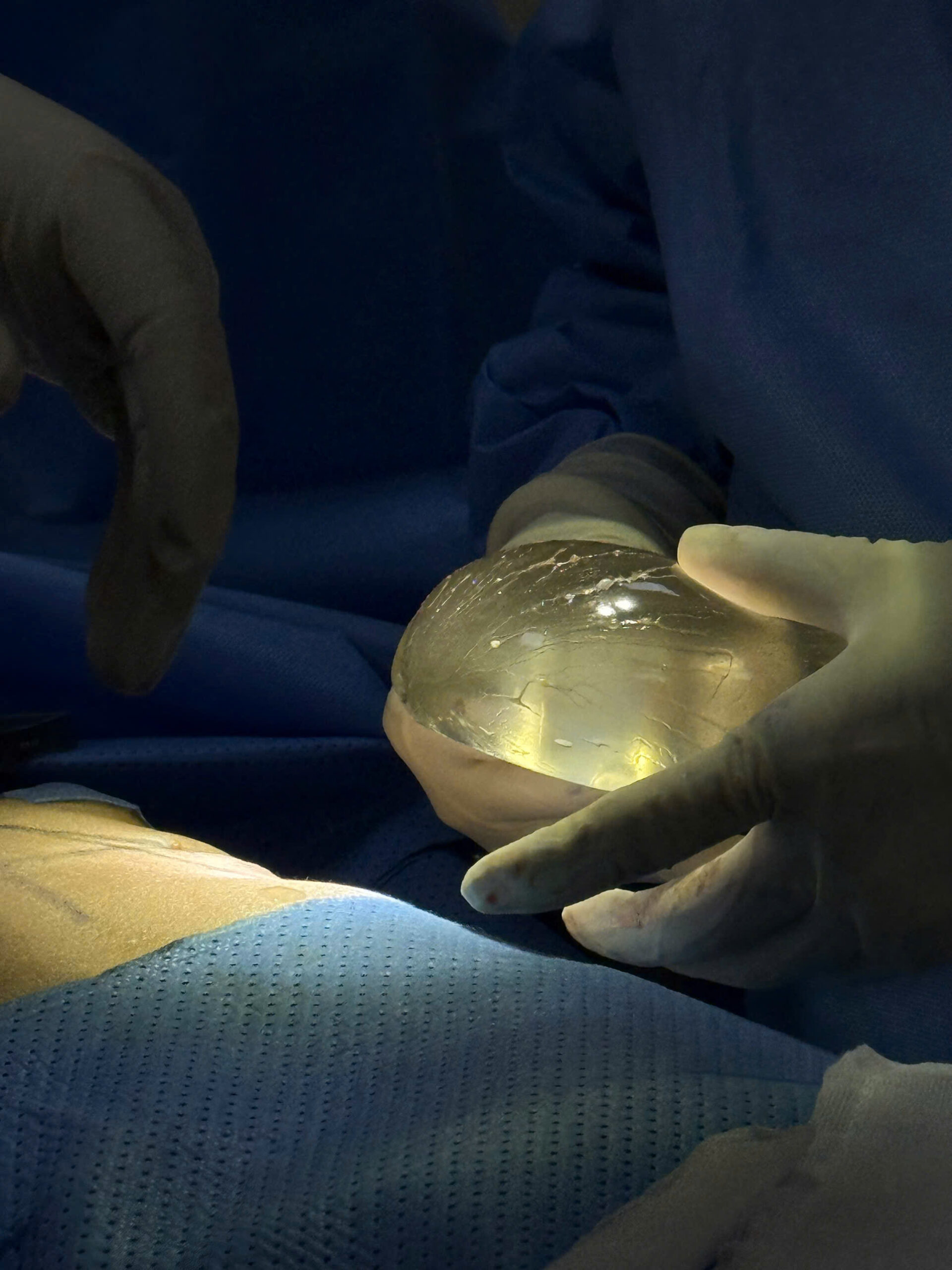
In England, the rules are set locally by integrated care boards (ICBs), so they vary by area. The Central East ICB policy, ratified on 1 April 2026, funds removal of any breast implant, including PIP implants, for leakage or rupture, Baker grade III or IV contracture confirmed by a specialist, recurrent infection or seroma, or BIA-ALCL. Removal outside those indications is not funded. Implants placed after breast cancer surgery or risk-reducing surgery are outside its scope and follow separate guidance.
Both NHS policies expect the private provider to deal with complications of private surgery first. Central East’s rationale says complications of privately funded surgery should be addressed by the private provider. Humber and North Yorkshire directs patients whose first operation was privately funded back to their private provider, and offers NHS removal, but not replacement, if the patient meets the criteria and the private provider cannot operate.
Neither policy has a separate rule for an augmentation done abroad; it is treated simply as privately funded surgery. For urgent problems such as a spreading infection, seek care at once rather than waiting for a funding decision.
How Medicare items apply in Australia
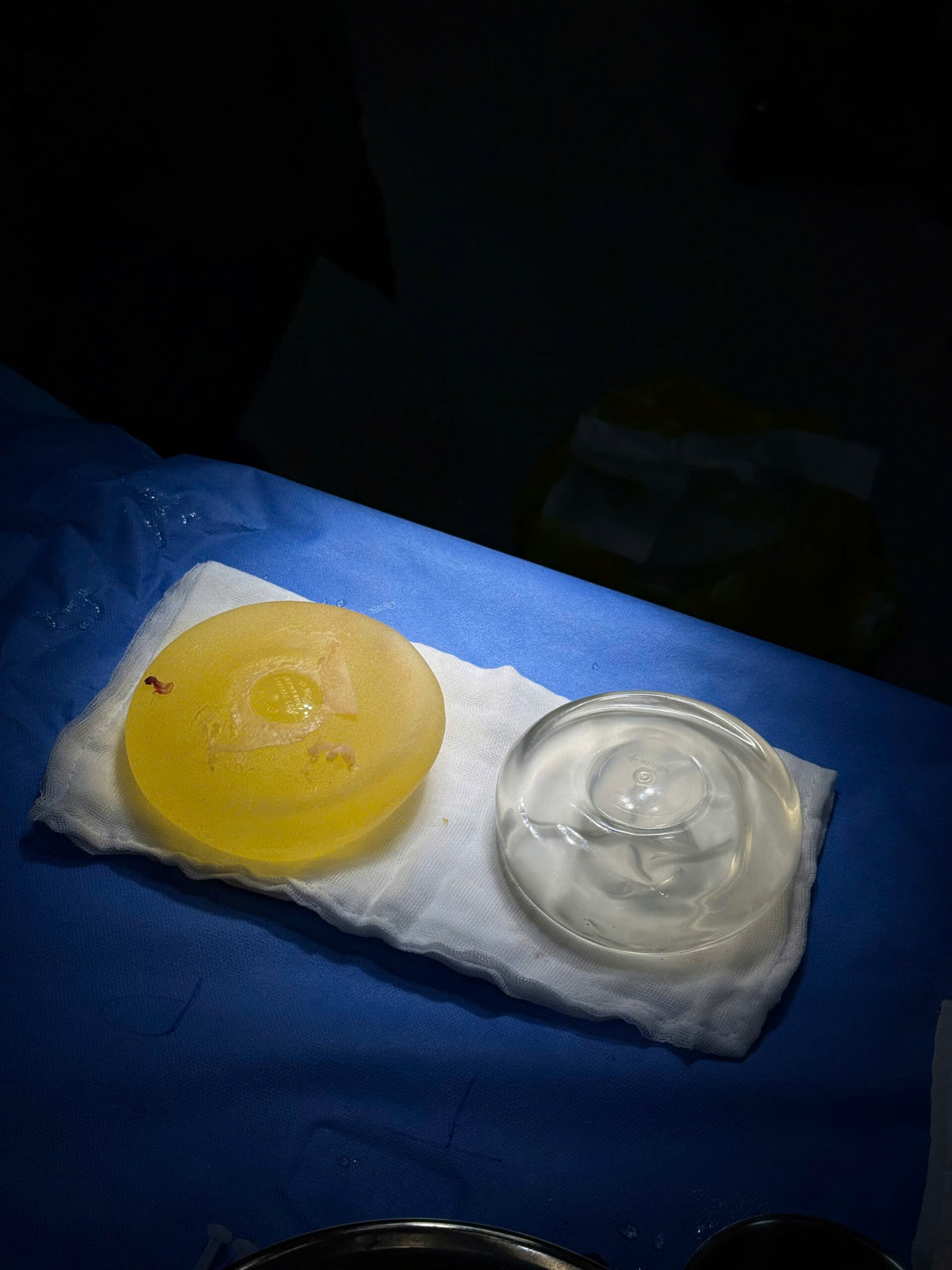
The Australian Government’s private health information site lists breast implant removal items under the clinical category “Breast surgery (medically necessary)”. Item 45548 covers removal of a breast prosthesis as an independent procedure. Item 45551 covers removal with excision of at least half of the fibrous capsule, without a new implant, and requires the specimen to be sent for histopathology with the volume removed documented.
The site describes this as an indicative list and advises speaking with your insurer about what your hospital cover includes, so ask your fund for a written answer that names the item numbers your surgeon intends to use.
What to gather before asking for approval
Coverage decisions rest on documents, and the published criteria show which ones are expected. A practical sequence looks like this.
Step 1 — Get the diagnosis documented. Anthem accepts silicone rupture when it is documented by mammography, ultrasound or MRI, and Medicare items 45553 and 45554 require photographic or imaging evidence of clinical need in the notes. A written scan report is therefore part of the evidence these criteria ask for, not an optional extra. When imaging is needed and how often is set out in our article on screening for silent rupture.
Step 2 — Collect your clinical notes. Kaiser Permanente of Washington asks for the last six months of clinical notes and, where relevant, the last six months of radiology notes. Ask your doctor to record the Baker grade, any infection and how symptoms affect daily life.
Step 3 — Find your implant details. The implant card, or the operation note from your original surgery, gives the manufacturer, model, surface and fill. This matters because some criteria depend on the implant type, such as silicone rather than saline, or Allergan BIOCELL textured implants.
Step 4 — Ask for prior authorisation in writing. Request a written decision before surgery that names the procedure, whether capsule removal is included, and whether any replacement or lift is excluded. For anything left outside cover, get a separate written quote before the operation.
Image placement: a checklist graphic with four icons — scan report, clinical notes, implant card and written pre-authorisation — caption “Documents that support a coverage request”
If removal is not covered: paying privately
The American Society of Plastic Surgeons gives an average surgeon’s fee of $3,979 for implant removal, based on its latest statistics, and notes that this excludes anaesthesia, operating facility and other related expenses. It also notes that many surgeons offer financing plans where insurance does not pay.
Some women weigh self-pay at home against surgery in another country. None of the insurance policies reviewed here addresses treatment abroad, so ask your insurer in writing before you book whether any part of an operation overseas, or any later complication care, would be reimbursed. Our cost and safety guide for implant removal in Vietnam sets out what a trip for surgery involves, including the stay and follow-up.
Video placement: the surgeon explaining on an anatomical model what an implant rupture and a capsular contracture look like on imaging and examination, and which findings are usually recorded in the notes — 3 minutes
Frequently asked questions
If only one implant qualifies, can both be removed? Some NHS policies allow it. Humber and North Yorkshire commissions removal of both implants when one meets the criteria, and Central East says bilateral removal may be considered when it is clinically appropriate. Insurers outside the NHS set their own rules, so ask before surgery.
Will insurance pay for the scans that check my implants? Not necessarily. The FDA notes that the MRI or ultrasound recommended to check silicone implants for rupture may not be covered by your insurance.
Can I have textured implants removed because of the lymphoma risk? It depends on where you are insured. Anthem covers elective removal in defined higher-risk groups, including Allergan BIOCELL implants, while the Humber and North Yorkshire policy does not commission removal for the risk of BIA-ALCL alone.
What if my request is refused? Both NHS areas reviewed here have an individual funding request route, which Central East describes as an application on grounds of clinical exceptionality when a patient does not meet the policy criteria. Elsewhere, ask your insurer how its review process works and what further evidence it would accept.
Conclusion
Insurance usually pays for implant removal when there is a documented complication such as silicone rupture, severe painful contracture, infection or BIA-ALCL, and usually does not when the reason is cosmetic or systemic symptoms. Replacement after a cosmetic augmentation is generally self-paid, while implants placed after a mastectomy have wider protection, including WHCRA in the United States. Because rules differ by insurer and region, gather your scans, notes and implant details, and get a written decision before surgery.
References
- U.S. Food and Drug Administration — Risks and Complications of Breast Implants (content current as of 15 December 2023) — https://www.fda.gov/medical-devices/breast-implants/risks-and-complications-breast-implants
- U.S. Food and Drug Administration — Things to Consider Before Getting Breast Implants (content current as of 8 March 2023) — https://www.fda.gov/medical-devices/breast-implants/things-consider-getting-breast-implants
- Anthem — Medical Policy SURG.00023: Breast Procedures; including Reconstructive Surgery, Implants and Other Breast Procedures (published 1 July 2026, last reviewed 14 May 2026) — https://anthem.com/medpolicies/abc/active/mp_pw_a053315.html
- Kaiser Foundation Health Plan of Washington — Clinical Review Criteria: Breast Implant Removal & Re-Implantation (last revised 4 February 2025, reviewed 3 June 2025) — https://wa-provider.kaiserpermanente.org/static/pdf/hosting/clinical/criteria/pdf/breast_implant.pdf
- U.S. Department of Labor, Employee Benefits Security Administration — Your Rights After a Mastectomy (Women’s Health and Cancer Rights Act of 1998) — https://www.dol.gov/agencies/ebsa/about-ebsa/our-activities/resource-center/publications/your-rights-after-a-mastectomy
- NHS Central East Integrated Care Board — Clinical Policy: Breast – Breast Prosthesis Removal, version 1.0 (ratified 1 April 2026) — https://www.centraleast.icb.nhs.uk/wp-content/uploads/2026/04/BREAST1-1.pdf
- Humber and North Yorkshire Health and Care Partnership — Breast prosthesis removal policy (effective 1 October 2024, review due 30 June 2027) — https://hnyppr.org.uk/w/breast-prosthesis-removal-policy
- Australian Government, privatehealth.gov.au — Breast surgery (medically necessary): MBS items 45548, 45551, 45553 and 45554 — https://www.privatehealth.gov.au/dynamic/MBSItems/BreastSurgery
- American Society of Plastic Surgeons — Breast Implant Removal Cost — https://www.plasticsurgery.org/cosmetic-procedures/breast-implant-removal/cost
- Peterson MN, Giblon RE, Achenbach SJ, Davis JM 3rd, TerKonda SP, Crowson CS. The Incidence and Outcomes of Breast Implants Among 1696 Women over more than 50 Years. Aesthetic Plastic Surgery 2023;47:2268–2276 — https://doi.org/10.1007/s00266-023-03535-4