Planning Breast Implant Removal in Vietnam From Overseas: What to Send Before an Online Consultation
MSc, MD Ho Cao Vu
Medical practice licence No. 028475/BYT-CCHN, issued by the Ministry of Health of Vietnam on 28 June 2018. Specialist in General Surgery and Plastic & Aesthetic Surgery, with over 15 years of experience in plastic and aesthetic surgery and over 20 years of general surgical experience in benign breast disease, breast cancer, abdominal wall and abdominal surgery at Cho Ray Hospital.
Updated October 2026 — cross-checked against the FDA guidance on breast implant labelling and the patient device card (2020), the American Society of Plastic Surgeons’ practice reference on patients travelling for surgery (2024) and the CDC Yellow Book chapter on medical tourism (2026).
For a woman living outside Vietnam, planning breast implant removal usually starts with an online consultation, long before she meets the surgeon in person. What she sends at that stage decides how much the surgeon can tell her. An implant card, the original operative report, recent imaging and clear photographs answer different questions. This guide explains what each document shows, how to take useful photographs, what to agree before booking flights, and how follow-up can continue after returning home.
What an online consultation can and cannot decide
An online consultation is a planning conversation. The surgeon reviews your history and your reasons for removal, looks at the documents and photographs you send, and explains which options are likely to be discussed: removal alone, removal with replacement, a capsulectomy, or removal combined with a lift. It also shows which information is still missing.
It cannot replace the examination. Capsule firmness, skin elasticity, the exact position of the implant and the condition of the breast tissue have to be felt and measured in person, and some of these findings change the operation. For international patients at Dr. Breast X, the consultation often starts remotely and is then confirmed in person before surgery, as described in our guide to breast implant removal cost and safety in Vietnam.
Remote consultation is now common across plastic surgery. A 2026 systematic review and meta-analysis by Mehdizadeh and colleagues in Aesthetic Plastic Surgery pooled 72 studies with 9,435 participants and found a pooled patient satisfaction rate of 83.9%. Its outcomes were satisfaction, use, travel and complications, rather than agreement between remote and in-person surgical plans. For implant removal, the remote stage works best as preparation, so that the in-person visit in Vietnam confirms a plan rather than starts it.
Documents to gather before the consultation
The aim is to let the surgeon know what is inside the breast, how it was placed and what has been found since. Most of this information already exists, but it is often spread across clinics, hospitals and countries.
The implant card
In the United States, breast implants are tracked medical devices. In its 2020 labelling guidance, the U.S. Food and Drug Administration (FDA) recommended that every patient receive a patient device card immediately after surgery. The recommended content includes:
- the serial or lot number of each implant;
- the style and size;
- the Unique Device Identifier (UDI);
- a web link to the current labelling for that implant;
- a toll-free telephone number for the manufacturer.
Older implants may come with a different card, a warranty document or only an entry in the hospital record. Our frequently asked questions list what Dr. Breast X checks before removal: the brand, the filling (saline or silicone gel), the surface (smooth or textured), the size including diameter and projection, and the warranty period. Textured implants and implants of unknown origin need particular attention, and the FAQ also asks whether the implant appears on a list that calls for removal or special monitoring.
If the card is lost, the hospital or clinic where the implants were placed may still hold the record. Ask for the implant details and the operative report together.
The original operative report
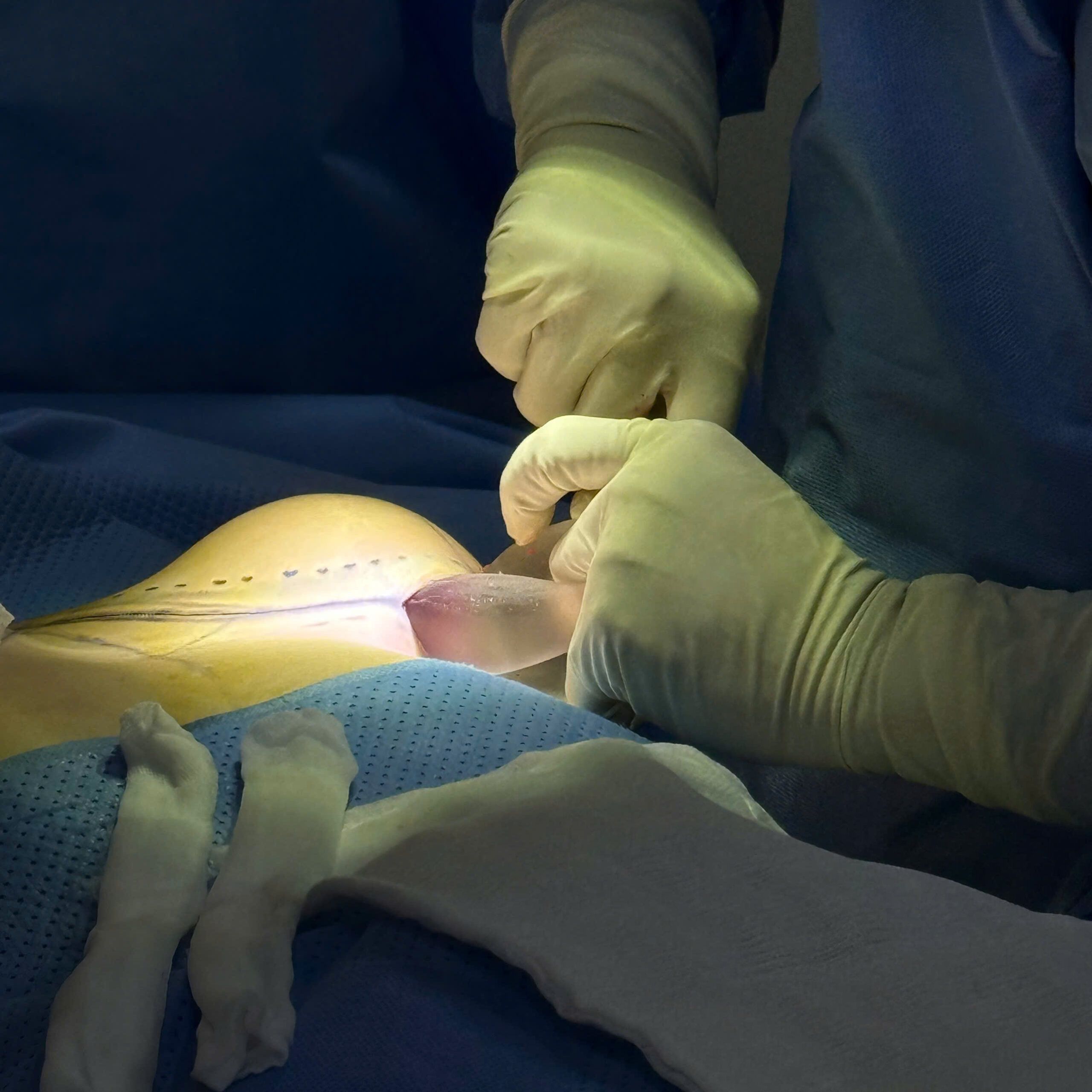
The operative report describes how the first surgery was done: the incision, the plane of placement (above or below the muscle), the implant volume on each side and any unusual findings. A surgeon planning removal uses these details to judge the approach and to anticipate what the capsule may look like. If you have had more than one operation, send the report for each one, including any capsulotomy, implant exchange or lift.
A systematic review by McAuliffe and colleagues (2023) on complications of surgery abroad treated in the United States described unavailable or incomplete records as one of the difficulties faced by the doctors who took over care. The same gap applies in reverse: a surgeon in Vietnam can plan more accurately when the history from home is complete.
Imaging reports and the images themselves
For silicone gel implants, the FDA recommends a first ultrasound or MRI at 5 to 6 years after implant surgery, then every 2 to 3 years, even without symptoms. An MRI is recommended for women with symptoms or with uncertain ultrasound results. Women who have followed this schedule may already have a recent scan.
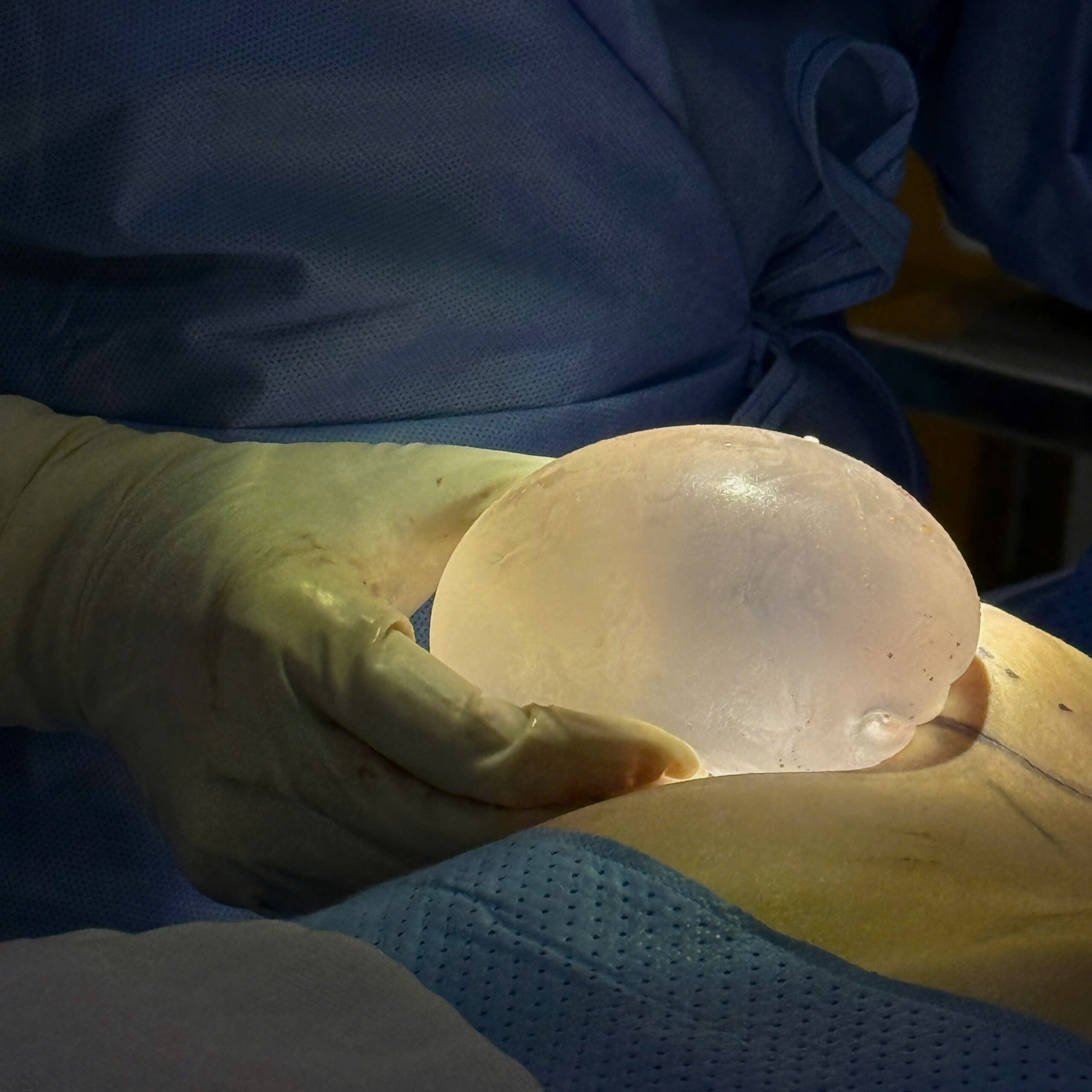
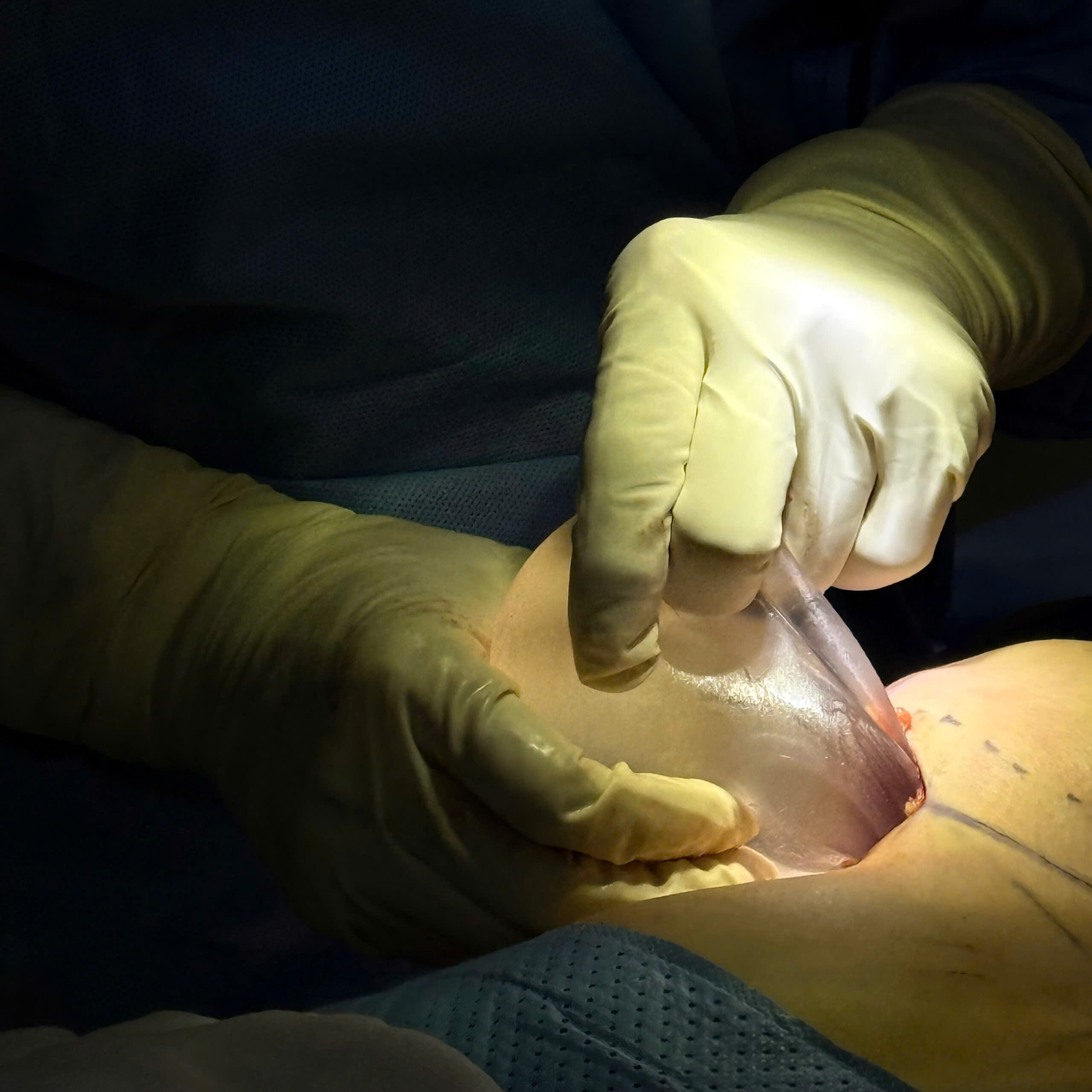
Send both the written report and, where possible, the images themselves, usually as a download link or a disc from the imaging centre. The report gives the radiologist’s conclusion, while the images allow the surgeon to look at the capsule, any fluid around the implant and the shape of a rupture. Our FAQ describes a specialised breast MRI as part of the assessment before removal or capsulectomy: it shows the breast tissue, the implants, the pocket and the capsule, and helps detect rupture, contracture or a suspicious lesion. Whether an existing scan is sufficient, or a new one is needed in Vietnam, is decided after the surgeon has reviewed it. Our article on screening for silent rupture explains why rupture can be present without symptoms.
Medical history and medications
A short written summary saves time during the call:
- current medications and supplements, with doses;
- allergies and previous reactions to anaesthesia;
- chronic conditions, such as diabetes, high blood pressure or a clotting disorder;
- smoking, vaping or other nicotine use;
- previous breast treatment, including biopsies, cancer surgery or radiotherapy;
- the symptoms that led you to consider removal, and when they started.
Previous breast cancer treatment matters in particular, because radiotherapy can change the tissue around the implant. One of our case reports describes an Australian-Vietnamese patient with a ruptured implant after breast cancer treatment who chose explantation in Vietnam.
| Document | What it tells the surgeon | Where to find it |
|---|---|---|
| Implant card or warranty document | Manufacturer, style, size, surface and serial or lot number | Your own records, the manufacturer or the original clinic |
| Operative report | Incision, placement plane, implant volume and earlier findings | The hospital or clinic of the first surgery |
| Imaging report and images | Rupture, capsule condition, fluid and breast tissue | The imaging centre or your doctor |
| Medical history summary | Anaesthetic and wound-healing risk, previous breast treatment | Prepared by you, with help from your doctor |
| Photographs | Shape, symmetry, scars and visible changes | Taken at home, following the views below |
Image placement: a simple checklist graphic with five icons — implant card, operative report, imaging disc, medication list and camera — with the caption “What to prepare before an online consultation for implant removal”.
How to take photographs for a remote assessment
Photographs show shape, symmetry, scars and skin quality before the consultation. They are most useful when taken the same way each time, so that they can be compared later.
Points that make photographs easier to read:
- Views: front, both sides at 45 degrees and both full sides, with the arms relaxed at the sides. The surgeon may also ask for a front view with the arms raised.
- Framing: from the base of the neck to the navel, so that both breasts and the crease below them are in view. The face does not need to be included.
- Light and background: even daylight or room light from the front, a plain wall behind you, and no strong shadows.
- No filters: turn off beauty modes, filters and automatic retouching on the phone camera.
- Distance: the same distance and height for every view, ideally with someone else holding the camera.
Photographs have clear limits. In a 2019 study in JAMA Surgery, Kummerow Broman and colleagues asked 523 surgeons to assess online case vignettes after abdominal surgery, with and without wound photographs. Adding the photographs barely changed the accuracy of diagnosing a surgical site infection (57.1% without photographs and 58.1% with them), and surgeons were less likely to recommend further care when a photograph was included. The study did not involve breast surgery, but the lesson is general: a photograph shows the surface and cannot show firmness, warmth, tenderness or fluid under the skin.
Keeping your photographs and records private
Breast photographs and medical records are sensitive personal data. A 2021 review on safe clinical photography by Chandawarkar and Nadkarni in Archives of Plastic Surgery identified unsecured smartphones, social media, instant messaging and commercial cloud storage as the main threats to the safety of clinical images.
Before sending anything, ask the clinic which channel it uses for medical files and who will see them. Keep the face and identifying features, such as tattoos, out of the frame where you can. Avoid shared photo albums or automatic cloud backup folders that other people can open, and remove the images from shared devices once the clinic has confirmed receipt. Consultation photographs should not be posted publicly to ask for opinions.
What to agree before you book flights
Surgery far from home needs a written plan. The American Society of Plastic Surgeons (ASPS) issued a practice reference in 2024 on the care of patients who travel for surgery. It asks the operating surgeon to plan specific points with the patient before the operation:
- Length of stay. The time to stay near the hospital after surgery should be decided, communicated and formally agreed before travel.
- Blood clot risk. The risk of venous thromboembolism should be assessed, with advice on reducing it during a long journey.
- Local follow-up. If routine care, such as suture or drain removal, cannot be done before departure, a qualified doctor near the patient’s home should be identified.
- Telehealth. The surgeon should decide which follow-up can safely take place remotely and confirm that the patient can use it.
- Records. The surgeon should be ready to share records with the doctors who provide follow-up, with the patient’s signed consent.
- Written instructions. The patient should leave with spoken and written instructions for routine and emergency care.
The CDC Yellow Book (2026 edition) adds that air travel and surgery each increase the risk of blood clots, and that travelling after surgery increases it further. How long you need to remain in Vietnam depends on the operation performed and on your recovery, and it should be confirmed with the surgeon before you book a return flight. Our guide for international patients travelling for breast surgery explains how travel and recovery are scheduled around the operation.
Questions worth asking during the online consultation:
- Which documents and images are still missing for my case?
- Will I need a new MRI or ultrasound in Vietnam, or can my recent scan be used?
- Is removal alone likely, or should I prepare for a capsulectomy, replacement or a lift?
- How long should I stay in Vietnam after surgery before flying home?
- What will I receive in writing when I leave, and in which language?
- How do I contact the surgical team after I return home, and what happens if I need to be examined?
Follow-up after you return home
Follow-up continues after the flight home. The International Society of Aesthetic Plastic Surgery (ISAPS) advises patients to make sure that their surgeon can send information about the procedure to their local doctor, and to check in advance where they can go for follow-up care in their own country. The CDC Yellow Book recommends asking for copies of the overseas medical records in English and sharing them with the clinicians who see you afterwards.
Before leaving Vietnam, ask for the documents that will matter later:
- the operative report, in English, including whether a capsulectomy was performed;
- the pathology report, if the capsule or any fluid was sent for testing;
- the details of the removed implants and, if new implants were placed, their card and serial numbers;
- the discharge instructions and the medications prescribed.
Remote follow-up usually combines messages and photographs at agreed intervals. Photographs help the surgical team follow healing and shape, but they do not replace an examination. New or increasing pain, swelling, redness, fever, wound changes or sudden asymmetry need an in-person assessment, and in an emergency the nearest hospital is the right place to go, with your records in hand.
How the consultation works at Dr. Breast X
Consultations at Dr. Breast X are available in English and Vietnamese. The online consultation reviews your history, documents and photographs, and the plan is confirmed at the in-person examination in Ho Chi Minh City. Before removal or capsulectomy, the assessment includes a specialised breast MRI of the implants, the capsule and the breast tissue, or a review of a recent scan you bring.
The surgery is performed directly by Dr. Ho Cao Vu at Nam Sai Gon International General Hospital. The extent of the operation, from simple removal to total or en bloc capsulectomy, is decided from the examination and imaging, not from photographs alone. More detail on the operation itself is available on the page for breast implant removal at Dr. Breast X.
Frequently asked questions
Can the type of surgery be decided from photographs alone? No. Photographs show the shape of the breasts and visible scars, but capsule firmness, skin quality and the condition of the implant need an in-person examination and, often, imaging. The online consultation prepares a provisional plan that is confirmed in person.
What if I cannot find my implant card? Contact the hospital or clinic where the implants were placed and ask for the implant details and the operative report. If no record can be found, tell the surgeon; imaging and the findings during surgery may still help identify the implant, and the plan is made with that uncertainty in mind.
Should I have an MRI before travelling to Vietnam? Send any recent scan you already have. The surgeon will advise whether it is enough or whether a new MRI or ultrasound should be done, either at home before travelling or in Vietnam before surgery.
Is it safe to send breast photographs online? It is safer when you use the channel the clinic recommends for medical files, keep your face out of the frame and avoid shared albums or public posts. Ask the clinic who will see the images and how they are stored.
Conclusion
Planning breast implant removal in Vietnam from overseas begins with information. The implant card identifies the device, the operative report explains how it was placed, imaging shows its current condition and standard photographs show the breast as it looks today. An online consultation turns these into a provisional plan, which the in-person examination confirms. Agreeing the length of stay, follow-up and records in writing before booking flights helps care continue after you return home.
References
- U.S. Food and Drug Administration — Breast Implants: Certain Labeling Recommendations to Improve Patient Communication. Guidance for Industry and FDA Staff (issued 29 September 2020) — https://www.fda.gov/media/131885/download
- American Society of Plastic Surgeons — Practice Reference: Appropriate Care of Patients Traveling for Surgery (issued 19 September 2024) — https://plasticsurgery.org/documents/health-policy/resources/2024-appropriate-care-of-patients-traveling-for-surgery.pdf
- Stoney RJ, Leidel L. Medical Tourism. In: CDC Yellow Book: Health Information for International Travel, 2026 edition. Centers for Disease Control and Prevention — https://www.cdc.gov/yellow-book/hcp/health-care-abroad/medical-tourism.html
- International Society of Aesthetic Plastic Surgery — Considering Your Procedure Abroad: Make a Plan (page dated 2022) — https://www.isaps.org/discover/patients-home/considering-your-procedure-abroad/make-a-plan/
- Mehdizadeh M, Zhang FW, Yu LC, et al. Telemedicine in Plastic Surgery: A Systematic Review and Meta-analysis of Utilization and Outcomes Pre- and Post-pandemic. Aesthetic Plastic Surgery 2026;50:5712–5720 — https://doi.org/10.1007/s00266-026-05879-z
- Kummerow Broman K, Gaskill CE, Faqih A, et al. Evaluation of Wound Photography for Remote Postoperative Assessment of Surgical Site Infections. JAMA Surgery 2019;154(2):117–124 — https://doi.org/10.1001/jamasurg.2018.3861
- Chandawarkar R, Nadkarni P. Safe clinical photography: best practice guidelines for risk management and mitigation. Archives of Plastic Surgery 2021;48(3):295–304 — https://doi.org/10.5999/aps.2021.00262
- McAuliffe PB, Muss TEL, Desai AA, Talwar AA, Broach RB, Fischer JP. Complications of Aesthetic Surgical Tourism Treated in the USA: A Systematic Review. Aesthetic Plastic Surgery 2023;47(1):455–464 — https://doi.org/10.1007/s00266-022-03041-z