Breast Implant Malposition: Bottoming Out, Lateral Displacement and How They Are Corrected
MSc, MD Ho Cao Vu
Medical practice licence No. 028475/BYT-CCHN, issued by the Ministry of Health of Vietnam on 28 June 2018. Specialist in General Surgery and Plastic & Aesthetic Surgery, with over 15 years of experience in plastic and aesthetic surgery and over 20 years of general surgical experience in benign breast disease, breast cancer, abdominal wall and abdominal surgery at Cho Ray Hospital.
Updated October 2026 — cross-checked against the FDA’s page on risks and complications of breast implants, the ten-year Natrelle 410 core study in Aesthetic Surgery Journal and the American Society of Plastic Surgeons’ article on signs that a revision may be needed.
An implant that sits too low, drifts towards the armpit or moves towards the centre of the chest can change the shape of a breast that looked right after augmentation. This is breast implant malposition, and bottoming out is its best-known form. A displaced implant, a capsular contracture and natural breast ptosis can look alike but are corrected in different ways, so the first step is to recognise which problem is present and what the options are, with or without new implants.
What breast implant malposition means
Malposition means that the implant is no longer sitting in the position planned for it within the breast. The FDA lists malposition and displacement among the local complications reported in at least 1% of women with breast implants, alongside asymmetry, capsular contracture, rupture and visibility. It also reminds patients that breast implants are not lifetime devices and that the chance of complications rises the longer they are in place.
A 2026 review by Khanna and Incze in Clinics in Plastic Surgery describes malposition as a common, multifactorial complication and a leading reason for reoperation. The implant can move in one direction or several:
- Inferior malposition (bottoming out): the implant drops below the intended breast crease.
- Lateral malposition: the implant drifts towards the side of the chest and the armpit.
- Medial malposition: the implants move towards the midline; when the two pockets meet across the breastbone, the condition is called symmastia.
- Superior malposition: the implant sits too high on the chest.
- Rotation: an anatomically shaped implant turns within its pocket, which changes the breast shape.
Malposition is different from two conditions it is often confused with. In capsular contracture, the scar capsule around the implant tightens and the breast becomes firm, and the implant may be held too high. Our article on capsular contracture after breast augmentation explains how that is graded. In breast ptosis, the breast tissue descends over an implant that may still be in the right place.
How common is implant malposition?
The most detailed long-term figures come from studies of one implant: the Natrelle 410, an anatomically shaped silicone gel implant with Allergan’s BIOCELL textured surface. In the ten-year core study (Maxwell and colleagues, Aesthetic Surgery Journal, 2015), 941 women were enrolled at 48 US sites between 2001 and 2002. The estimated risk of implant malposition by 10 years was 4.7% after primary augmentation and 9.1% after revision augmentation. Malposition accounted for 10.2% of reoperations in the primary augmentation group and 14.5% in the revision augmentation group.
A larger analysis of the same implant (McGuire and colleagues, Plastic and Reconstructive Surgery, 2017) followed 17,656 women in two continued-access studies. Here malposition was counted per implant, and follow-up was shorter, with a median of 4.1 years in the augmentation group and 2.1 to 2.6 years in the other groups.
| Patient group | Risk by 10 years, core study (Maxwell 2015) | Implants with malposition, continued-access studies (McGuire 2017) |
|---|---|---|
| Primary augmentation | 4.7% | 1.5% |
| Revision augmentation | 9.1% | 2.7% |
| Primary reconstruction | 5.7% | 1.7% |
| Revision reconstruction | 8.0% | 2.7% |
Two points limit how far these numbers travel. The textured surface of these implants was designed to grip the surrounding tissue, so the results do not describe smooth round implants. In addition, Allergan recalled its BIOCELL textured implants worldwide in July 2019 at the FDA’s request because of their association with breast implant-associated anaplastic large cell lymphoma (BIA-ALCL), so the 410 is no longer on the US market. What the data do show consistently is that malposition was more frequent after a previous revision than after a first operation. Our article on how long breast implants last looks at reoperation over time more broadly.
Bottoming out: signs and causes
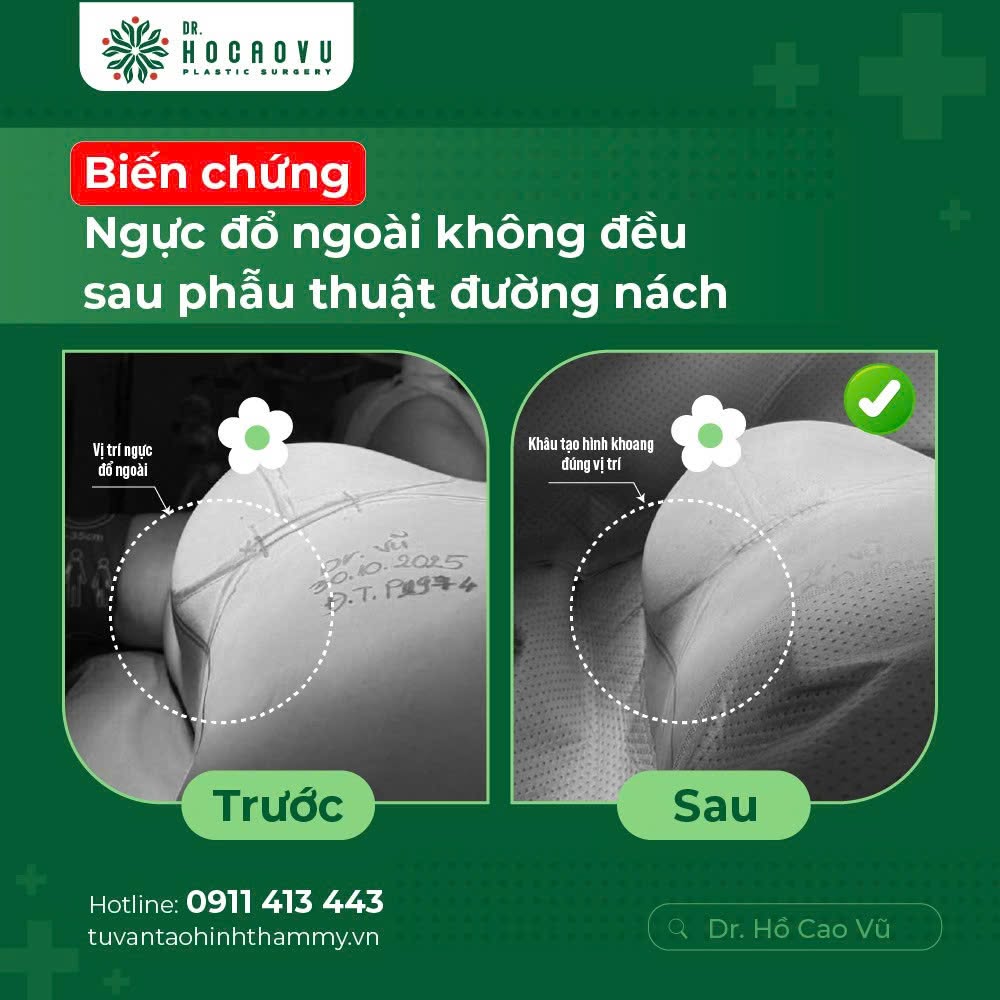
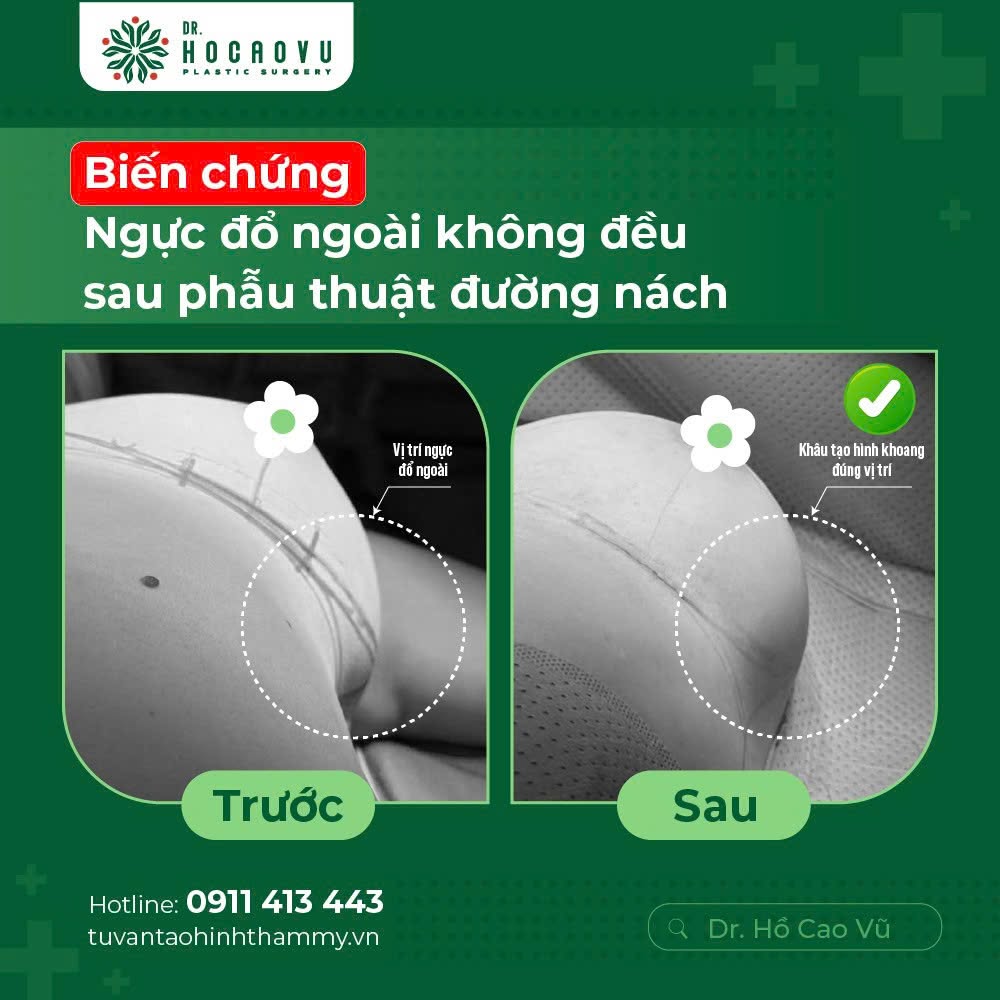
Bottoming out is the downward form of malposition. The American Society of Plastic Surgeons (ASPS) describes it as the implant gradually sinking below the breast crease, often related to the weight of the implant, pregnancy or skin laxity. The same article notes a feature that helps separate it from breast ptosis: as a bottomed-out implant falls lower, the nipple tends to point upwards, whereas in natural ptosis the nipple descends with the breast tissue.
The lower half of the breast may also look fuller and the upper half emptier. These signs can also appear with ptosis or with an implant that is too large for the breast, which is why measurement at consultation matters more than appearance in a mirror.
Several factors have been linked with malposition in published work:
- Pocket dissection: Shestak, writing in Aesthetic Surgery Journal in 2011, lists dissection of a pocket that is too large, or not large enough, among the causes.
- Implant size and weight: the same paper names an implant that is too large for the patient, and ASPS points to implant weight.
- Tissue support: Shestak also describes local tissues that are too compromised to hold the implant in place, and Khanna and Incze include age-related changes in the breast tissue.
- Surgical details: in the McGuire analysis, a longer incision was associated with malposition after primary augmentation, and operations performed in physicians’ offices rather than hospitals or standalone surgical facilities were associated with malposition in both revision groups.
These are associations from observational data, so they describe risk, not the cause in any individual case. When bottoming out and ptosis occur together, a lift may be discussed as well; our article on breast implant removal and breast lift explains how that decision is made.

Lateral displacement and symmastia
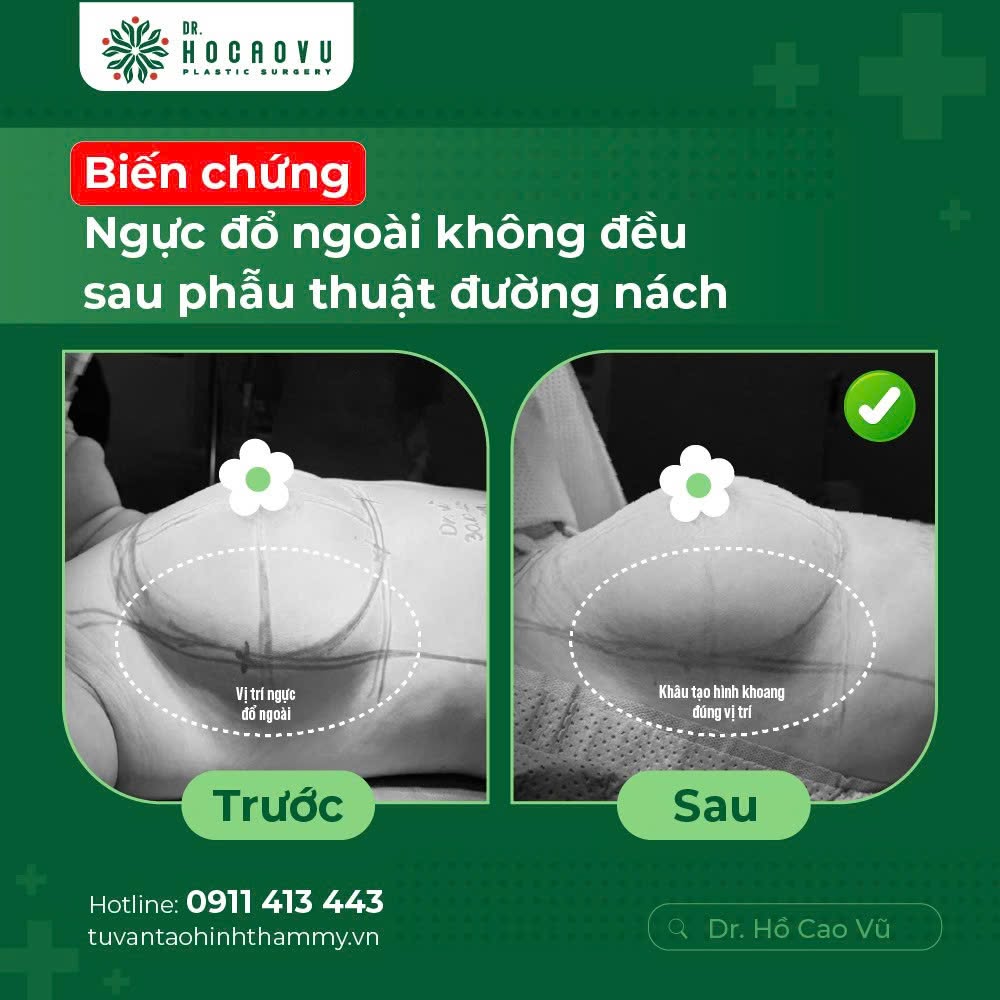
Lateral displacement means that the implants have moved outwards, so the gap between the breasts widens and fullness appears towards the armpit. ASPS includes implants that move too far to the side, merge in the centre or rotate among the signs that a revision may be needed, and describes symmastia as a rare complication.
The plane in which the implant was placed also affects how malposition develops. Subglandular implants, which lie in front of the pectoralis major muscle, depend on breast tissue and skin for support. Subpectoral implants are partly covered by the muscle, which adds a layer of coverage in front of the implant. Our article comparing subglandular placement with dual-plane placement describes an intraoperative case in which the two breasts had implants in different planes, with bottoming out on one side.
A “double-bubble” contour, in which the implant and the lower breast form two separate curves, is a related problem. Maxwell and Gabriel included it, together with symmastia and medial malposition, among the late complications they treated with a new pocket in front of the old capsule (Aesthetic Surgery Journal, 2008).
How a displaced implant is assessed
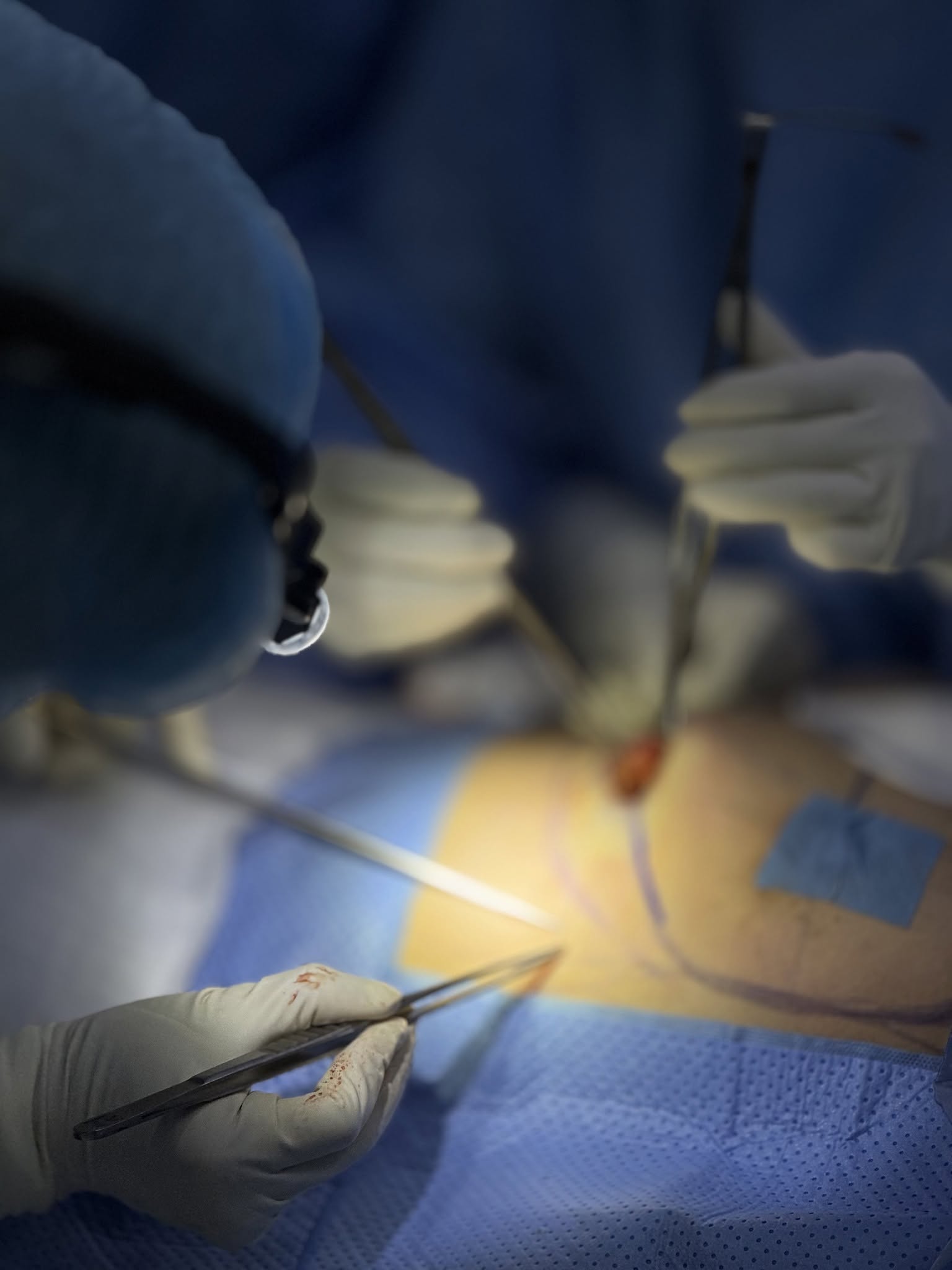
Assessment begins with a clinical examination, standing and lying down. The surgeon notes where the implant sits relative to the breast footprint, the position of the nipple and the crease, soft-tissue thickness, skin quality and how firm the capsule feels. Measurements and photographs make it possible to compare one side with the other and to document change.
A classification published by Pacifico, Goddard and Harris in Aesthetic Surgery Journal (2024) grades malposition by the distance in centimetres that the implant has moved from its ideal footprint along each axis. In their combined series of 242 breasts in 128 patients, grade 1 malposition did not warrant surgery, while all grade 3 cases did. The grading was reproducible between observers in 9 of 10 patients in the prospective group. A system of this kind is useful mainly because it records the problem in measurable terms before and after any correction.
The examination also looks for problems that change the plan. A firm, distorted breast suggests capsular contracture. An old silicone implant raises the question of rupture, which may cause no symptoms; our article on screening for silent rupture explains when ultrasound or MRI is recommended. The implant card or the original operation note shows the implant type, size, surface and placement plane.
Options for correcting malposition
Correction aims to rebuild the pocket so that the implant sits within the intended footprint and stays there. The choice depends on the direction and degree of displacement, the condition of the capsule and soft tissues, the implant itself and what the patient wants from revision.
Capsulorrhaphy: narrowing the existing pocket
Capsulorrhaphy closes part of the existing pocket with internal sutures, so that the crease or the side wall of the pocket is moved back to where it should be. It is often combined with a release of the capsule on the opposite side, sometimes called a mirror-image capsulotomy, so that the implant can move into its new position without tension on the repair.
Spear and Little described a multiple-layer technique in Plastic and Reconstructive Surgery in 1988, based on 40 patients treated over five years. Chasan later reported a simplified technique in 11 patients (2005) and then 75 patients treated between 2002 and 2006 (Chasan and Francis, Aesthetic Surgery Journal, 2008). In that series, just under half also had a mastopexy, average follow-up was 21 months and no complications were reported, although patients described more discomfort after surgery than they had expected. The same papers note that capsulorrhaphy can also reduce the size of the pocket when a smaller implant is chosen.
Creating a new pocket
When the old capsule is thin, scarred or too large, the surgeon may create a new pocket instead. For subpectoral implants, the neopectoral pocket is made between the front wall of the old capsule and the pectoralis major muscle. Maxwell, Birchenough and Gabriel reported 198 patients treated this way over four years, mainly for capsular contracture or malposition, of whom 3 required reoperation for complications (Aesthetic Surgery Journal, 2009).
A 2025 series from China (Qiao and colleagues, Aesthetic Plastic Surgery) used a precapsular pocket in 29 patients (52 breasts) undergoing revision augmentation, with no complications reported over an average follow-up of 7.9 months. A change of plane, for example from subglandular to subpectoral, is another option, but it requires careful management of the old pocket so that the implant does not slip back into it.
Additional support and implant change
Where the tissues are very thin, some surgeons reinforce the repair with an acellular dermal matrix, a processed tissue sheet that acts as an internal support. Shestak’s 2011 series of 19 patients used this approach for severe malposition after staged breast reconstruction, so it reflects a reconstructive setting with compromised tissues rather than routine cosmetic revision.
Changing to a smaller or lighter implant reduces the load on the lower pocket and may be combined with any of the techniques above. Removal without replacement is the remaining option. Khanna and Incze conclude that having no implants is the only certain way to end the risk of malposition, and our article on breast implant removal without replacement explains what the breast may look like afterwards.
The evidence for these techniques comes largely from retrospective series by individual surgeons, with small numbers and relatively short follow-up. No trial has compared the techniques directly, so the published results help explain what each method is designed to do but do not predict the outcome for an individual patient.
Keeping the existing implant or replacing it
An intact implant of a suitable size does not always need to be replaced when the problem lies in the pocket. Replacement is more likely to be discussed when the implant has ruptured, when a capsular contracture is present, when the patient wants a different size, or when the implant is old and other complications are expected over time.
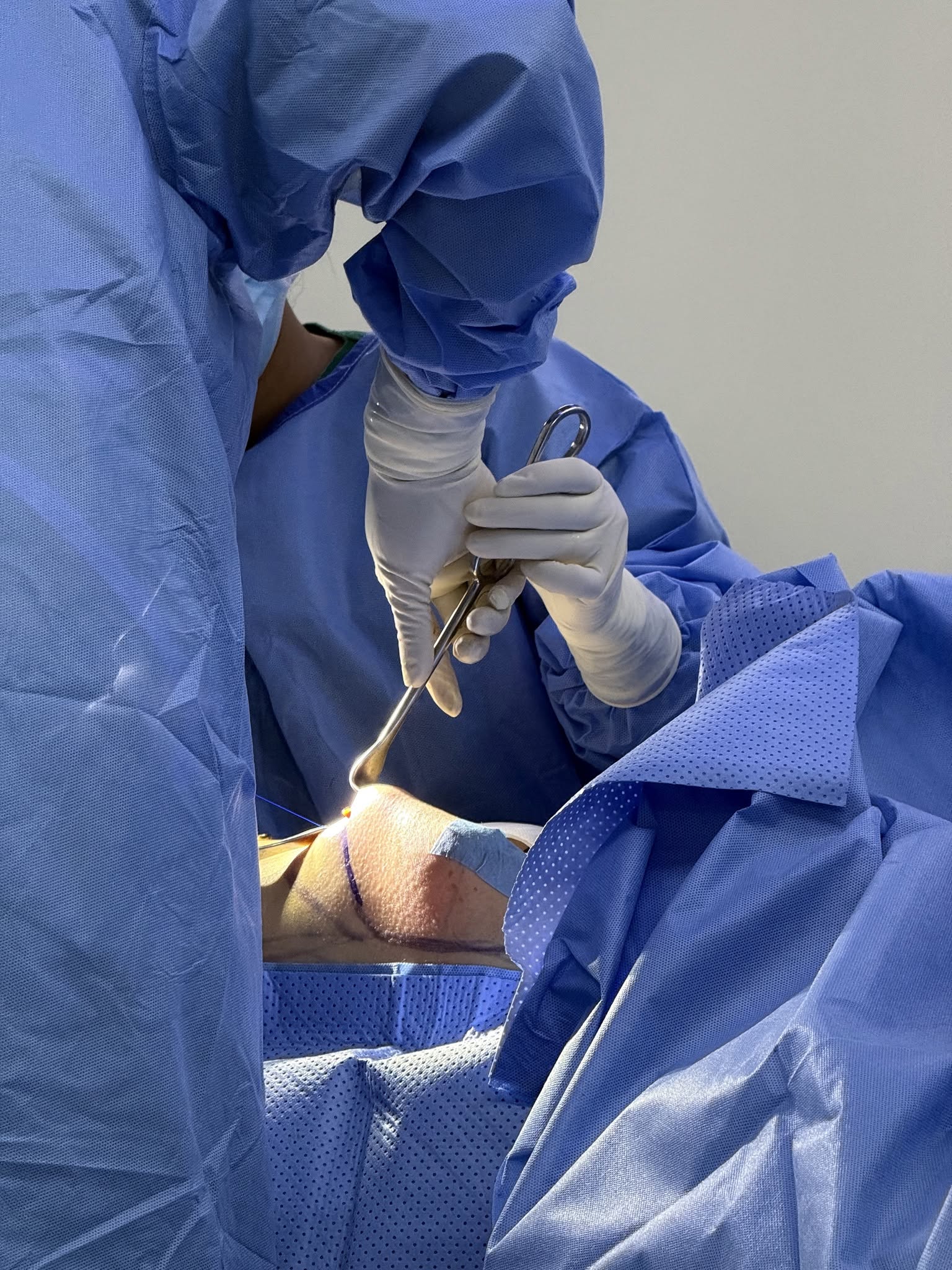
At Dr. Breast X, the consultation and preoperative assessment include whether the existing implant can be retained during breast correction without implant replacement. The surgery is performed directly by Dr. Ho Cao Vu at Nam Sai Gon International Hospital. As part of his surgical approach, the pocket is dissected and repaired with an ultrasonic surgical scalpel. The published capsulorrhaphy series cited above did not study this device, so its use is part of his technique rather than evidence of a different outcome.
Recovery and risks after revision surgery
Recovery depends on what is done. Capsulorrhaphy alone, a new pocket and a combined lift involve different amounts of dissection, so the recovery plan should be specific to the operation rather than a single timeline. Patients may be instructed to wear a supportive garment or to limit arm movement and lifting for a period, depending on the surgeon’s protocol.
Revision carries the same categories of risk as the first operation, including infection, bleeding, wound-healing complications, capsular contracture, asymmetry and changes in nipple sensation, and malposition can recur. The FDA notes that women with implants may need one or more reoperations during their lives and that there is no guarantee of a satisfactory cosmetic outcome from any reoperation. For patients travelling for surgery, the length of stay before flying home is set by the surgeon according to the procedure performed.
Questions worth asking before revision:
- Which direction has the implant moved, and how far, compared with the other side?
- Is there any sign of capsular contracture or rupture, and is imaging needed first?
- Can my existing implant be kept, or is replacement recommended, and why?
- Will the pocket be repaired, or will a new pocket or a different plane be used?
- Would a lift or a smaller implant improve the result in my case?
Frequently asked questions
Does bottoming out mean that my implant has ruptured? No. Malposition and rupture are separate problems, although both can occur in the same breast. A silicone rupture may cause no visible change, so imaging is the way to check the implant itself when there is doubt.
Can a supportive bra correct a displaced implant? A supportive bra may make the breast more comfortable, but it does not change the pocket that holds the implant. Garments are mainly used after corrective surgery, in the way the surgical team instructs.
Can malposition be corrected at the same time as a breast lift? Yes, in many cases. Published capsulorrhaphy series include patients who had a mastopexy in the same operation, and the surgeon will advise whether combining them suits your tissues.
Is it safe to wait before having malposition corrected? Malposition without other symptoms is usually planned rather than treated urgently. Pain, swelling, redness, fever or a sudden change in shape should be assessed promptly, because they may point to a different complication.
Conclusion
Breast implant malposition, including bottoming out, lateral displacement and symmastia, occurs when the pocket no longer holds the implant in its intended place. It is distinct from capsular contracture and breast ptosis, and a measured examination, with imaging when rupture is suspected, shows which problem is present. Correction may involve capsulorrhaphy, a new pocket, added support, a smaller implant or removal. Because the evidence comes mainly from small surgical series, the plan should be based on your own tissues, implant and goals.
References
- U.S. Food and Drug Administration — Risks and Complications of Breast Implants (content current as of 15 December 2023) — https://www.fda.gov/medical-devices/breast-implants/risks-and-complications-breast-implants
- U.S. Food and Drug Administration — FDA takes action to protect patients from risk of certain textured breast implants; requests Allergan voluntarily recall certain breast implants and tissue expanders from the market (24 July 2019) — https://www.fda.gov/news-events/press-announcements/fda-takes-action-protect-patients-risk-certain-textured-breast-implants-requests-allergan
- American Society of Plastic Surgeons — Maman DY. Seven signs you need a breast implant revision (10 August 2022) — https://www.plasticsurgery.org/news/blog/seven-signs-you-need-a-breast-implant-revision
- Maxwell GP, Van Natta BW, Bengtson BP, Murphy DK. Ten-Year Results From the Natrelle 410 Anatomical Form-Stable Silicone Breast Implant Core Study. Aesthetic Surgery Journal 2015;35(2):145–155 — https://doi.org/10.1093/asj/sju084
- McGuire P, Reisman NR, Murphy DK. Risk Factor Analysis for Capsular Contracture, Malposition, and Late Seroma in Subjects Receiving Natrelle 410 Form-Stable Silicone Breast Implants. Plastic and Reconstructive Surgery 2017;139(1):1–9 — https://doi.org/10.1097/PRS.0000000000002837
- Khanna J, Incze T. Breast Implant Malposition: Prevention, Assessment, and Treatment. Clinics in Plastic Surgery 2026;53:307–319 — https://doi.org/10.1016/j.cps.2025.11.012
- Pacifico MD, Goddard NV, Harris PA. Classification of Breast Implant Malposition. Aesthetic Surgery Journal 2024;44:1032–1042 — https://doi.org/10.1093/asj/sjae084
- Spear SL, Little JW 3rd. Breast capsulorrhaphy. Plastic and Reconstructive Surgery 1988;81(2):274–279 — https://doi.org/10.1097/00006534-198802000-00026
- Chasan PE. Breast capsulorrhaphy revisited: a simple technique for complex problems. Plastic and Reconstructive Surgery 2005;115(1):296–301 — https://doi.org/10.1097/01.prs.0000146706.85392.6f
- Chasan PE, Francis CS. Capsulorrhaphy for revisionary breast surgery. Aesthetic Surgery Journal 2008;28:63–69 — https://doi.org/10.1016/j.asj.2007.07.007
- Maxwell GP, Gabriel A. The neopectoral pocket in revisionary breast surgery. Aesthetic Surgery Journal 2008;28:463–467 — https://doi.org/10.1016/j.asj.2008.04.005
- Maxwell GP, Birchenough SA, Gabriel A. Efficacy of neopectoral pocket in revisionary breast surgery. Aesthetic Surgery Journal 2009;29:379–385 — https://doi.org/10.1016/j.asj.2009.08.012
- Qiao C, Shi Z, Xu J, et al. Precapsular Pocket Repositioning: An Effective Technique for Correcting Implant Malposition in Revision Breast Augmentation. Aesthetic Plastic Surgery 2025;49:6303–6310 — https://doi.org/10.1007/s00266-025-04964-z
- Shestak KC. Acellular dermal matrix inlays to correct significant implant malposition in patients with compromised local tissues. Aesthetic Surgery Journal 2011;31(7 Suppl):85S–94S — https://doi.org/10.1177/1090820X11418337