
Flying After Breast Implant Removal: When It Is Safe to Fly Home and How Long to Stay in Vietnam
MSc, MD Ho Cao Vu
Medical practice licence No. 028475/BYT-CCHN, issued by the Ministry of Health of Vietnam on 28 June 2018. Specialist in General Surgery and Plastic & Aesthetic Surgery, with over 15 years of experience in plastic and aesthetic surgery and over 20 years of general surgical experience in benign breast disease, breast cancer, abdominal wall and abdominal surgery at Cho Ray Hospital.
Updated October 2026 — cross-checked against the British Thoracic Society clinical statement on air travel (2022), the cohort study of venous thrombosis after air travel in PLoS Medicine (2007) and a 2026 in-flight study of patients travelling home after aesthetic surgery.
Most women who have breast implant removal can fly home within days rather than weeks, but there is no single safe number for everyone. The right time depends on how much surgery was done, whether drains were used, how the wound and breathing are at review, and personal risk of blood clots. This guide explains what changes during a flight, which complications matter after explant surgery and how the date for flying home is decided.
The short answer: when can you fly after breast implant removal?
After a straightforward removal, the main risks of flying too early are blood clots, bleeding into the breast pocket and, after a more extensive capsule removal, air around the lung that has gone unnoticed. Each is uncommon, and each can be checked for before you board.
At Dr. Breast X, the usual planning figure for routine breast implant removal, with or without new implants, is a stay in Vietnam of 5 to 7 days. A breast lift with an anchor-shaped (inverted-T) scar needs longer, as explained in our guide to breast implant removal in Vietnam. A total or en bloc capsulectomy, a drain or any complication can also move the date, which is confirmed at the last review rather than when the ticket is booked.
What happens to your body during a flight
Aircraft cabins are pressurised, but not to sea level. In a 2026 study in Plastic and Reconstructive Surgery Global Open, Ramírez and colleagues note that cabins are kept at the equivalent of 8,000 feet, 73.6% of sea-level pressure, so the air carries less oxygen.
An aerospace medicine physician on the team flew with 20 women returning home about 16 days after aesthetic surgery, 12 of whom had breast implants, on flights averaging almost 8 hours:
- Oxygen. Saturation fell by 4% to 7% in the first 2 to 4 hours. The patients started with lower haemoglobin, a median of 10.4 g/dL after surgery against 13.6 g/dL before.
- Heart rate. It rose by 15 to 20 beats per minute in every participant.
- Leg veins. The popliteal vein behind the knee widened from 5.14 mm before take-off to 6.45 mm at 5 hours, returning to baseline 3 days after landing.
The authors add that trapped gas expands as cabin pressure falls (Boyle’s law). Their patients were young, healthy and closely supervised, so the study describes the physiology of flying rather than a complication rate.
Blood clots: the main reason surgeons ask you to wait
Venous thromboembolism (VTE) is a clot in a deep vein, usually in the leg, which can travel to the lungs as a pulmonary embolism. Surgery and long flights each raise the risk, and the effects add up.
In a 2007 cohort study in PLoS Medicine, Kuipers and colleagues followed 8,755 employees of international organisations. After a flight of at least 4 hours, symptomatic venous thrombosis was 3.2 times more frequent than without air travel, equal to one event per 4,656 long-haul flights. The risk was highest in the first 2 weeks, rose with longer and more frequent flights, and was higher in women taking oral contraceptives.
Surgery adds its own risk. Among 1,126 plastic and reconstructive surgery patients who received no blood-thinning medicine, Pannucci and colleagues (2011) found a VTE rate of 1.69% within 60 days, rising to 11.3% in those with a Caprini risk score above 8. In that high-risk group, more than half of the clots were diagnosed between day 15 and day 60. These were larger operations with hospital admission, not typical implant removals, but the study shows why risk is assessed person by person.
The British Thoracic Society (BTS) statement on air travel, published in Thorax in 2022, groups travellers as follows:
| BTS risk group (2022) | Examples | Advice for the flight |
|---|---|---|
| All passengers | — | Avoid excess alcohol and caffeine, stay mobile, exercise the legs |
| Moderate risk | Recent minor surgery, age over 60, extensive varicose veins | As above, plus graduated compression stockings |
| High risk | Within 6 weeks of major surgery, previous clot not on anticoagulation, thrombophilia | If travel is essential, consider preventive anticoagulation after careful clinical assessment |
A short removal in a healthy woman sits closer to minor surgery; a long operation with total capsulectomy and a lift, in a woman with a past clot, does not. This is why the surgeon asks about previous clots, the contraceptive pill and family history before setting a date.
Bleeding and fluid in the breast pocket
Removing an implant leaves a space. Blood collecting there forms a haematoma, and clear fluid forms a seroma. Both usually appear in the first days, which is one reason the early reviews matter.
In 841 women who had removal with capsulectomy and a lift, reported by Hirsch in 2026, haematoma occurred in 0.71% and seroma needing a drain in 1.19%. In 500 explantations with complete capsulectomy reported by Nicolaidis and colleagues, haematoma occurred in 0.9% of breasts; one patient had a significant bleed after returning home, and the delay before drainage contributed to partial loss of the nipple.
Whether flying itself causes bleeding is not proven. Kyriazidis and colleagues (2024) described a woman who took a 55-minute flight 7 days after breast augmentation; both breasts swelled that night, and about 300 mL of haematoma was removed from each side. The authors present it as a cautionary case, not proof of cause. A 2018 systematic review by Co and colleagues likewise found only limited evidence of harm to breast wounds, drains or implants at altitude.
The practical point is location. A bleed on day 2 in Ho Chi Minh City can be treated the same day by the team that operated; the same bleed over the ocean, or at home before a local doctor has seen your records, is harder to manage.
Pneumothorax after capsulectomy and why it matters for flying
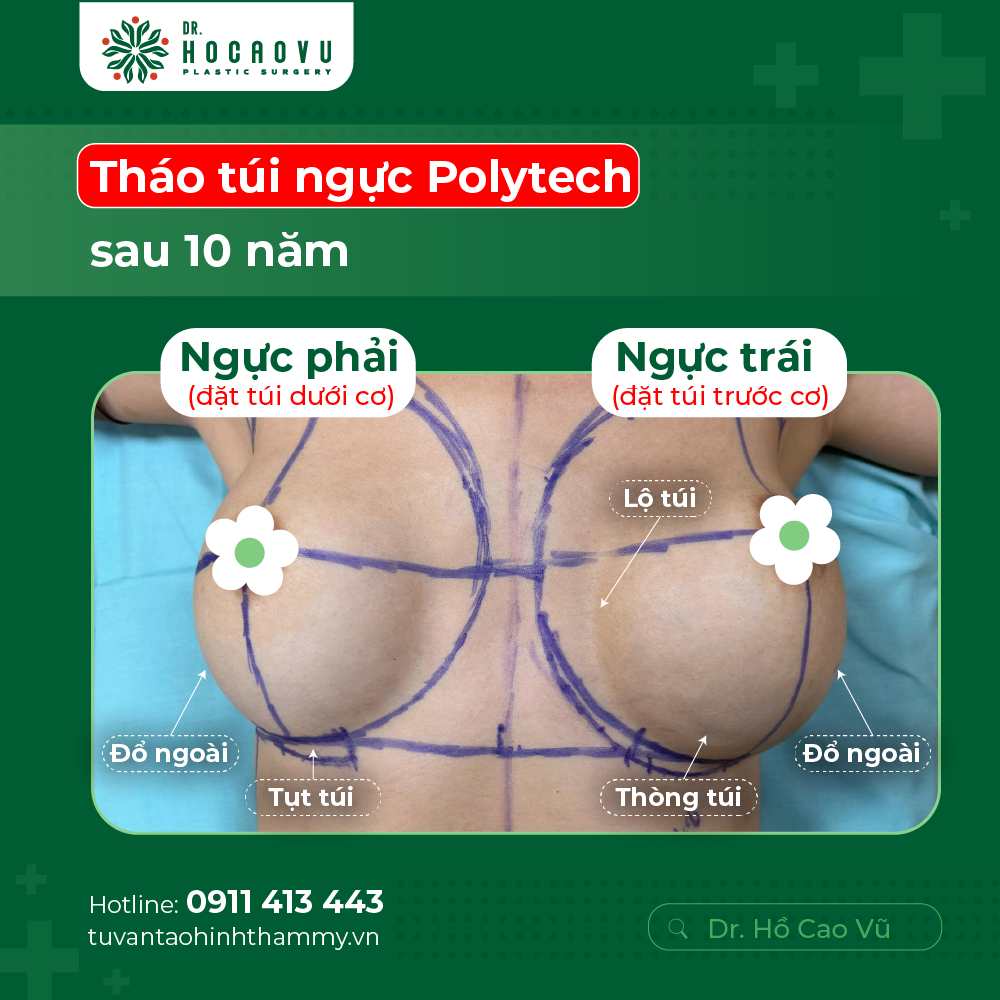
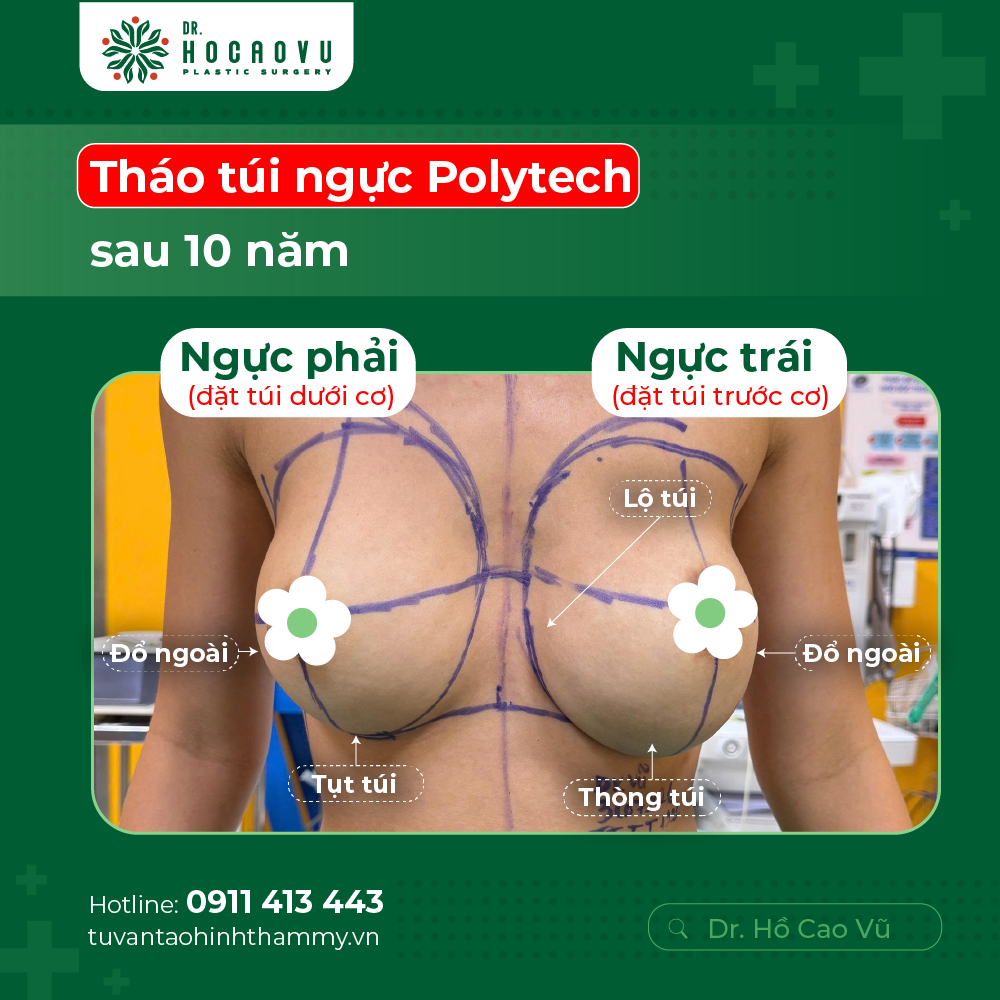
When the back wall of the capsule is stuck firmly to the ribs, removing it can occasionally breach the lining of the chest (the pleura), letting air collect around the lung: a pneumothorax. This risk belongs mainly to total and en bloc capsulectomy, described in our article on en bloc, total and partial capsulectomy.
Nicolaidis and colleagues counted 12 pleural punctures over 1,000 explantations with capsulectomy, 1.2% per breast, none causing a significant pneumothorax. Our review of complication rates after breast implant removal covers this alongside the other risks.
For flying, the BTS rule is clear: most people with an untreated pneumothorax should not fly, because trapped air expands at altitude, and after treatment they should wait 1 week once a chest X-ray confirms full resolution. Breathlessness, sharp chest pain on breathing in or shoulder-tip pain after surgery should be reported before you travel.
What the travel studies show
Most studies of travel after aesthetic surgery involve augmentation or body contouring, so they guide planning without giving an exact answer for explant surgery.
| Study | Who was studied | Main finding |
|---|---|---|
| Keramidas et al., 2026 | 618 women flying within 48 hours of breast augmentation, Greece and UK | No haematomas, clots or infections with a 33-step protocol in selected patients (level IV) |
| Hoyos et al., 2024 | 3,367 patients in Bogotá, 865 international | More complications in international patients (adjusted odds ratio 4.6); flights over 4 hours associated with non-aesthetic complications |
| Goodarzi et al., 2026 | 198 UK patients treated after cosmetic surgery abroad | Inadequate aftercare (21%) and premature air travel (5%) recurring factors; 1 death from pulmonary embolism |
Early flying can be safe in carefully selected patients under a strict protocol. Problems arise mostly when follow-up is thin, risk is not assessed or patients leave before they are ready.
How the date for flying home is decided
- Step 1 — Before surgery. The plan is agreed (removal only, capsulectomy, replacement or a lift), clot risk is assessed and a provisional flight window is discussed.
- Step 2 — Day of surgery. The operation performed is recorded, including how much capsule was removed and whether a drain was placed.
- Step 3 — First review. The breasts are checked for swelling or a tense side that could mean a collection; drains are removed once output has fallen.
- Step 4 — Chest and breathing. After capsulectomy over the ribs, the surgeon asks about breathlessness and chest pain and arranges a chest X-ray if there is any doubt.
- Step 5 — Final review. The wound is checked, the flight date confirmed, and you receive an operative report in English, written instructions and a contact for after you land.
| Situation after explant surgery | What usually affects the flight date |
|---|---|
| Routine removal, with or without new implants, no drain | Planning figure of 5 to 7 days, confirmed at the final review |
| Total or en bloc capsulectomy | Drain removal and chest assessment, sometimes a few extra days |
| Removal with an inverted-T lift | Longer stay for wound checks, planned before surgery |
| Haematoma, seroma or wound problem | Treated first; flying is postponed until it settles |
| Previous clot or thrombophilia | Individual plan, possibly including preventive medicine |
Women having removal for breast implant illness follow the same surgical criteria; our article on breast implant illness and explant decisions covers that decision itself.
On the flight: what you can do to reduce risk
- Move. Choose an aisle seat, walk every 2 to 3 hours where safe, and flex your ankles regularly while seated.
- Drink water. Limit alcohol and caffeine, and avoid sleeping tablets that keep you still for hours.
- Compression. Wear graduated compression stockings if advised, and keep your support bra on unless told otherwise.
- Lifting. Do not lift a heavy case into the overhead locker; keep hand luggage light.
- Paperwork and medicine. Carry your operative report and medicine list, take prescribed medicine on time, and do not start blood thinners on your own.
Warning signs during or after the flight
Seek medical help promptly for:
- pain, swelling or warmth in one calf or thigh;
- sudden breathlessness, chest pain or coughing up blood;
- one breast becoming rapidly larger, tense or very painful;
- fever, spreading redness or discharge from the wound.
Breathlessness or chest pain is an emergency: tell the cabin crew during a flight, or call emergency services after landing.
Planning your stay in Vietnam after breast implant removal
At Dr. Breast X, MSc, MD Ho Cao Vu performs breast implant removal at the Department of Surgery, Nam Sai Gon International General Hospital in Ho Chi Minh City, a general hospital with an intensive care unit. Before surgery, blood and clotting tests, an electrocardiogram, a chest X-ray and an echocardiogram confirm fitness for anaesthesia. Surgery is performed under laryngeal mask airway (LMA) anaesthesia with an ultrasonic surgical scalpel, which divides tissue and seals small vessels in the same pass.
In routine removal and replacement, a drain is usually not needed and patients go home the same day. Complex cases, such as complete capsulectomy, grade IV contracture, rupture or an old haematoma, take longer and may need a drain. A combined lift changes the timetable, as described in our article on breast implant removal and breast lift, and arrangements from arrival to review are set out in our guide for international patients.
Frequently asked questions
How soon can I fly after breast implant removal? After routine removal at Dr. Breast X, the planning figure is a stay of 5 to 7 days in Vietnam before flying home. The date is confirmed at the final review and is longer after an inverted-T lift, a drain or any complication.
Can I fly with a drain in? In most plans the drain is removed before the flight by the team that placed it. A drain still in place means fluid is still being produced, and it needs care on the journey and a doctor at your destination who can remove it.
Will cabin pressure damage the area where my implants were? Evidence that cabin pressure harms healing breast wounds or drains is limited, according to a 2018 systematic review. The concerns that matter more are blood clots, bleeding or fluid collecting in the pocket, and, rarely, air around the lung after capsulectomy, which is why these are checked before you fly.
Do I need blood-thinning injections for the flight? According to the BTS statement, preventive medicine is unnecessary for most travellers. It is considered for people at high risk, such as those with a previous clot or thrombophilia, after an individual assessment by the surgeon.
Conclusion
Flying home after breast implant removal is usually possible within a week after a routine operation, but the date is decided case by case. Cabin conditions lower oxygen and slow blood flow in the legs, long flights raise the risk of clots, and bleeding, fluid or a pneumothorax are easier to manage before departure than after. A final review, simple measures on board and clear documents make the journey safer.
References
- Coker RK, Armstrong A, Church AC, et al. BTS Clinical Statement on air travel for passengers with respiratory disease. Thorax 2022;77(4):329–350 — https://doi.org/10.1136/thoraxjnl-2021-218110
- Kuipers S, Cannegieter SC, Middeldorp S, Robyn L, Büller HR, Rosendaal FR. The absolute risk of venous thrombosis after air travel: a cohort study of 8,755 employees of international organisations. PLoS Medicine 2007;4(9):e290 — https://doi.org/10.1371/journal.pmed.0040290
- Ramírez B, Aguilar H, Stanford N, et al. Aesthetic Surgical Tourism: Physiological Changes During Flight That May Affect Patient Safety and Outcomes. Plastic and Reconstructive Surgery Global Open 2026;14(5):e7568 — https://doi.org/10.1097/gox.0000000000007568
- Pannucci CJ, Bailey SH, Dreszer G, et al. Validation of the Caprini risk assessment model in plastic and reconstructive surgery patients. Journal of the American College of Surgeons 2011;212(1):105–112 — https://doi.org/10.1016/j.jamcollsurg.2010.08.018
- Hirsch EM. Outcomes of Mastopexy Explantation: A Consecutive Series of 841 Patients. Aesthetic Surgery Journal Open Forum 2026;8:ojag056 — https://doi.org/10.1093/asjof/ojag056
- Nicolaidis SC, Boucher M, Lu M. Complications Following 500 Consecutive Explantations with Simultaneous Breast Lift. JPRAS Open 2026;50:102–104 — https://doi.org/10.1016/j.jpra.2026.04.002
- Kyriazidis I, Antoniou A, Demiri E, et al. Bilateral Hematoma Following Air Travel after Breast Augmentation: A Cautionary Tale and Literature Review. Plastic and Reconstructive Surgery Global Open 2024;12(3):e5639 — https://doi.org/10.1097/gox.0000000000005639
- Co M, Ng J, Kwong A. Air Travel Safety in Postoperative Breast Cancer Patients: A Systematic Review. Clinical Breast Cancer 2018;18(5):e813–e817 — https://doi.org/10.1016/j.clbc.2018.05.003
- Keramidas E, Gavala MI, Rodopoulou S. Flying Following Breast Augmentation. How Safe is it? An Evidence-Based Report of 20 Years of Experience. Aesthetic Plastic Surgery 2026;50(17):7142–7151 — https://doi.org/10.1007/s00266-026-06028-2
- Hoyos AE, Ramirez B, Benavides J, Perez Pachon ME, Varela A. Aeromedical Considerations for Patient Safety in Aesthetic Medical Tourism. Aerospace Medicine and Human Performance 2024;95(10):765–770 — https://doi.org/10.3357/amhp.6432.2024
- Goodarzi MR, Nugent NF, Pacifico MD, Tyler M, Wokes JET. Beauty Abroad, Burden at Home: Complications and National Health Service Impact of Cosmetic Tourism — Insights From the British Association of Aesthetic Plastic Surgeons National Database. Aesthetic Surgery Journal 2026;46(11):1177–1183 — https://doi.org/10.1093/asj/sjag056


