Breast Implant Rippling: Causes, Grades and How It Is Treated
MSc, MD Ho Cao Vu
Medical practice licence No. 028475/BYT-CCHN, issued by the Ministry of Health of Vietnam on 28 June 2018. Specialist in General Surgery and Plastic & Aesthetic Surgery, with over 15 years of experience in plastic and aesthetic surgery and over 20 years of general surgical experience in benign breast disease, breast cancer, abdominal wall and abdominal surgery at Cho Ray Hospital.
Updated November 2026 — cross-checked against the FDA list of breast implant risks and complications and a 2018 review of rippling after breast augmentation and reconstruction.
Some women notice small waves or folds at the side or lower edge of the breast months or years after augmentation, most clearly when they lean forward, lie on their side or after losing weight. This is usually implant rippling. It is rarely dangerous, but it can be distressing, and it is one of the reasons women ask about revision or implant removal. Below, we explain what rippling is, why it happens, how surgeons grade it, what the published studies show about risk factors, and which treatment options exist, including what the evidence does not yet tell us.
What is breast implant rippling?
The US Food and Drug Administration (FDA) lists “wrinkling/rippling” among the known complications of breast implants and describes it as wrinkling of the implant that can be felt or seen through the skin. The FDA lists “visibility”, where the implant itself can be seen through the skin, as a separate item (FDA). In practice the two often appear together, because both depend on how much tissue covers the implant.
The NHS explains the mechanism in one sentence: rippling happens when the implant is only covered by a thin layer of tissue that sticks to the surface of the implant, and it notes that this is very difficult to treat (NHS). The American Society of Plastic Surgeons (ASPS) includes “wrinkling of the skin over the implant” in the risks it asks patients to discuss before breast augmentation (ASPS).
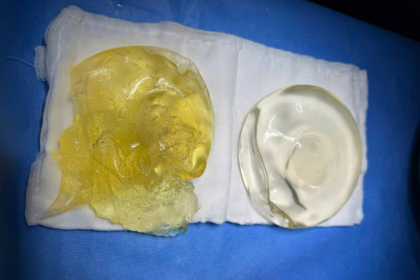
Rippling is different from a ruptured implant. A ruptured silicone implant often causes no visible change at all, which is why imaging is used to check implant integrity. Our article on screening for silent rupture explains what the FDA recommends.
How surgeons grade rippling
In a 2018 review in Aesthetic Plastic Surgery, Pantelides and Srinivasan proposed a simple classification based on how rippling usually presents:
| Grade | Severity | What it means |
|---|---|---|
| 1a | Mild | Rippling can be felt but not seen, in the lower outer part of the breast |
| 1b | Mild | Rippling can be felt but not seen, in the upper inner part of the breast (cleavage area) |
| 2 | Moderate | Rippling is visible only when leaning forward |
| 3 | Severe | Rippling is visible when standing upright |
The authors proposed the scale so that treatments could be compared more consistently. It is useful for patients too: rippling that can only be felt is managed very differently from rippling that is visible in everyday clothing.
How common is rippling?
Reported rates vary widely, because studies define and measure rippling differently.
| Study | Who was studied | Main finding |
|---|---|---|
| Codner and colleagues, 2011 | 812 women having primary augmentation in one group practice, followed over 15 years | Rippling in 7.1%; more frequent in underweight patients with saline implants placed above the muscle |
| Swanson, 2020 (prospective study) | 223 women having primary augmentation under the muscle, with saline or silicone implants | 18% reported visible rippling and 32% palpable rippling in surveys; ultrasound found ripples in 24% (saline) and 27% (silicone) |
| Fanzio and colleagues, 2025 (review) | Published data on implant complications | Visible rippling or wrinkling may affect up to 20% of patients |
The gap between 7.1% and 32% largely reflects what was counted. Codner’s group recorded rippling as a clinical complication, while Swanson asked women directly and also scanned the implants with high-resolution ultrasound, which detects folds that a surgeon may not record. In Swanson’s study only five of 223 women were listed with rippling as a complication, even though many more noticed it in the survey.
What makes rippling more likely?
Thin tissue coverage and low body weight
Both large series found the same pattern. Codner’s group reported a significantly higher rate in underweight patients with saline implants placed above the muscle, and Swanson found that women who reported rippling had significantly lower body mass indices than those who did not. Fanzio and colleagues list a lack of overlying breast tissue, a thin soft-tissue layer and redistribution of glandular tissue as contributing factors, with reconstruction and revision surgery as risk factors.
This is also why rippling can appear or worsen years after surgery. Weight loss, breastfeeding and ageing can all change the volume and quality of breast tissue over the implant. These are reasonable explanations, but we did not find studies that measured how often rippling starts after each of these events.
Implant pocket
Where the implant sits determines how much tissue covers it.
- Above the muscle (subglandular): the implant is covered only by breast tissue, fat and skin. Our article comparing subglandular and dual-plane placement shows how thin coverage can make implant edges and folds visible.
- Under the muscle fascia (subfascial): a 2024 meta-analysis by Yuan and colleagues in Aesthetic Surgery Journal pooled ten studies and found less rippling, haematoma and capsular contracture with the subfascial plane than with the subglandular plane. The authors noted that all included studies had a high risk of bias.
- Under the muscle (subpectoral or dual plane): the pectoralis muscle adds a layer over the upper part of the implant. However, a 2019 meta-analysis by Li and colleagues found no significant difference in rippling between subpectoral and prepectoral augmentation, while subpectoral placement had less capsular contracture and haematoma but more implant displacement and animation deformity.
These findings point in slightly different directions, which is typical of this field. The practical message is that the pocket alone does not decide whether rippling occurs; the thickness of the patient’s own tissue matters as much.
Saline or silicone?
The NHS states that silicone implants are less likely to wrinkle, and that saline implants are more likely to fold. Swanson’s prospective study, however, found similar rates of rippling with saline and silicone implants placed under the muscle, both in patient surveys and on ultrasound. Swanson also found that women who reported rippling had, on average, smaller implants. One explanation is that implant type matters less than coverage, but a single study cannot settle the question.
Fanzio and colleagues add that round implants may be less suitable for women who are thin, because limited coverage can make the implant more noticeable, rippled or wrinkled.
Is rippling dangerous?
Rippling on its own is mainly a cosmetic and comfort problem. In their 2025 review for healthcare providers, Fanzio and colleagues advise that patients with rippling should see a surgeon, though not urgently, and that management includes surgical revision and/or fat transfer to improve tissue support.
See a surgeon sooner if rippling comes with other changes, such as:
- a breast that becomes firm, tight or changes shape, which may suggest capsular contracture;
- a saline implant that looks noticeably smaller, which may mean deflation;
- new swelling, a lump, or pain, particularly years after surgery;
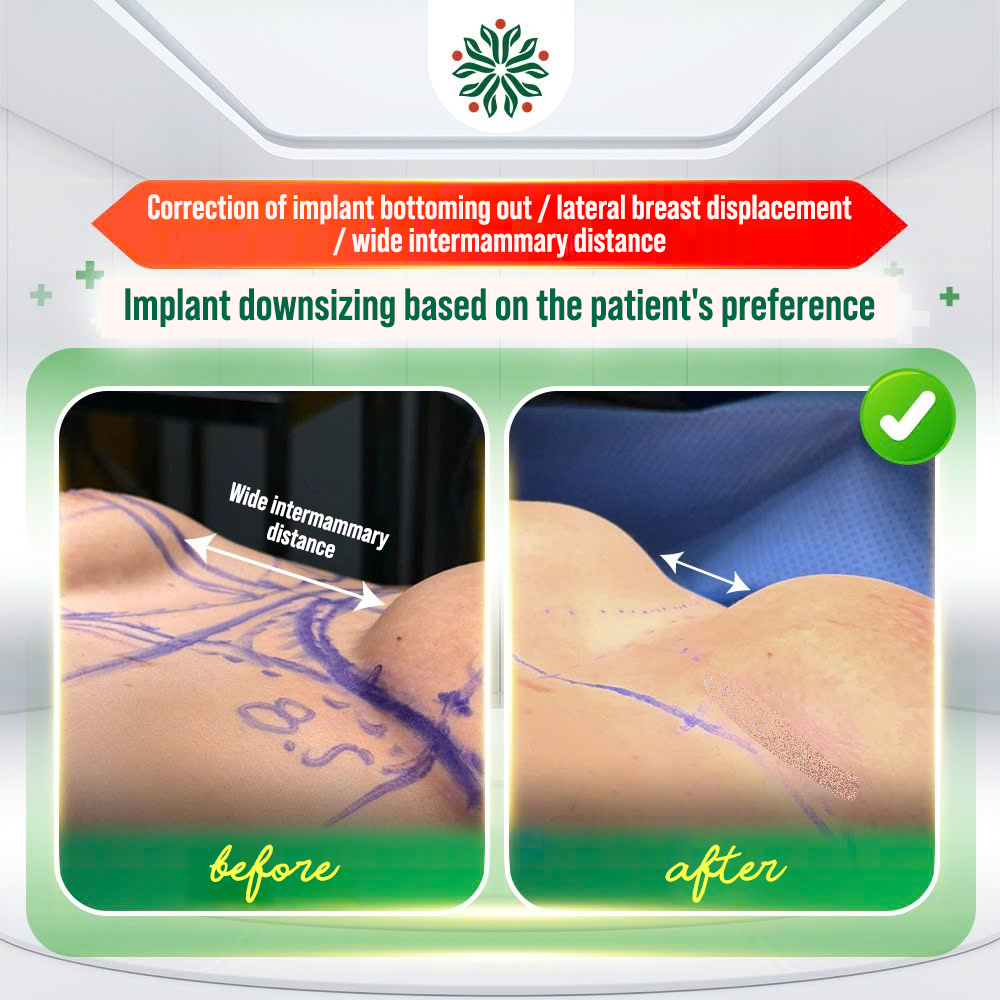
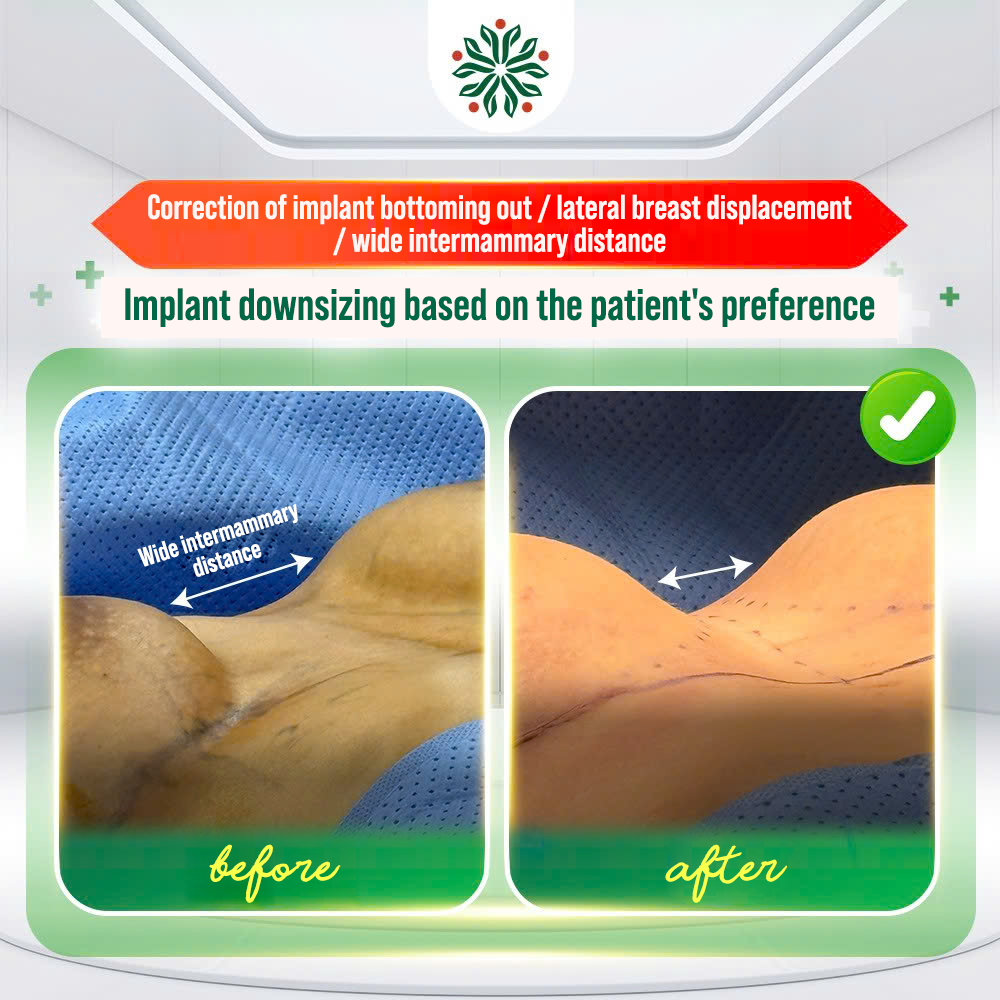
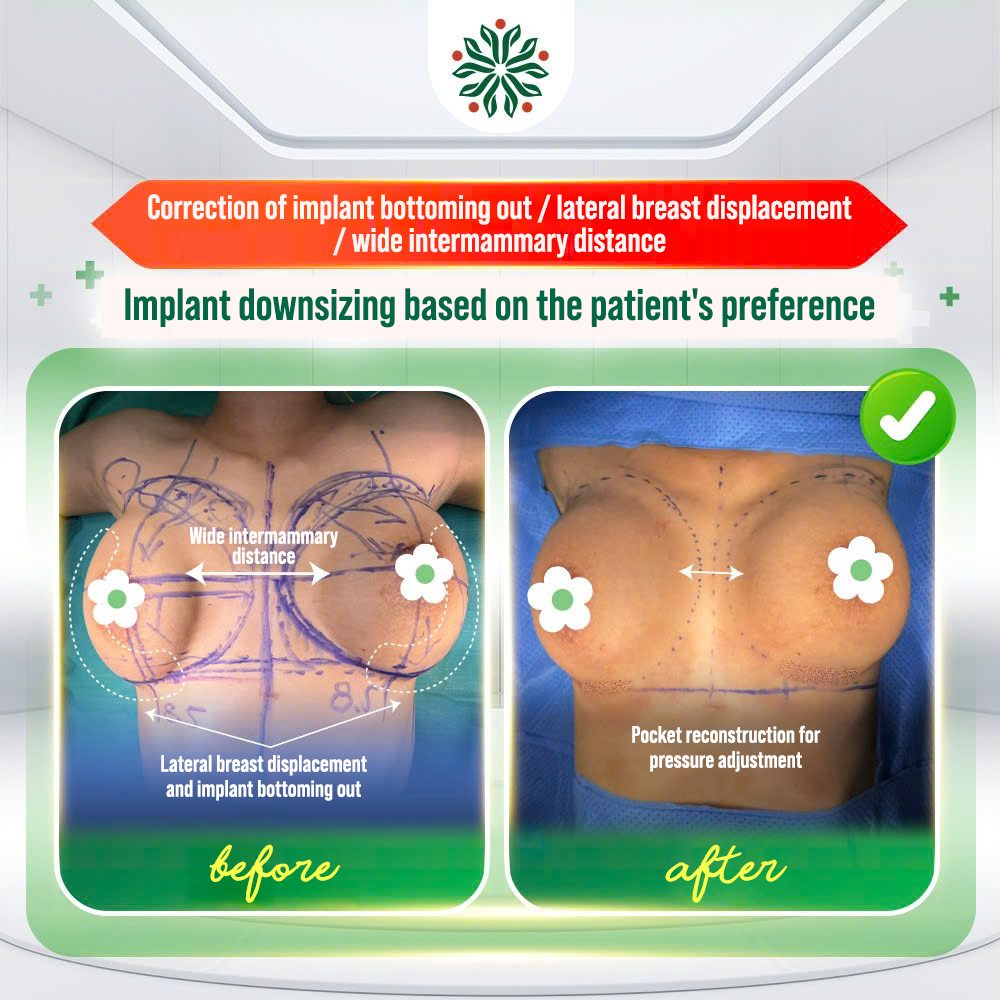
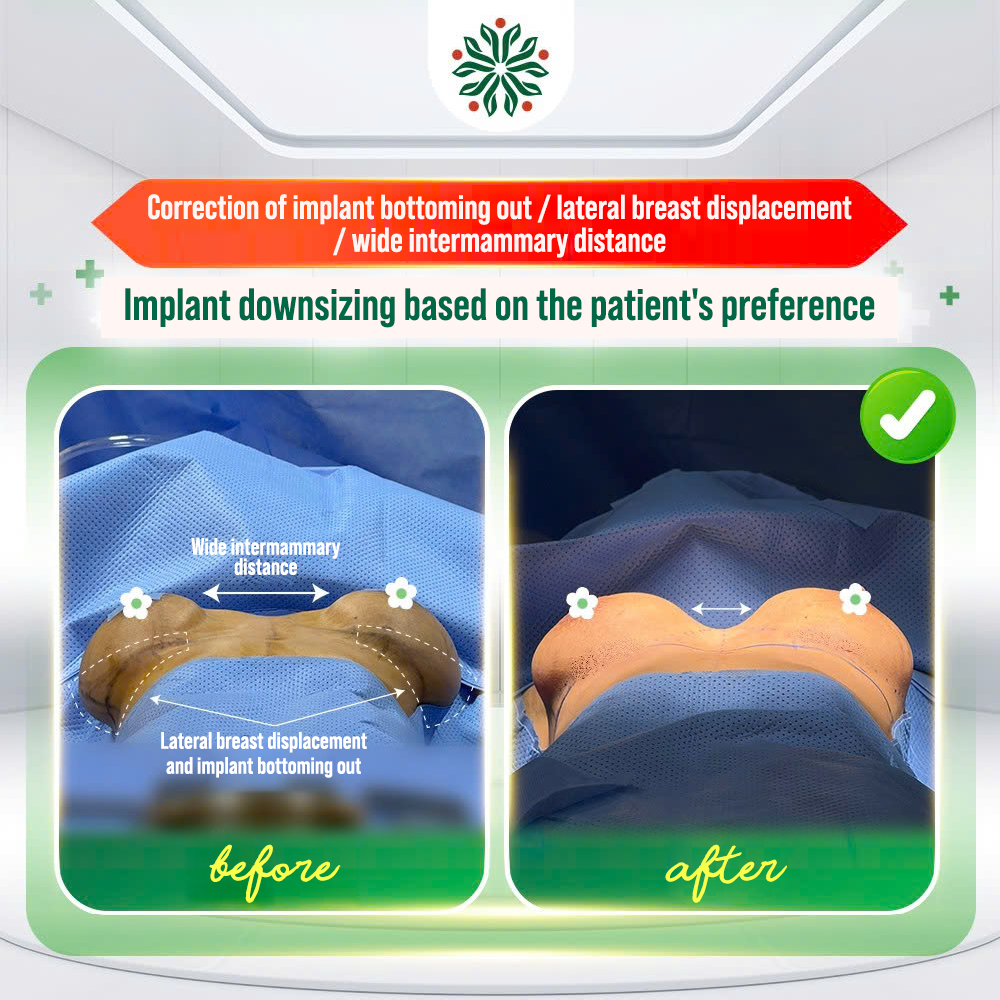
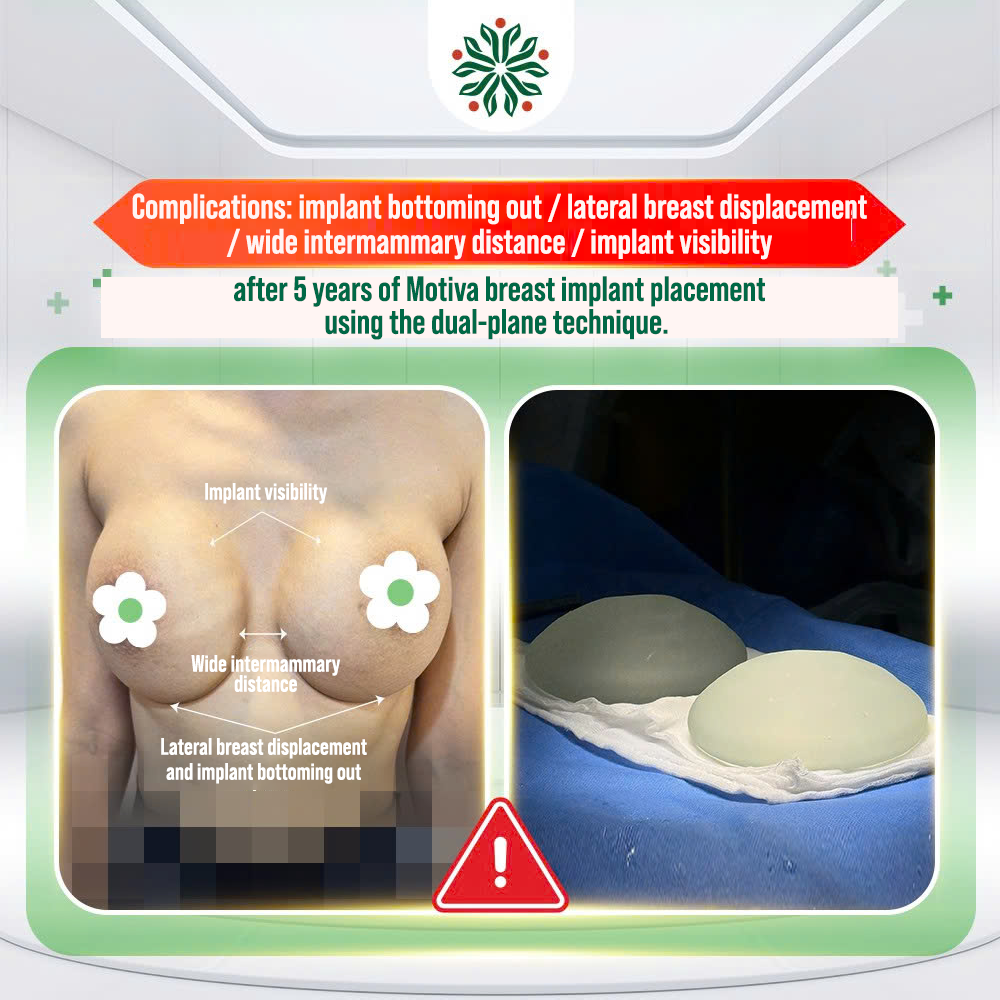
- an implant that has moved down or sideways, described in our article on bottoming out and malposition.
Can rippling be fixed without surgery?
We did not find published evidence that exercises, massage, creams or garments correct implant rippling. The NHS describes rippling as very difficult to treat, and the treatments reviewed by Pantelides and Srinivasan are all procedures. For mild rippling that can only be felt, many women choose to monitor it rather than have surgery, and that is a reasonable option when there are no other symptoms.
Surgical treatment options
Pantelides and Srinivasan describe the traditional approach as replacing the implant, often in a pocket under the muscle to reduce recurrence, with increasing the implant size or tightening the capsule as other options. They also review newer techniques, such as fat grafting and acellular dermal matrix. Which option is suitable depends on the grade of rippling, where it is, the current pocket and how much tissue the patient has.
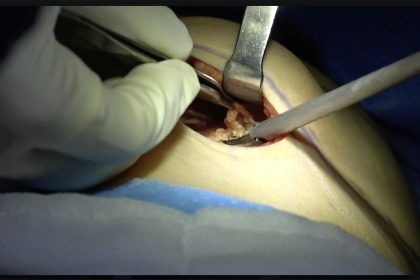
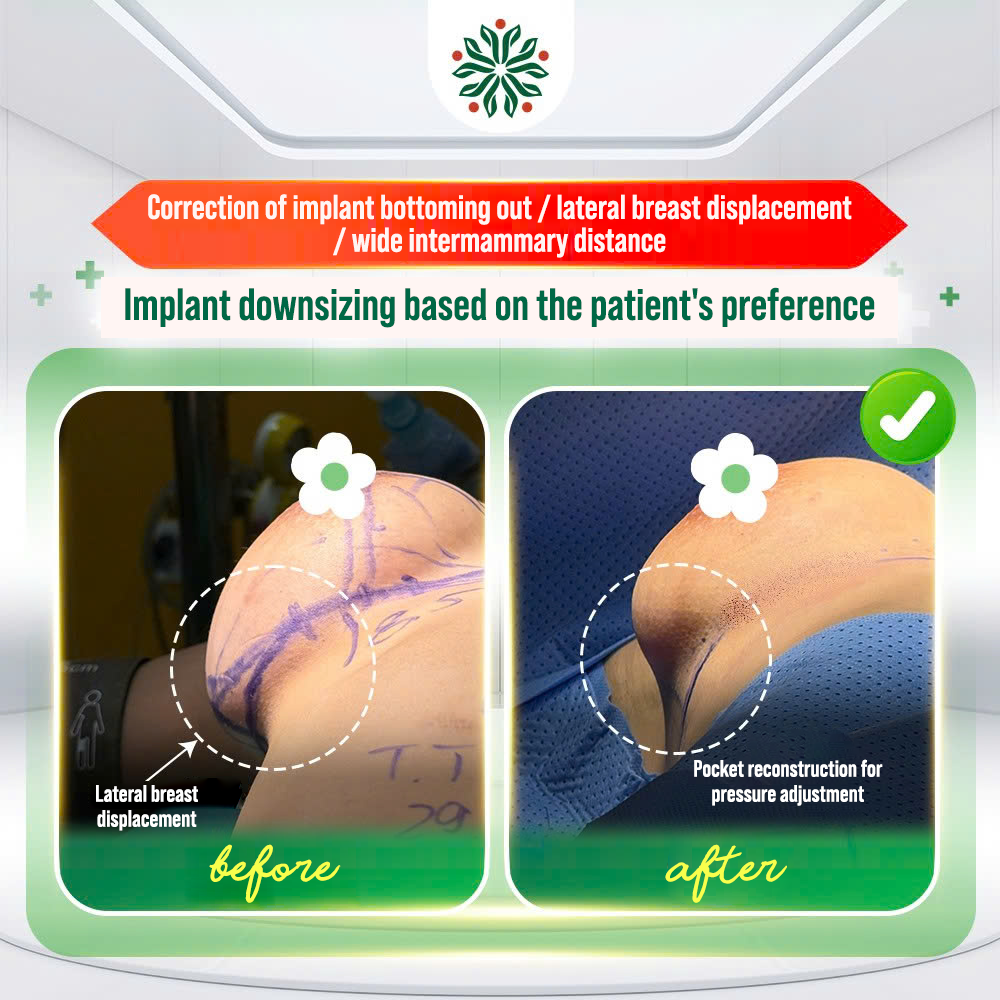
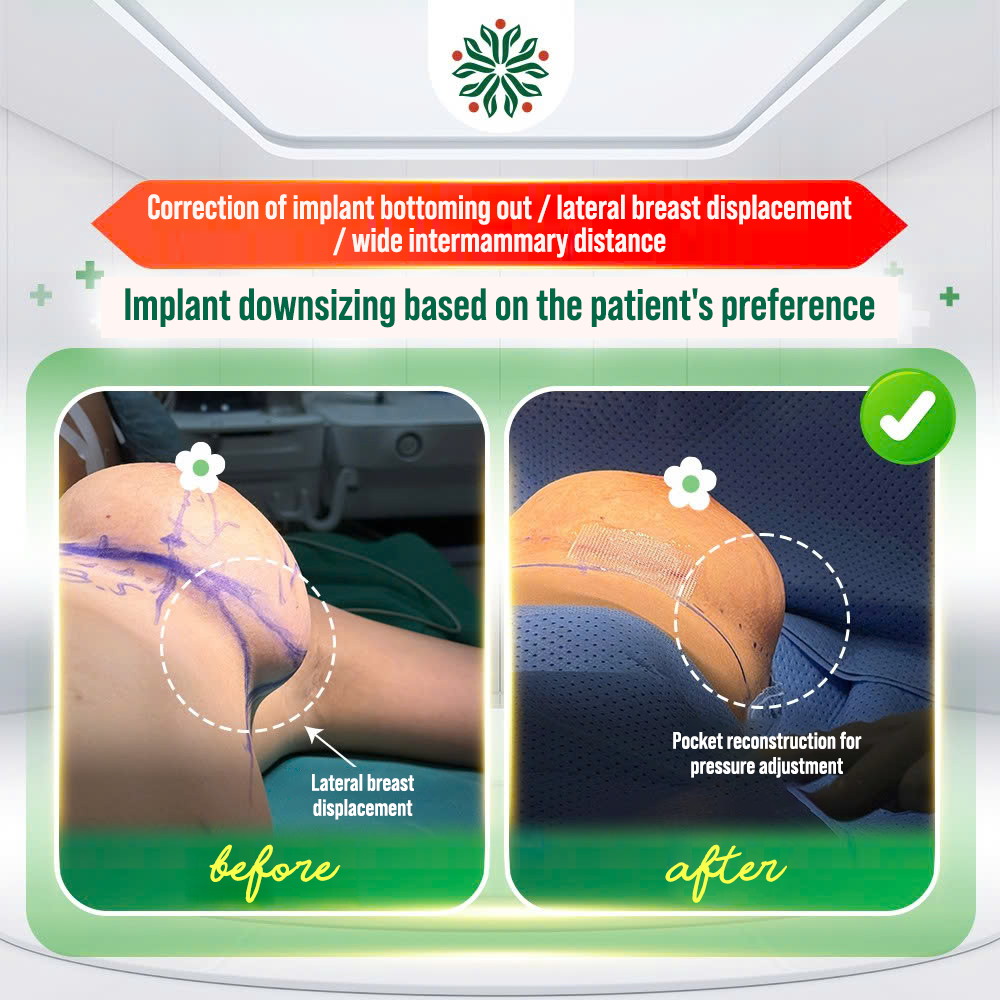
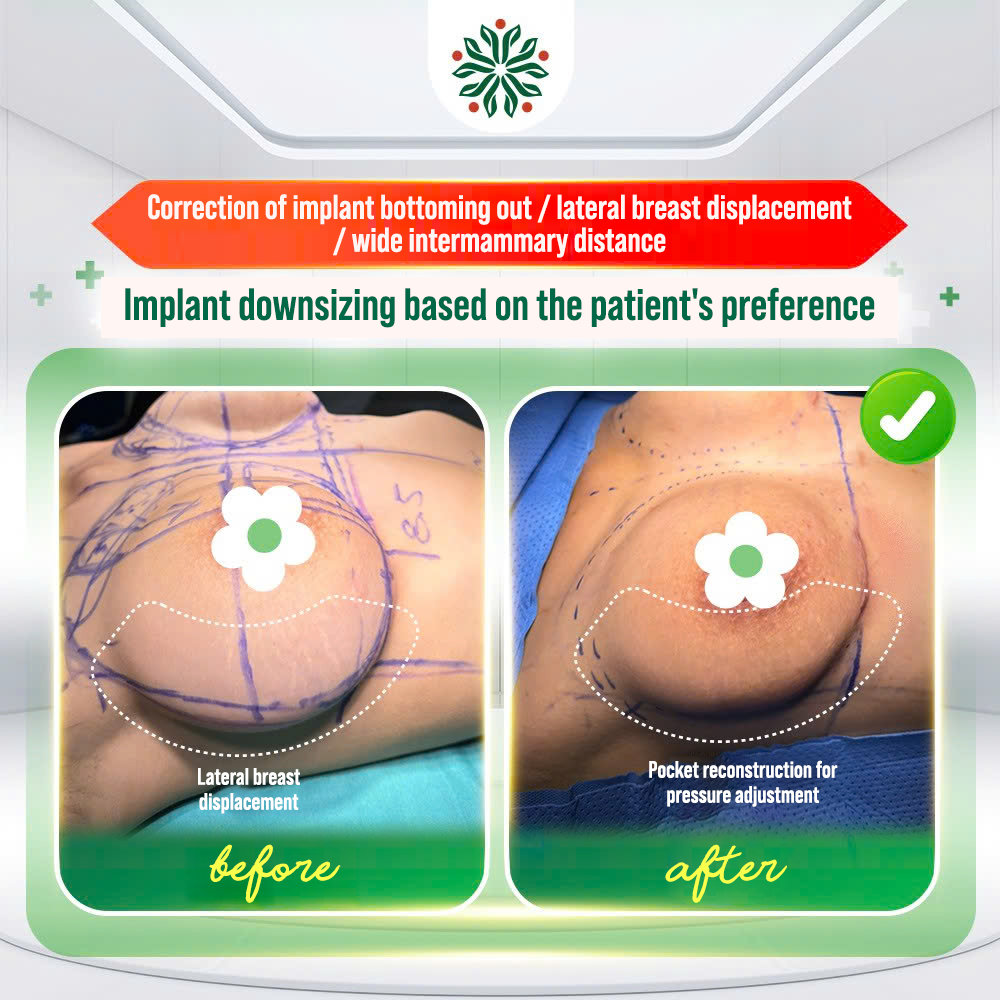
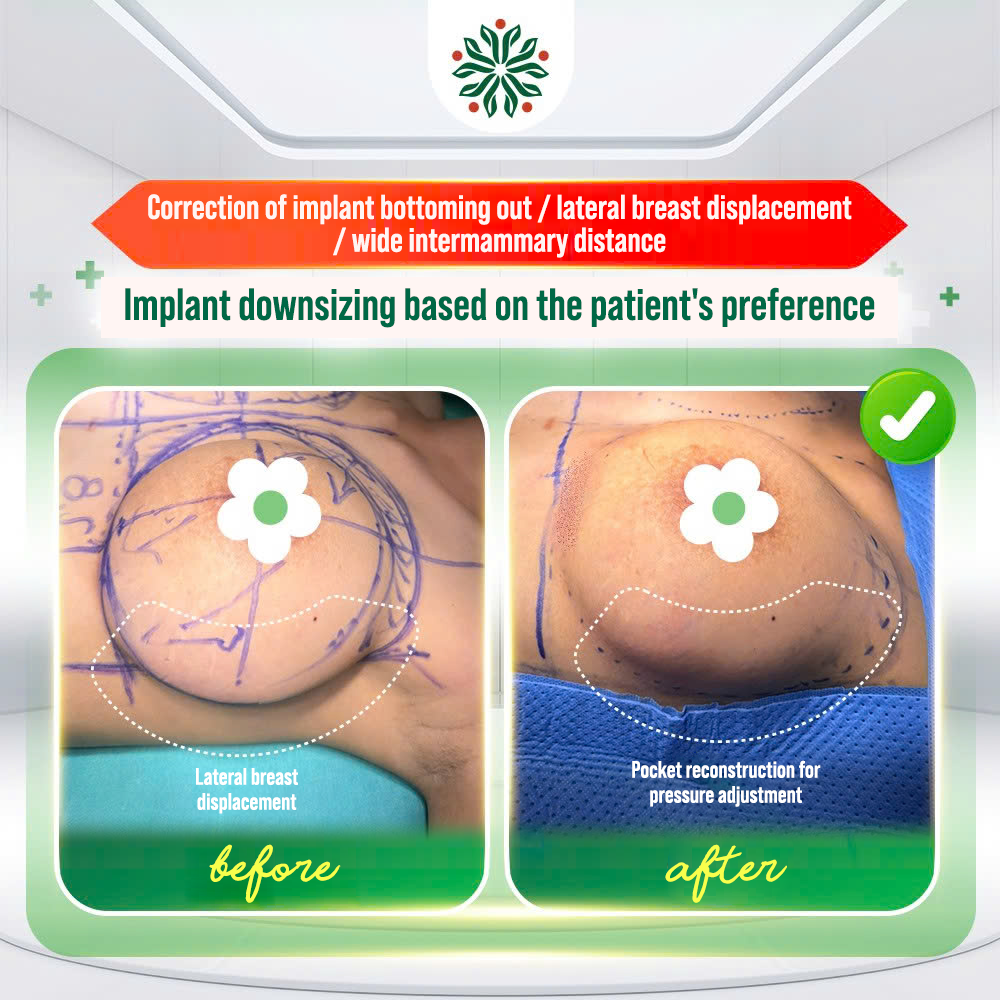
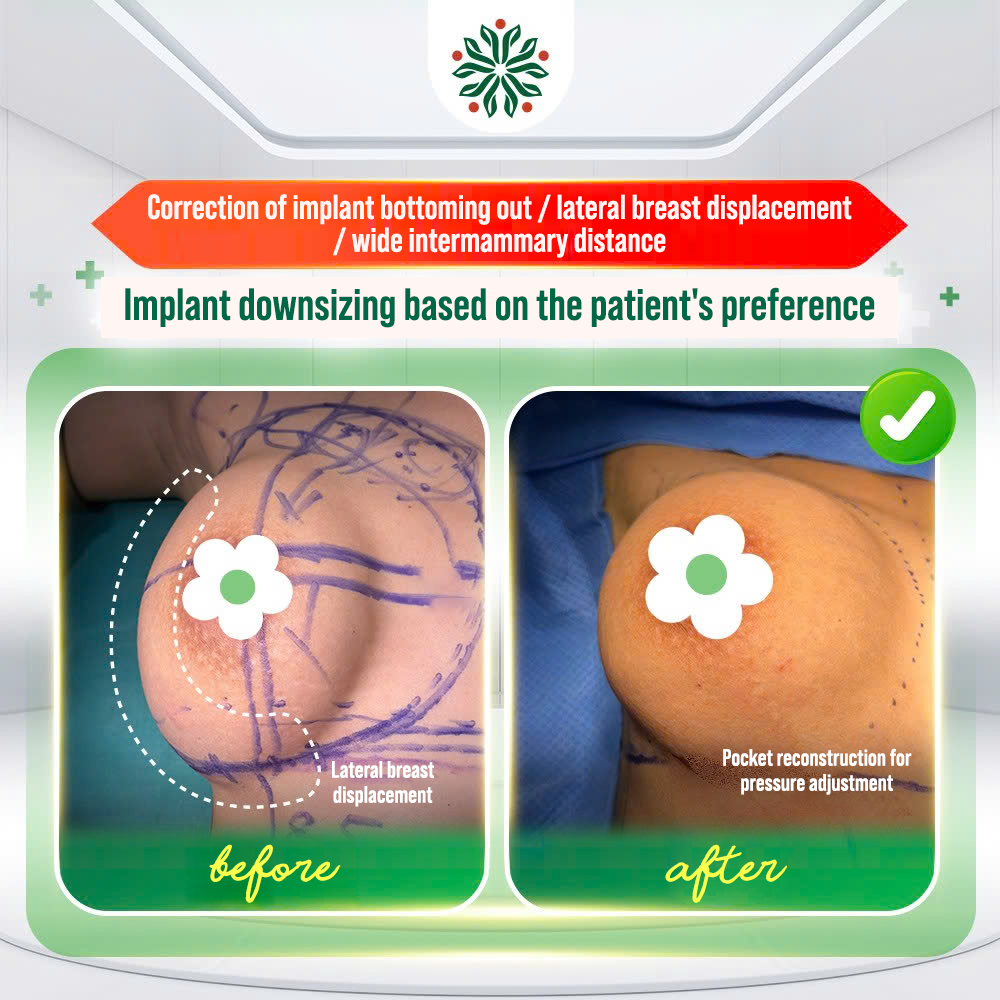
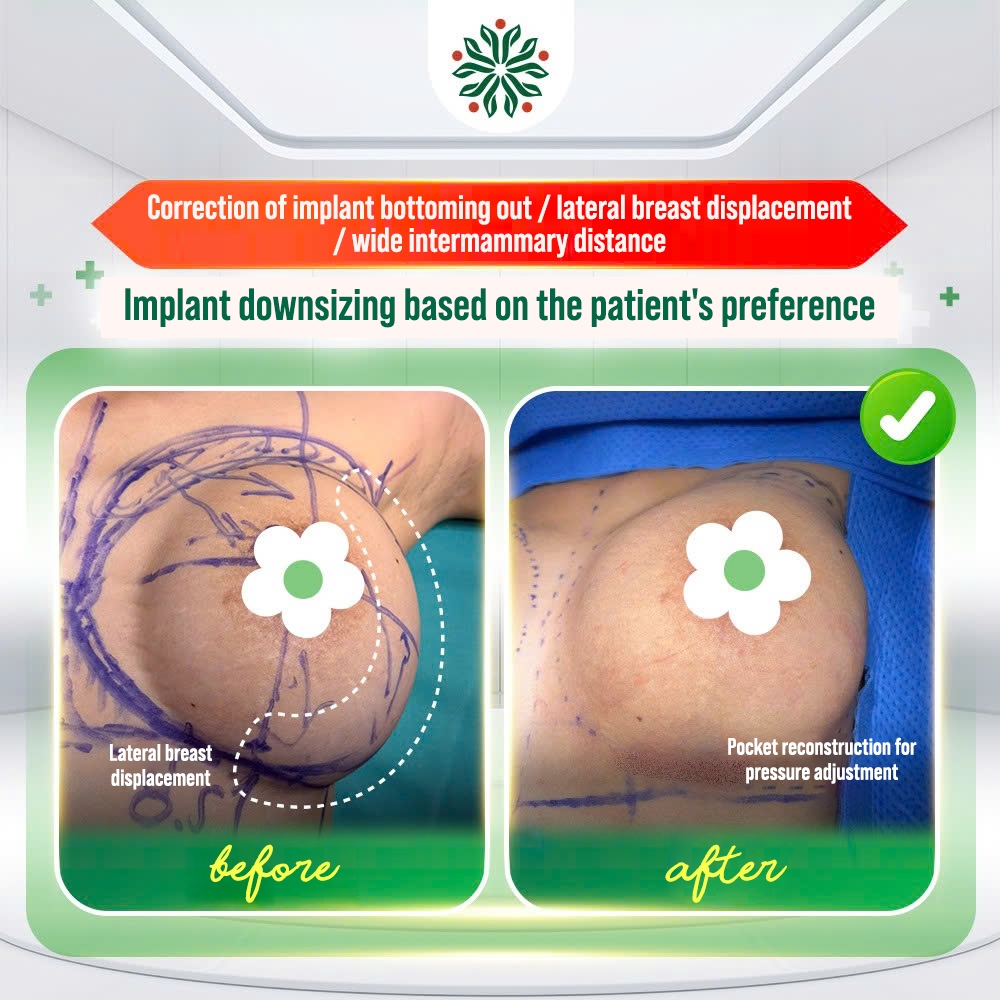
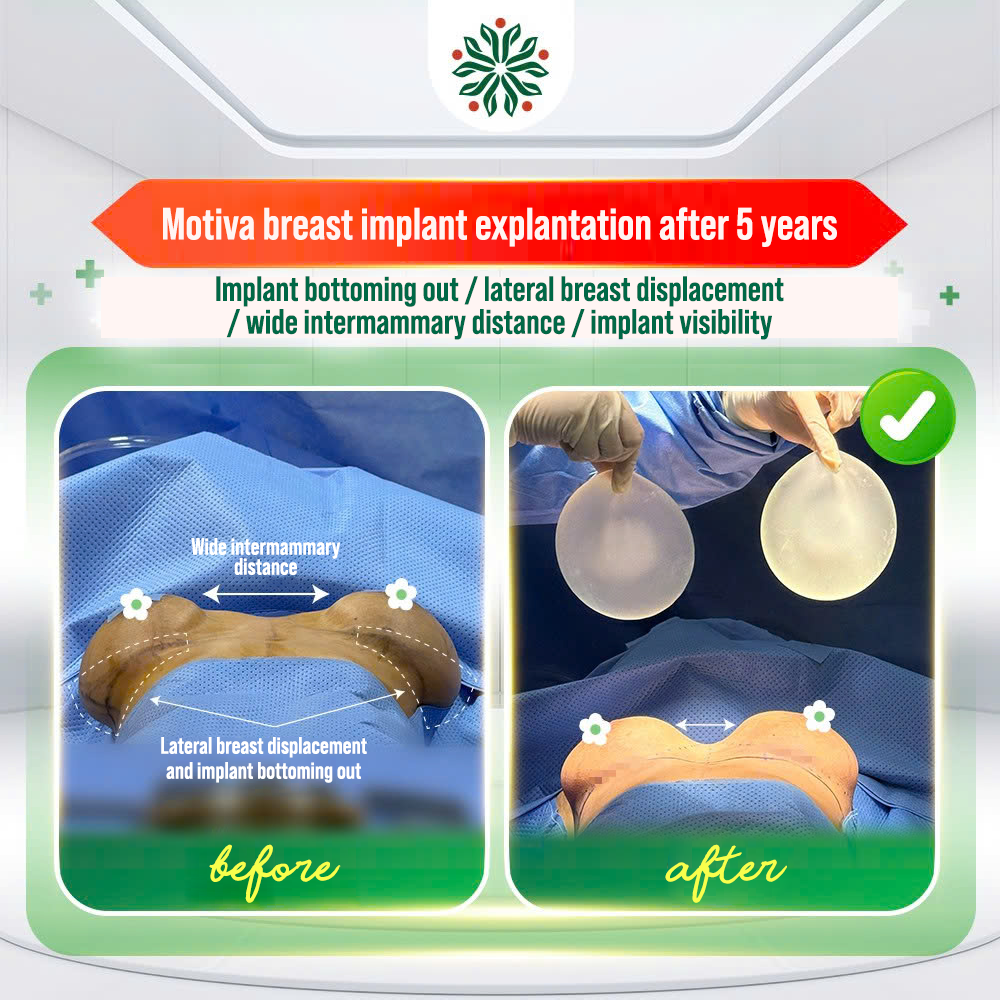
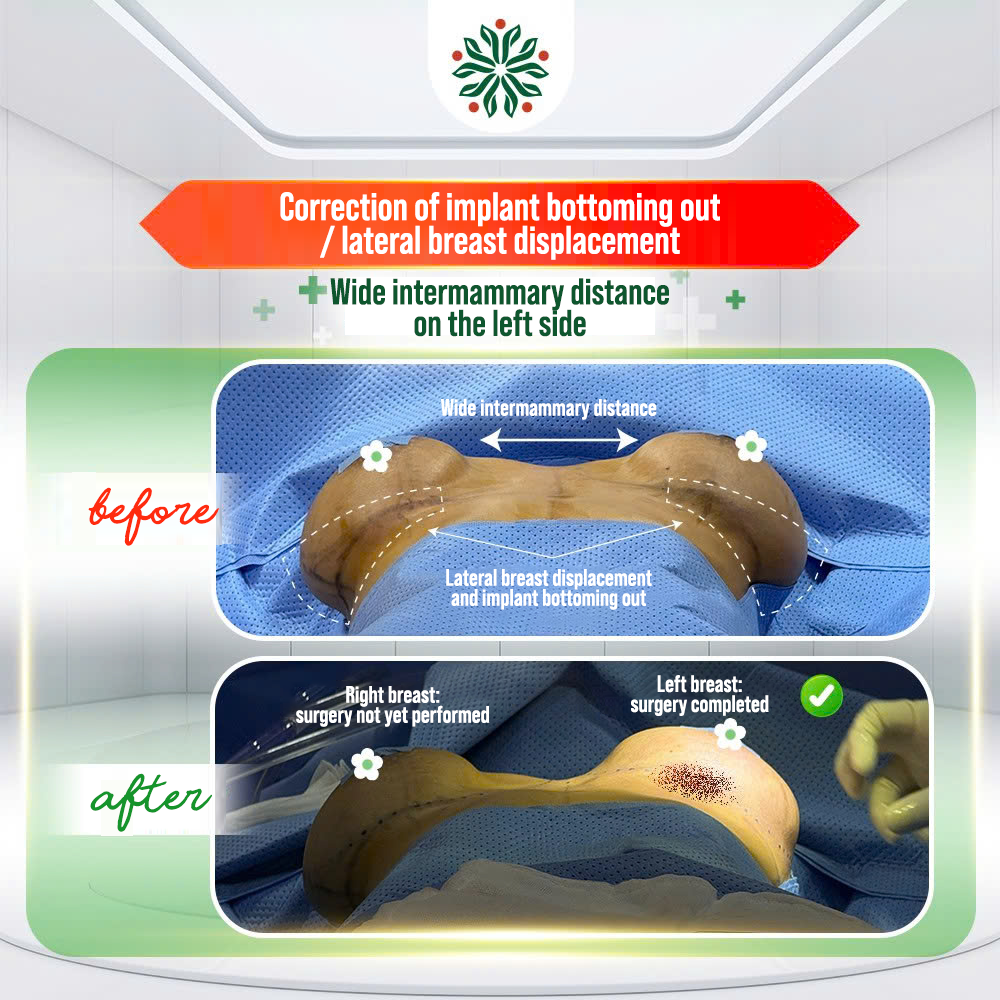
Changing the pocket. Moving an implant from above the muscle to below it adds a layer of cover. The subglandular versus dual-plane article linked above explains why this conversion is technically demanding: the old pocket has to be managed so that the new implant does not slip back into it. In a published case on our site, Dr. Ho Cao Vu moved both implants to a new pocket under the pectoral muscle in a 35-year-old patient with a thin chest wall whose lower outer breast showed rippling, visible implant edges and capsular contracture (case report).
Changing the implant. In the same case, the surgeon advised that patients with a slender frame and thin breast tissue should avoid very large or very high-projection implants and consider a moderate projection with a diameter suited to the chest. This is a general principle; implant choice is made individually after examination.
Fat grafting. Fat taken by liposuction from another area is injected into the thin tissue over the implant to thicken the coverage. Fanzio and colleagues list fat transfer among the main treatments, and Pantelides and Srinivasan describe it as an emerging option. It needs enough donor fat, and more than one session may be required.
Acellular dermal matrix. This is a processed tissue sheet placed between the implant and the thin tissue to add support. Pantelides and Srinivasan review it as an emerging option. It adds cost, and it is used more often in reconstruction than in cosmetic revision.
Removing the implant. If the implant is removed and not replaced, implant rippling can no longer occur, although the breast will be smaller and its shape may change. Some women with rippling, capsular contracture or ageing implants choose this route. Our article on implant removal without replacement explains what to expect, including recovery.
Rippling can return after any of these options, particularly if the tissue over the implant remains thin. Ask your surgeon what result is realistic for your grade of rippling.
Questions to ask at your consultation
- Which grade is my rippling, and where is it? Felt only, visible when leaning forward, or visible when standing.
- Where is my implant now, and what type is it? Bring your implant card or operation notes if you have them.
- Is there another problem as well? For example capsular contracture, malposition or a suspected rupture.
- What would each option change? Pocket change, implant change, fat grafting or removal.
- What is the chance it comes back? And what would be done if it does.
If you are considering surgery abroad, send photographs before you travel so the surgeon can plan. For rippling, photographs taken standing and leaning forward are particularly useful.
Rippling correction in Vietnam
Consultations and preoperative assessments are provided at Dr. Breast X. Surgery is performed directly by MSc, MD Ho Cao Vu at the Department of Surgery, Nam Sai Gon International General Hospital in Ho Chi Minh City, using an ultrasonic surgical scalpel, with implant removal performed under laryngeal mask airway (LMA) anaesthesia. Dr. Ho Cao Vu prioritises placement under the pectoral muscle, because the additional muscle layer means that changes in the tissue in front of the implant have less effect on it. The plan for correcting rippling is decided after examination, and in some cases with ageing tissue or other complications, removal followed by a waiting period before any new implant may be advised.
Frequently asked questions
Is breast implant rippling normal? Some degree of rippling is common. In one prospective study, 32% of women could feel rippling and 18% could see it. It is listed by the FDA as a known complication rather than a sign that surgery went wrong.
Does implant rippling go away on its own? Rippling caused by thin tissue coverage does not usually resolve by itself. It may become less noticeable with weight gain in some women, but we did not find studies that measured this.
Can rippling be a sign of rupture? Rippling and rupture are separate complications. A ruptured silicone implant is often silent, so if you are worried about rupture, ask about ultrasound or MRI rather than relying on how the breast looks.
Are saline implants more likely to ripple? The NHS states that saline implants are more likely to fold. A 2020 prospective study, however, found similar rates of rippling with saline and silicone implants placed under the muscle.
Conclusion
Breast implant rippling is wrinkling of the implant that can be felt or seen through the skin, and it is driven mainly by thin tissue coverage. Studies link it to low body weight, implants placed above the muscle and, in some data, smaller implants, while the evidence on saline versus silicone is mixed. It is rarely urgent, but it does not usually go away on its own. Treatment options include moving the implant under the muscle, changing the implant, fat grafting, dermal matrix or removal, and the right choice depends on the grade, the current pocket and the tissue available.
References
- US Food and Drug Administration. Risks and Complications of Breast Implants — https://www.fda.gov/medical-devices/breast-implants/risks-and-complications-breast-implants
- National Health Service (NHS). Breast enlargement (breast implants). Page last reviewed 21 September 2023 — https://www.nhs.uk/tests-and-treatments/cosmetic-procedures/cosmetic-surgery/breast-enlargement/
- American Society of Plastic Surgeons. Breast augmentation safety — https://www.plasticsurgery.org/cosmetic-procedures/breast-augmentation/safety
- Pantelides NM, Srinivasan JR. Rippling Following Breast Augmentation or Reconstruction: Aetiology, Emerging Treatment Options and a Novel Classification of Severity. Aesthetic Plastic Surgery 2018;42(4):980–985 — https://doi.org/10.1007/s00266-018-1117-y
- Codner MA, Mejia JD, Locke MB, et al. A 15-year experience with primary breast augmentation. Plastic and Reconstructive Surgery 2011;127(3):1300–1310 — https://pubmed.ncbi.nlm.nih.gov/21364430/
- Swanson E. Prospective Study of Saline versus Silicone Gel Implants for Subpectoral Breast Augmentation. Plastic and Reconstructive Surgery Global Open 2020;8(6):e2882 — https://pmc.ncbi.nlm.nih.gov/articles/PMC7339341/
- Li S, Mu D, Liu C, et al. Complications Following Subpectoral Versus Prepectoral Breast Augmentation: A Meta-analysis. Aesthetic Plastic Surgery 2019;43(4):890–898 — https://pubmed.ncbi.nlm.nih.gov/31139912/
- Yuan M, Kim P, Gallo L, et al. Outcomes in Subfascial Versus Subglandular Planes in Breast Augmentation: A Systematic Review and Meta-analysis. Aesthetic Surgery Journal 2024;44(9):NP639–NP644 — https://pubmed.ncbi.nlm.nih.gov/38825810/
- Fanzio P, Hammer J, Van Laeken N. Recognizing and Managing Breast Implant Complications: A Review for Healthcare Providers Who Treat Women Who Underwent Breast Implant-Based Surgery. International Journal of Women’s Health 2025;17:1297–1312 — https://pmc.ncbi.nlm.nih.gov/articles/PMC12067747/