Case Report: Intracapsular Breast Implant Rupture Two Years After Augmentation, Corrected With Capsulectomy and Implant Exchange
Dr. Ho Cao Vu — Plastic, Reconstructive and Aesthetic Surgeon
Dr. Ho Cao Vu holds Practising Certificate No. 028475/BYT-CCHN, issued by the Ministry of Health on 28 June 2018. He is a specialist in General Surgery and Plastic, Reconstructive and Aesthetic Surgery, with more than 15 years of experience in aesthetic plastic surgery and more than 20 years of experience in general surgery for the treatment of benign diseases, breast cancer, and abdominal wall and intra-abdominal conditions at Cho Ray Hospital.
A 42-year-old woman developed an intracapsular breast implant rupture with capsular contracture two years after augmentation. MRI confirmed the rupture; treatment involved explantation, capsulectomy, pocket revision and implant exchange.
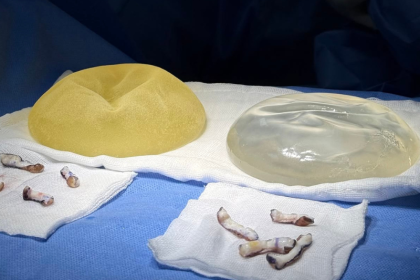
This case describes a 42-year-old woman who developed an intracapsular breast implant rupture, together with capsular contracture on the same side, two years after a breast augmentation performed elsewhere. She came to us because of discomfort and a change in the shape of one breast. An ultrasound could not settle the question, so a breast MRI was requested; the MRI confirmed the rupture. The old implants were removed, the capsule on the affected side was excised, the implant pocket was revised, and new implants were placed. The sections below follow the case in the order it unfolded: presentation, imaging, surgery and early outcome, followed by the general points a reader can take from it.
Presentation
The patient (case V100028) was 42 years old and had undergone breast augmentation with textured silicone gel implants at another facility two years earlier. She reported discomfort and a change in one breast. On examination there were signs of capsular contracture on the right side, and the right breast sat differently from the left.
Capsular contracture is the tightening and thickening of the fibrous capsule, the layer of scar tissue the body forms around every implant. In this patient it was a clinical finding at presentation; the record does not state a grade, and no cause for the rupture was identified.
Because these findings raised the possibility of an implant rupture, imaging was arranged before any surgical plan was finalised. In revision cases the operative plan follows the imaging findings rather than assumptions made at the bedside.
MRI findings and clinical assessment
An initial ultrasound did not provide enough information to confirm or exclude a rupture. Since the result was inconclusive and the patient had symptoms, a dedicated breast MRI was requested. MRI is one of the imaging methods the U.S. Food and Drug Administration (FDA) lists for evaluating silicone gel implants, and the FDA recommends MRI at any time when symptoms are present or an ultrasound is inconclusive.
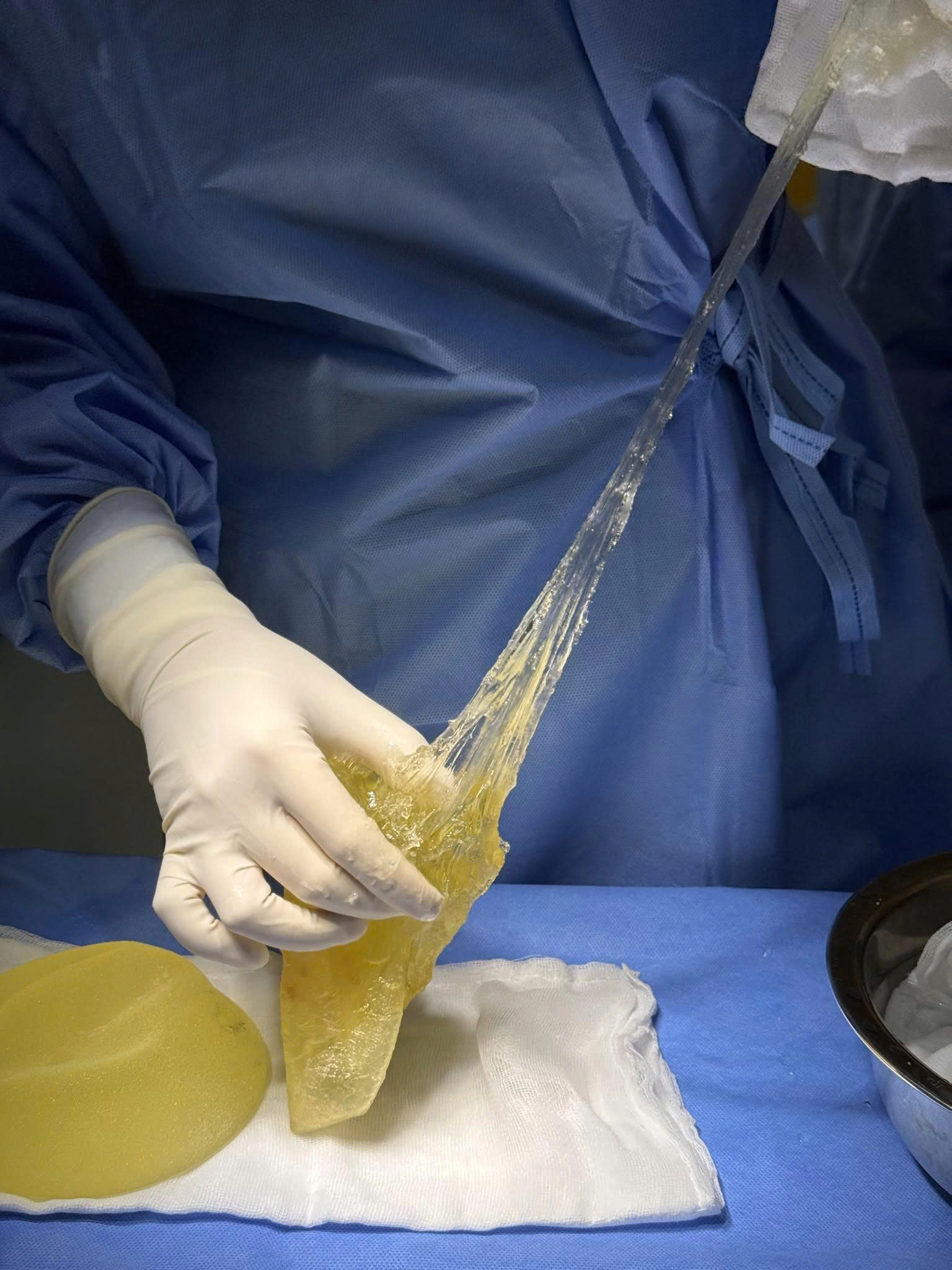
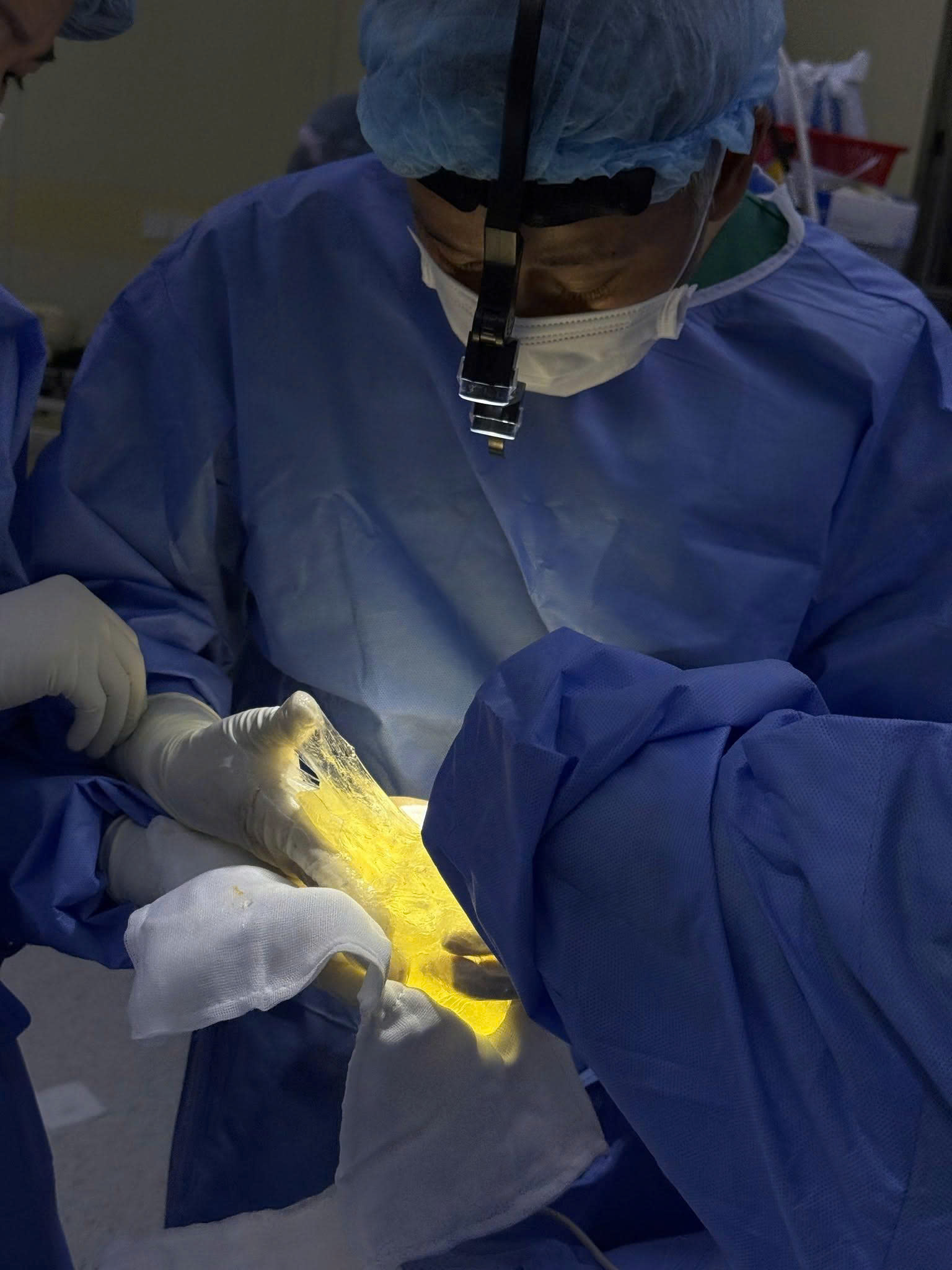
The MRI was performed on a 3.0 Tesla scanner with breast-specific sequences and interpreted by a radiologist. On the right side, the MRI showed reduced tension of the implant, non-homogeneous internal signal, and loss of continuity of the implant shell, with the collapsed shell folding inward while the silicone gel remained contained within the fibrous capsule. The reported conclusion was an intracapsular rupture of the right implant: the shell had failed, but the gel stayed inside the capsule. The left implant showed no rupture.
An intracapsular rupture can produce few outward signs precisely because the gel is still held inside the capsule; that is why imaging, rather than examination alone, is needed to identify it. In this patient, however, the rupture was not entirely silent: she had discomfort and a visible change in the breast, which is what prompted the assessment.
Surgical procedure
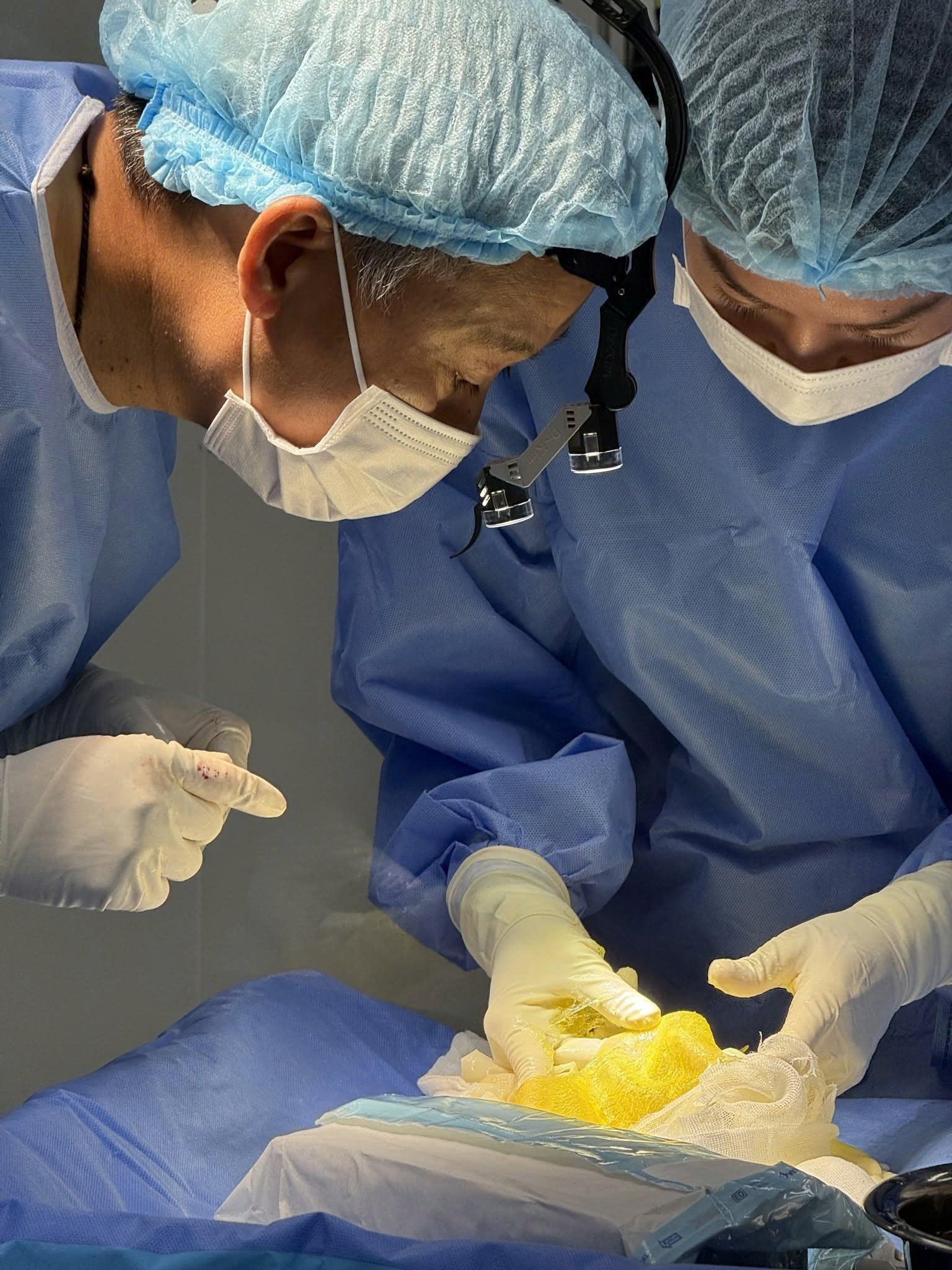
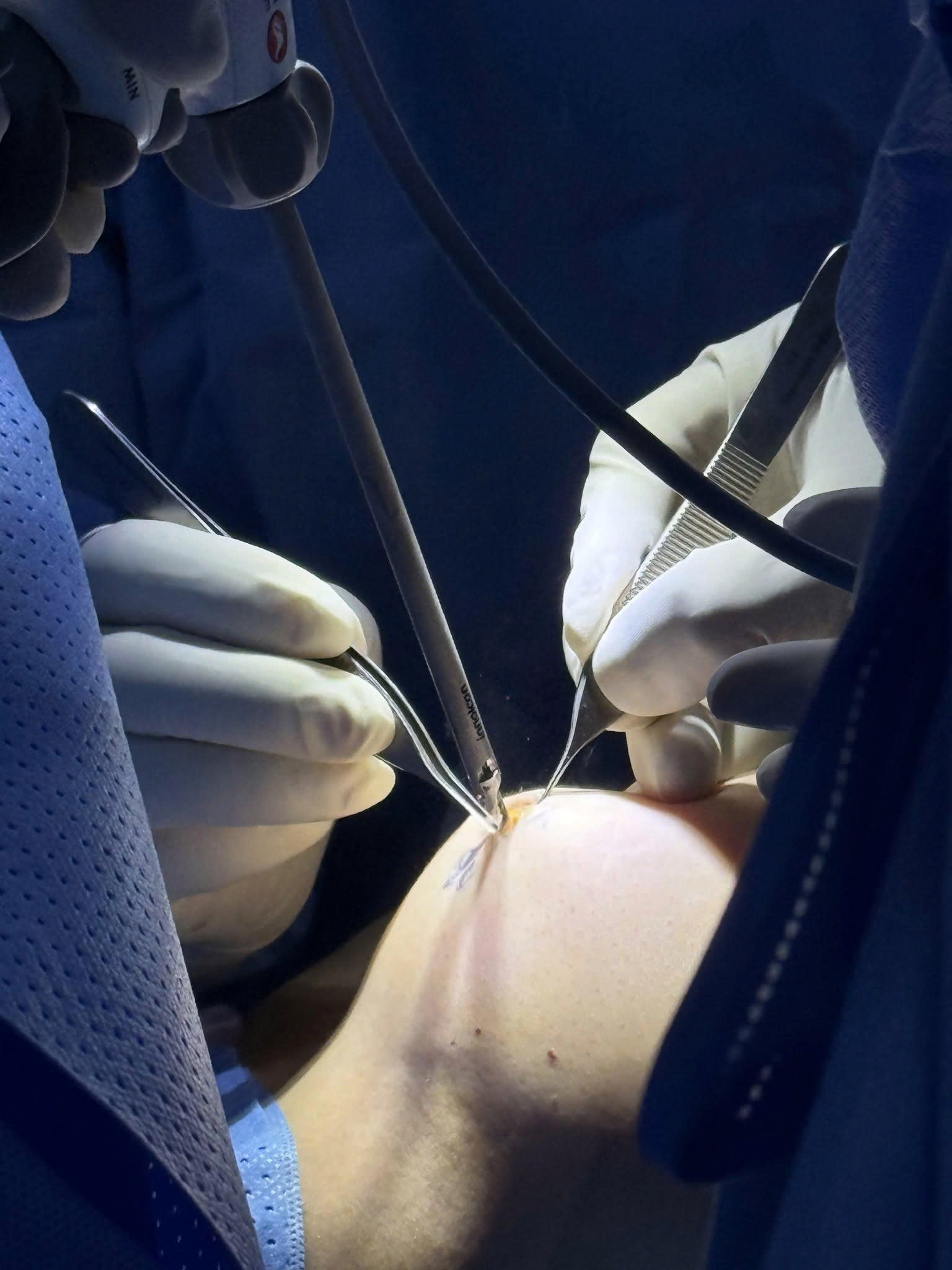
The operation was carried out under general anaesthesia and took approximately three hours. It involved four standardised steps: explantation (removal of the old implants), capsulectomy (excision of the capsule on the affected side), pocket revision (adjusting the space in which the implant sits), and implant exchange (placement of new implants).
- Bilateral incisions were made to access both implant pockets.
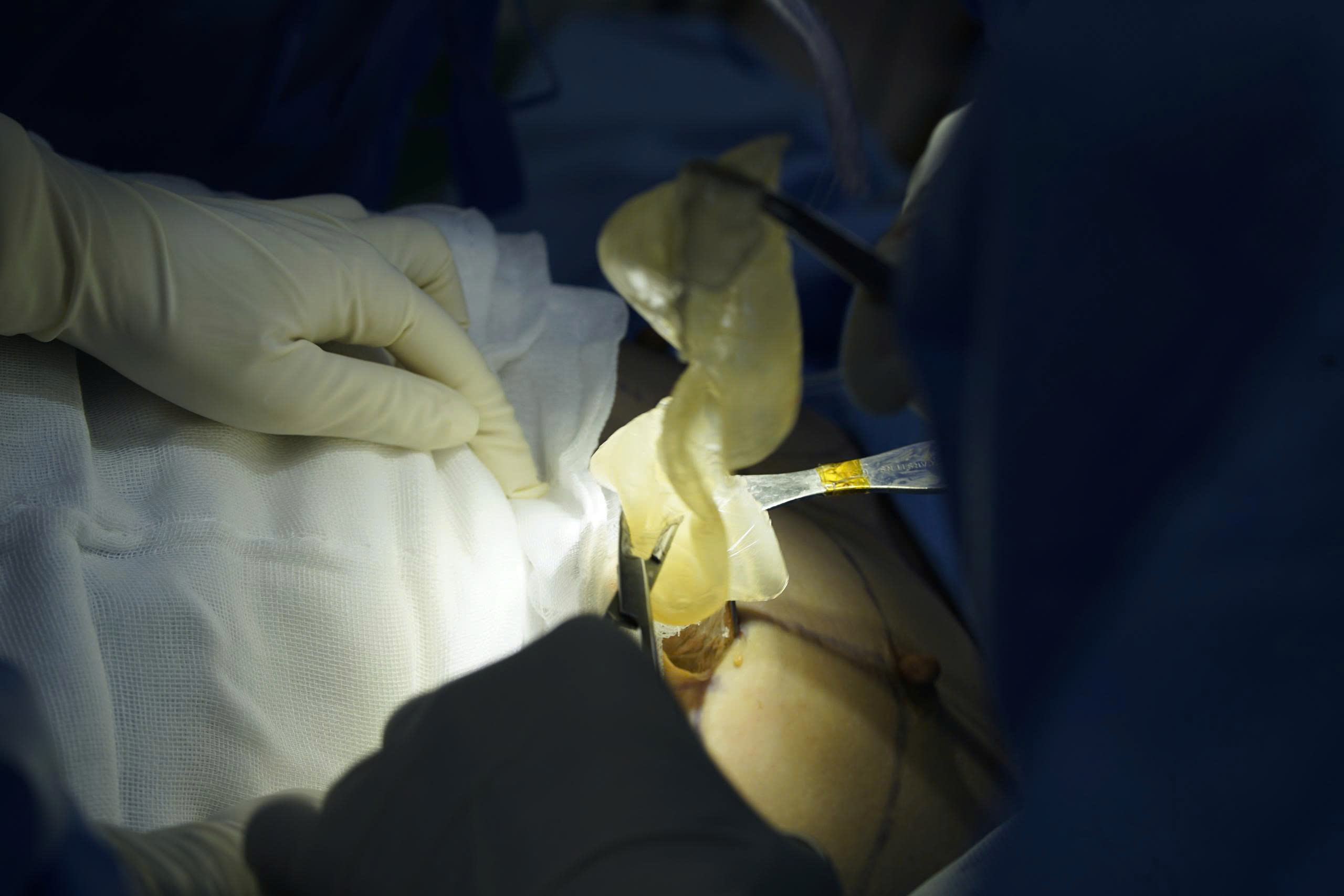
- Both old implants were removed. On the right side, the silicone gel associated with the rupture was cleared, and the affected capsule was excised. The operative record does not specify the extent of the capsule removed, so the procedure is described here as a capsulectomy without further qualification.
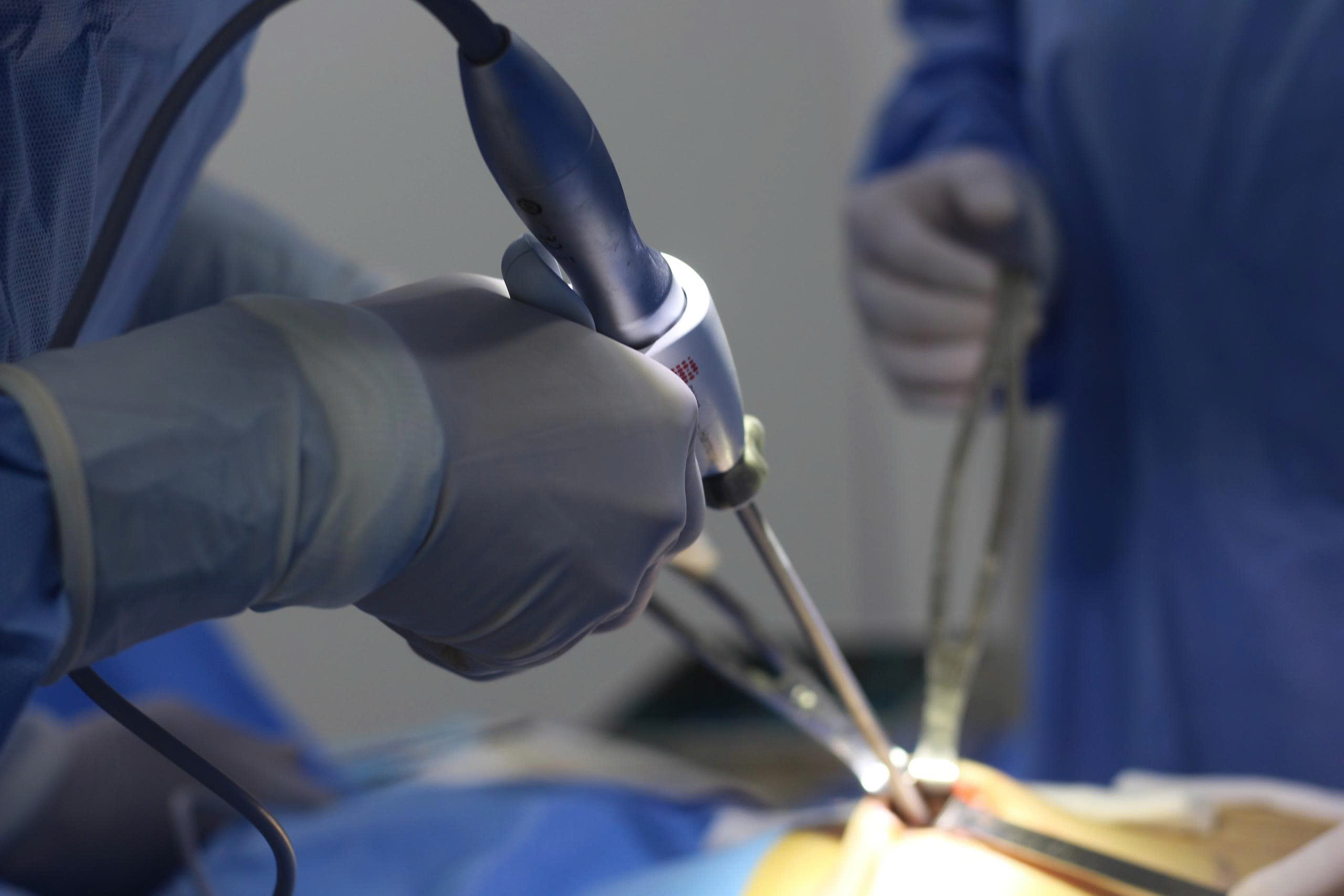
- Dissection was performed with an Ultrasonic Surgical Scalpel, an instrument that uses high-frequency mechanical vibration to assist cutting, coagulation and vessel sealing. This is the device Dr. Ho Cao Vu uses in revision surgery.
- The right pocket was found to be lower and wider than the left, consistent with inferior implant malposition. The pocket was revised beneath the pectoralis major muscle to fit the new implant, and haemostasis was checked before closure. The malposition is recorded as a finding; it is not presented as the cause of the rupture.
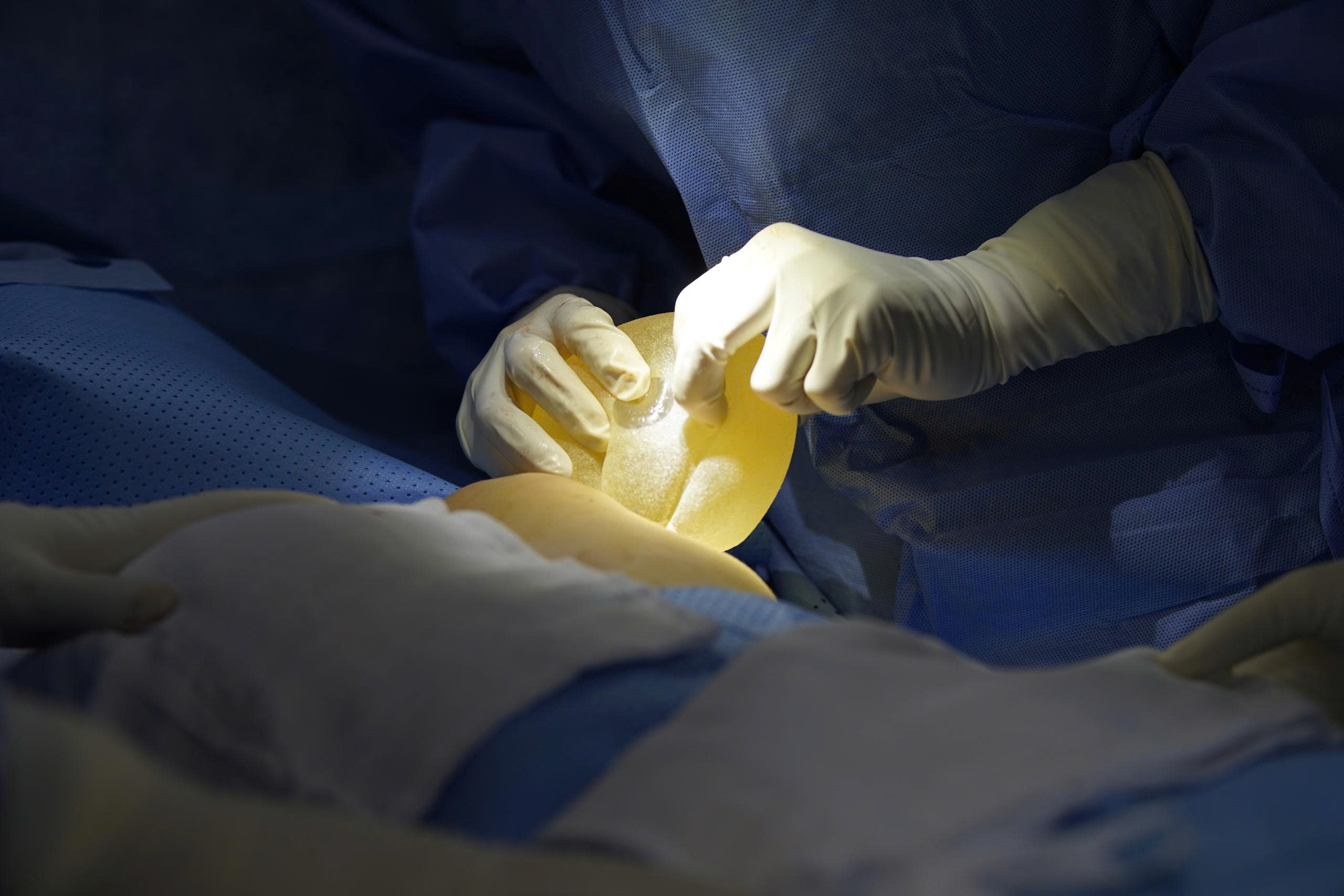
- New Mentor implants, 325 cc on each side, were placed.
- The incisions were closed in layers and a compression bra was applied.
The pre-operative and post-operative diagnoses were consistent: old implants with a right-sided intracapsular rupture.
On the replacement implants: the regulatory status of any implant depends on the exact product line and model, not on the manufacturer’s name or the volume. Patients who want to confirm the status of their implants should check the product labels and the patient device cards provided after surgery.
Outcome
In this case the patient was discharged within 24 hours. No drain was placed, and under Dr. Ho Cao Vu’s protocol she did not require routine postoperative antibiotics or analgesics. These details describe this patient and this surgeon’s protocol; they are not a standard that applies to every breast revision.
At the two-month follow-up, the implants felt soft and the breasts had a natural contour. This is an early assessment, not a long-term result. The outcome and recovery of a single case cannot be generalised to every patient; what the case does show is a typical sequence for a suspected rupture: assessment, confirmation on appropriate imaging, and an operative plan built around the findings.
What this case shows about intracapsular breast implant rupture
A ruptured silicone gel implant can go unnoticed. In an intracapsular rupture the gel is held within the fibrous capsule, so the breast may look and feel much the same for some time. That is the basis for the FDA’s advice to screen silicone gel implants with imaging rather than relying on symptoms alone. This patient did have symptoms, and her MRI was a diagnostic evaluation rather than routine screening; in her case the ultrasound was inconclusive and MRI gave the definitive answer, which matches the FDA’s guidance on when MRI is preferred.
The case also separates procedures that are often described together. Explantation, capsulectomy, pocket revision and implant exchange are related but distinct steps. Which of them applies depends on the findings in each patient rather than on a fixed rule, and a reader considering revision surgery should expect the plan to be explained step by step in those terms.
When should silicone breast implants be checked for rupture?
Because an intracapsular rupture can be silent, the timing of imaging does not depend on symptoms alone. In its labelling recommendations issued in 2020, the FDA advises that women with silicone gel implants and no symptoms have an ultrasound or MRI 5 to 6 years after placement, and then every 2 to 3 years thereafter. For women who have symptoms, or whose ultrasound is inconclusive, the FDA recommends MRI at any time. The American Society of Plastic Surgeons summarises the same schedule in its patient safety guidance.
In the FDA’s patient information, some women with ruptured implants have no symptoms, which is the reason imaging is used rather than waiting for a change to appear. This patient’s rupture occurred two years after augmentation, before the first routine screening interval would have applied, and it was investigated because she had symptoms. Her MRI therefore belongs to diagnostic evaluation, not to routine screening.
How is capsular contracture related to this case?
Alongside the rupture, this patient had capsular contracture on the right side: the fibrous capsule around the implant had thickened and tightened, which can make the breast feel firm, sit higher, or change shape, and may cause discomfort. The FDA lists capsular contracture among the recognised complications of breast implants.
The two conditions were present on the same side in this patient. The record does not establish that one caused the other, and no such conclusion is drawn here. What the finding did affect was the operative plan: when the capsule is abnormal, addressing it alongside the implant becomes part of the revision.
Frequently asked questions
Can a breast implant rupture without symptoms?
Yes. When a silicone gel implant ruptures inside the fibrous capsule, the gel is often contained and the breast may not change noticeably, which is why the FDA advises imaging to screen for rupture rather than waiting for symptoms. The patient in this case, however, did have discomfort and a change in shape, and her MRI was a diagnostic evaluation rather than routine screening.
Why was an MRI needed when an ultrasound had already been done?
Because the ultrasound did not provide enough information to confirm or exclude a rupture. MRI showed the implant shell in more detail and identified an intracapsular rupture. The FDA recommends MRI when symptoms are present or when an ultrasound is inconclusive, which was the situation here.
What does treatment for a ruptured implant involve?
It depends on the findings. It may include explantation, capsulectomy of part or all of the capsule, pocket revision and implant exchange, used alone or in combination. In this patient, both old implants were removed, the capsule on the affected side was excised, the right pocket was revised, and new 325 cc implants were placed.
Doctor profile
Dr. Ho Cao Vu holds Practising Certificate No. 028475/BYT-CCHN, issued by the Ministry of Health on 28 June 2018. He is a specialist in General Surgery and Plastic, Reconstructive and Aesthetic Surgery, with more than 15 years of experience in aesthetic plastic surgery and more than 20 years of experience in general surgery for the treatment of benign diseases, breast cancer, and abdominal wall and intra-abdominal conditions at Cho Ray Hospital.
In 2010, he received training in breast reconstruction after cancer at MD Anderson Cancer Center in Houston, Texas, under the direct guidance of Professor David Chang. He currently works at the Department of Surgery of Nam Sai Gon International General Hospital, where he performs plastic and reconstructive surgery.
In 2023, the “Harmo – 5K” trademark of Dr. Ho Cao Vu was granted a Trademark Registration Certificate by the Intellectual Property Office of Vietnam for cosmetic services. By 2025, Dr. Ho Cao Vu stated that he had performed more than 1,000 breast implant explantation cases and 3,000 plastic and reconstructive surgeries (breast augmentation, mastopexy and abdominoplasty) using the Ultrasonic Surgical Scalpel.
Contact for plastic and reconstructive surgery consultation
Phone number: 0911413443
Doctor’s Facebook: Dr Ho Cao Vu
Updated 14 September 2026.
References
- Breast Implant Safety — American Society of Plastic Surgeons (ASPS)
- Risks and Complications of Breast Implants — U.S. Food and Drug Administration (FDA)